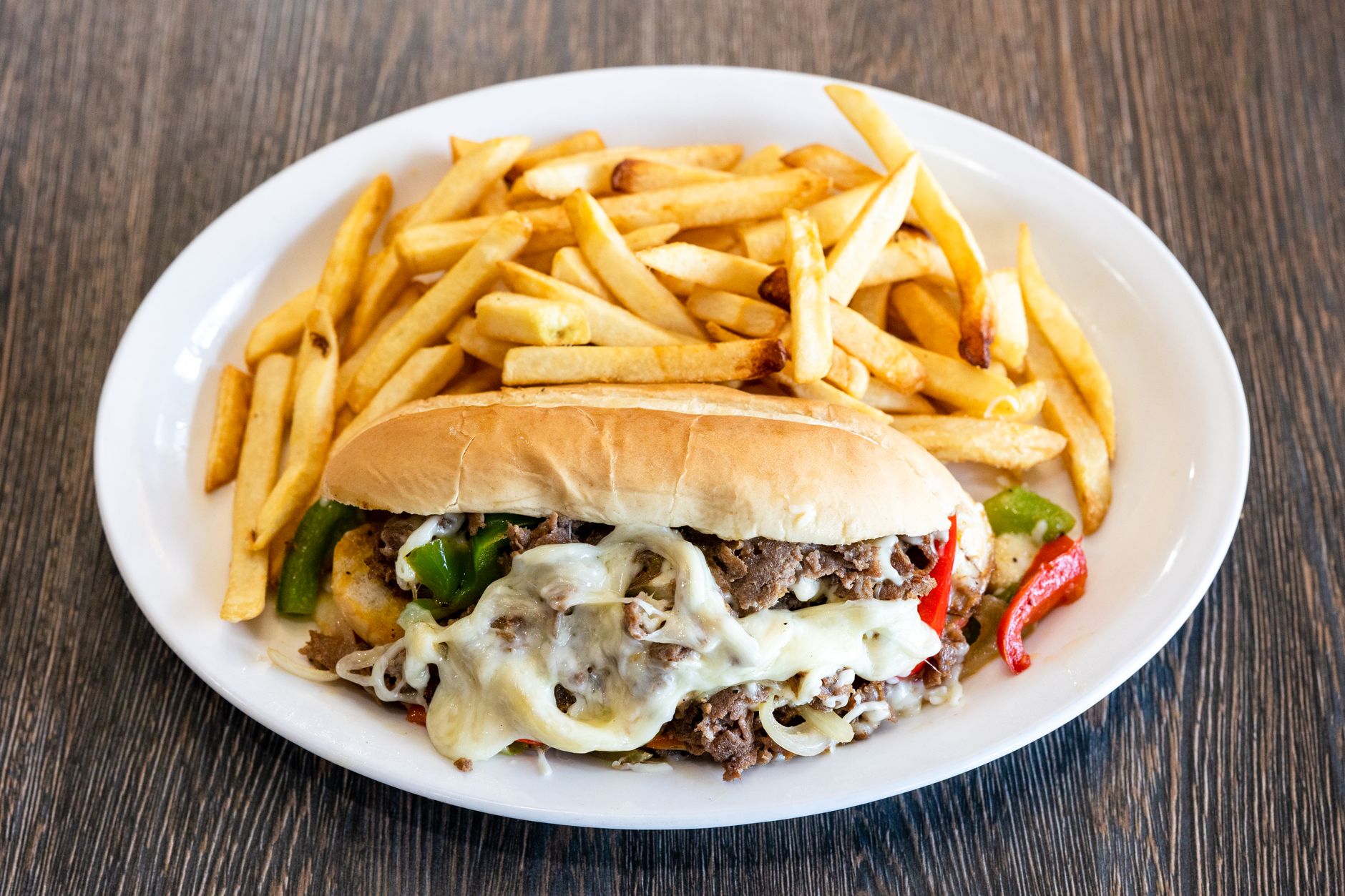
The Philly cheesesteak has a cleaner origin story than most classic American sandwiches — a single named inventor, a real South Philadelphia address, and a specific decade. It’s also one of the standout items on the menu at Mabel’s Deli inside Poncha Market, priced at $9.99.
Here’s where the sandwich actually came from, what belongs on an authentic version, and a recipe for making one at home.
Unlike sandwiches with murky, contested histories, the cheesesteak’s origin is unusually well documented for something invented at a hot dog stand nearly a century ago — which makes it a genuinely useful case study in how a regional specialty becomes a national one.
It’s also worth noting how quickly the sandwich spread beyond its single-location origin. Within a few decades, “cheesesteak” became a recognized sandwich category nationally, well beyond Philadelphia itself, even as the city’s own version remained the reference point everyone else gets measured against.
Who Invented the Philly Cheesesteak?
Pat Olivieri invented the sandwich in the 1930s at a modest hot dog stand in South Philadelphia that later became Pat’s King of Steaks. According to the most commonly told version, a taxi driver asked Olivieri to add cheese to what was originally just thinly sliced beef on a roll — and once the cheese stuck, so did the sandwich’s popularity.
That means the “cheese” part of cheesesteak was actually an addition to the original concept, not part of it from day one. The earliest versions were simply steak sandwiches, and the combination we know today only came together after that specific customer request.
It’s a genuinely rare thing in food history to have a sandwich’s defining ingredient added after the fact, on a customer’s suggestion, at a documented time and place. Most sandwich origin stories are murkier or entirely undocumented by comparison, which is part of why the cheesesteak’s history gets cited so specifically and confidently.
What Belongs on an Authentic Cheesesteak
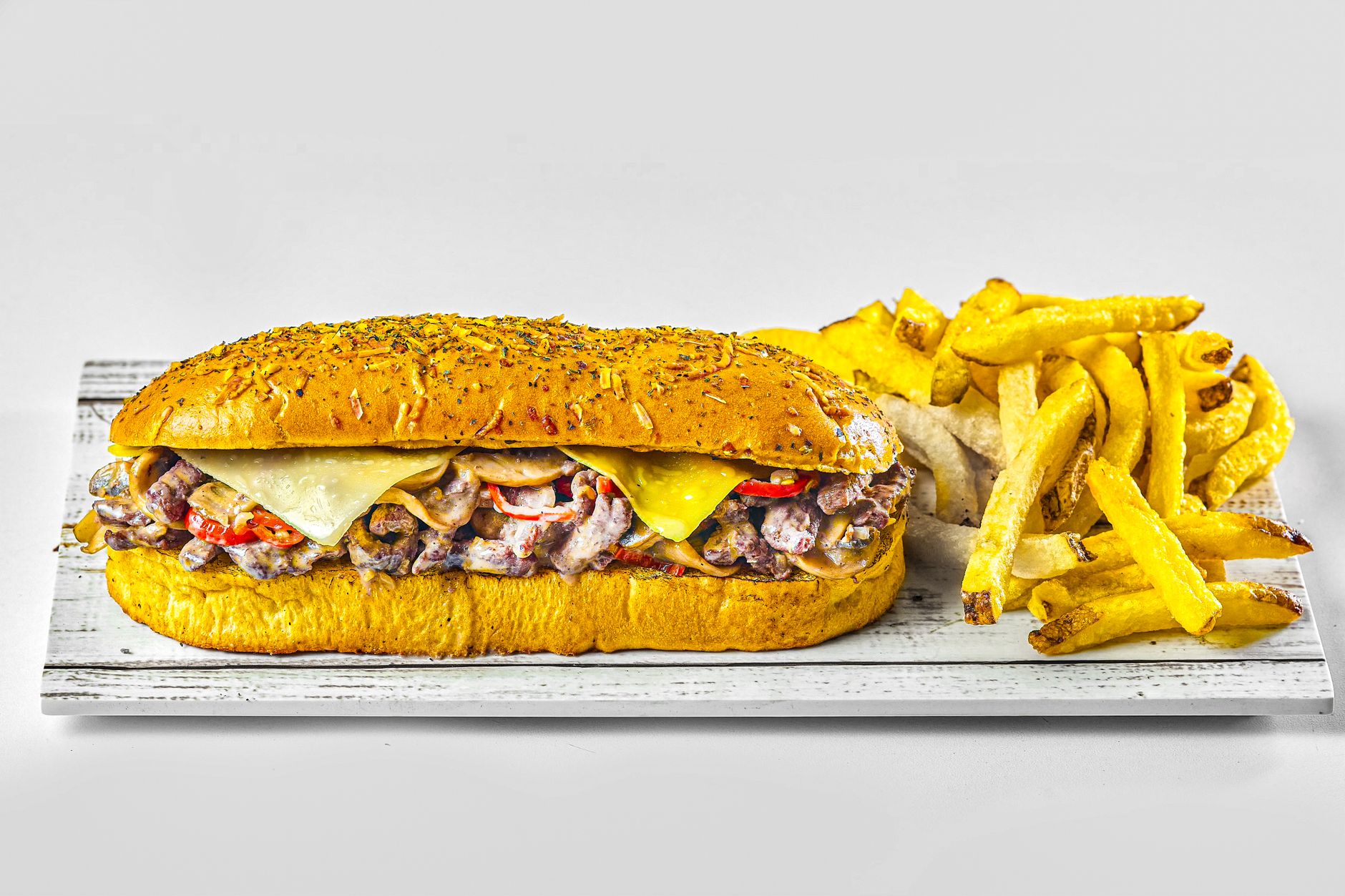
An authentic Philly cheesesteak comes down to a short list of specific choices: thinly shaved beef cooked on a flat top, served on a soft hoagie-style roll, and topped with either Cheez Whiz, American cheese, or provolone. Provolone is generally considered the choice if you want the traditional cheesesteak experience without the more polarizing Cheez Whiz.
Amoroso rolls are considered the authentic Philadelphia choice of bread, though any sturdy, soft roll works reasonably well outside the city. Sauteed onions and peppers are common additions, but purists note they weren’t part of the original recipe — they’re an accepted variation, not the authentic baseline.
This distinction between “authentic” and “accepted variation” comes up constantly in cheesesteak debates, and it’s worth understanding rather than dismissing as pointless pedantry. A sandwich can be genuinely excellent without being strictly authentic to the 1930s original, and most cheesesteaks served today, including outside Philadelphia, fall into that accepted-variation category rather than the purist original.
Chipotle mayo, hot peppers, or other regional additions found on cheesesteaks outside Philadelphia are best understood the same way — genuine departures from the original recipe, but not automatically worse for it, just a different regional take on a sandwich that’s always evolved as it spread beyond its birthplace.
For more on the cheese and toppings that go into a cheesesteak, see our provolone vs. mozzarella vs. Swiss cheese guide and guide to caramelizing onions and peppers.
How to Make a Cheesesteak at Home
Ingredients
- ½ lb. ribeye steak, very thinly sliced (partially freezing the meat first makes thin slicing much easier)
- 1 soft hoagie roll
- 2–3 slices provolone, or 2 tablespoons Cheez Whiz
- ½ small onion, sliced (optional but common)
- Salt and pepper to taste
- 1 tablespoon oil or butter
Instructions
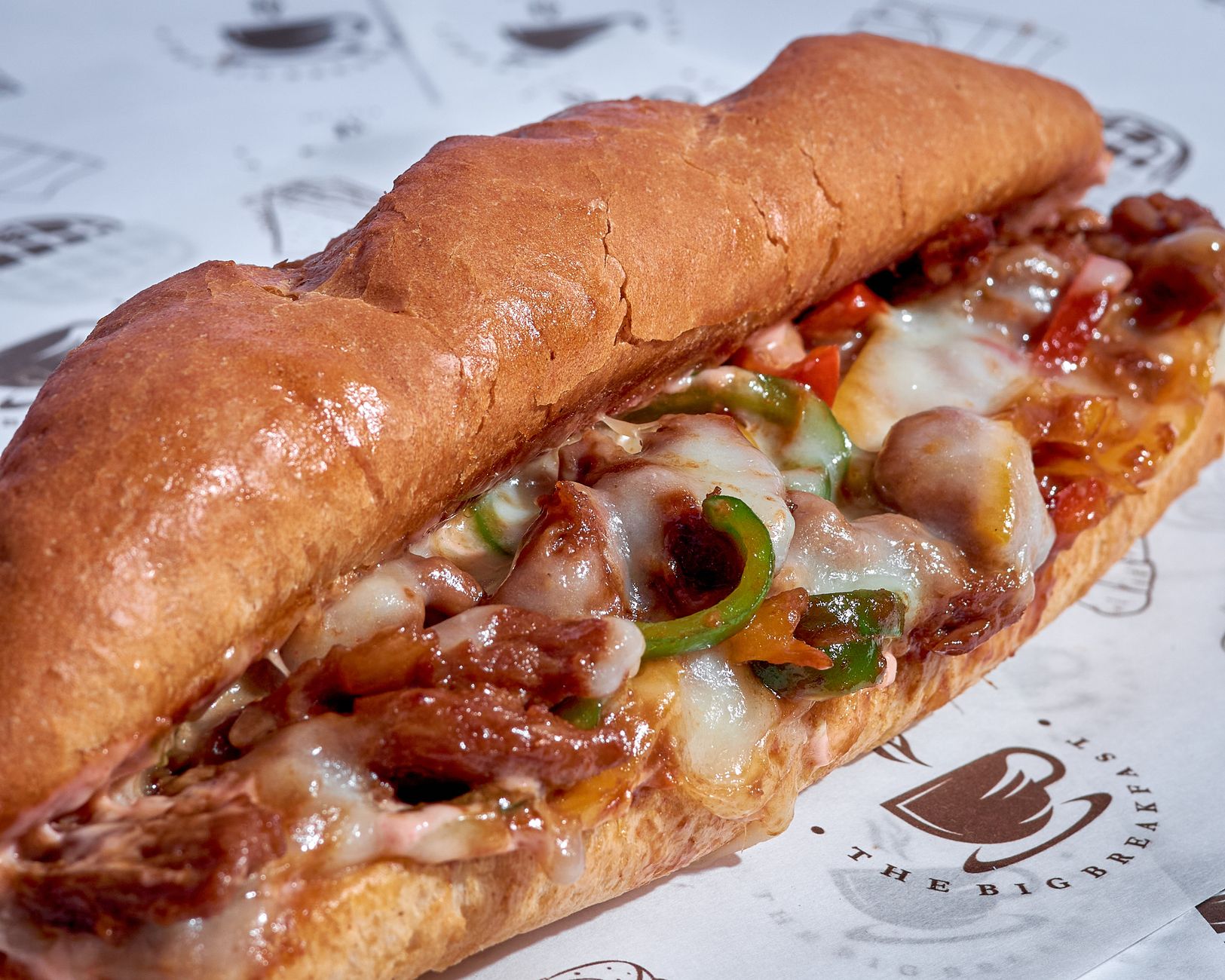
- Heat oil in a large skillet or flat-top over medium-high heat.
- If using onions, sauté until soft and starting to caramelize, then push to one side of the pan.
- Add the thinly sliced beef to the pan, chopping and turning it with a spatula as it cooks, seasoning with salt and pepper.
- Once the beef is cooked through, about 2–3 minutes, combine with the onions and top with cheese, letting it melt directly on the meat.
- Scoop the beef and melted cheese into the hoagie roll and serve immediately.
Tips for a Better Homemade Cheesesteak
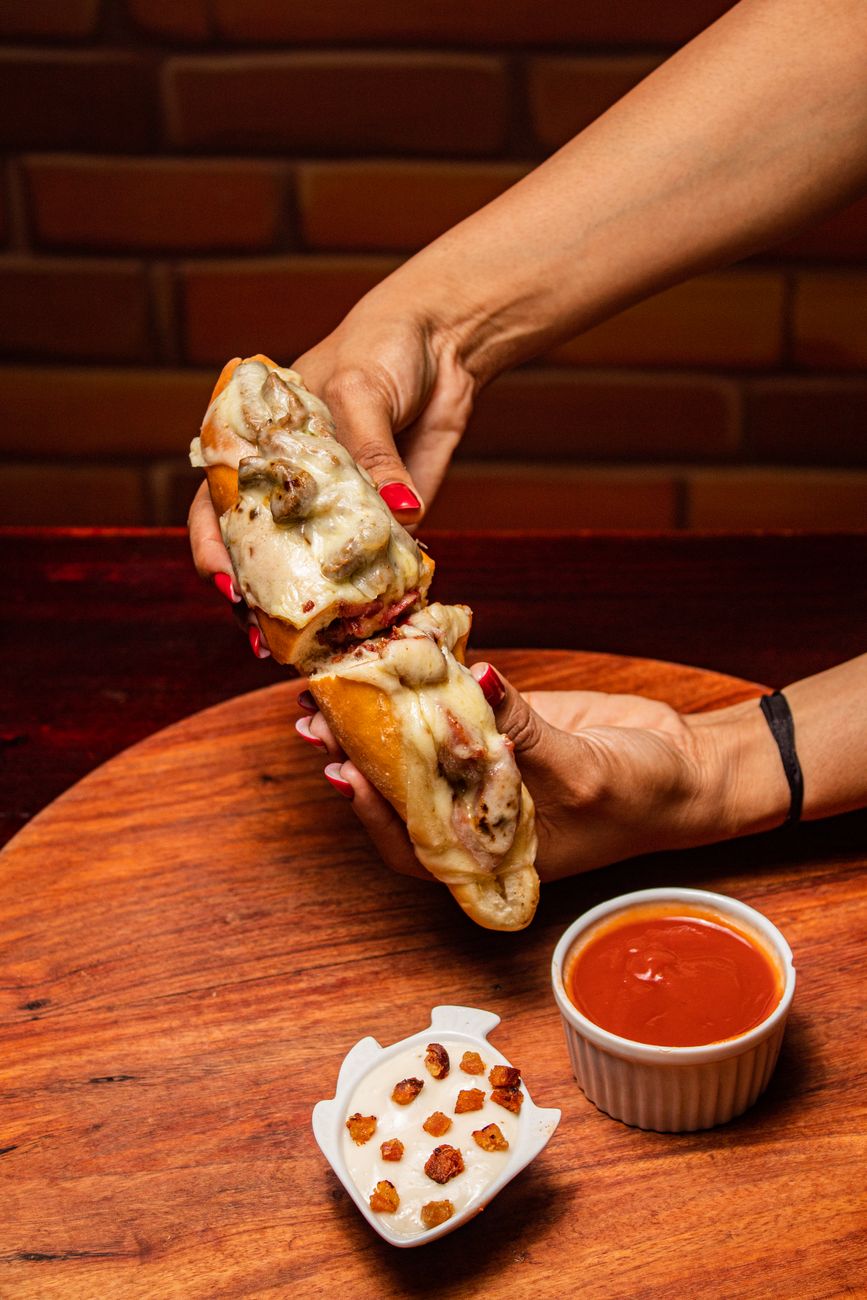
- Slice the beef as thin as possible — partially freezing it for 30 minutes beforehand makes this considerably easier with a sharp knife.
- Chop the meat into smaller pieces as it cooks rather than leaving it in large strips, which is closer to how it’s traditionally prepared on a flat top.
- Melt the cheese directly onto the meat in the pan rather than just placing it on top of the assembled sandwich, so it fully incorporates rather than sitting as a separate layer.
- Don’t overload the roll — a proper cheesesteak is generous but still holds together without falling apart in your hands.
How It Compares to the Philly at Mabel’s Deli
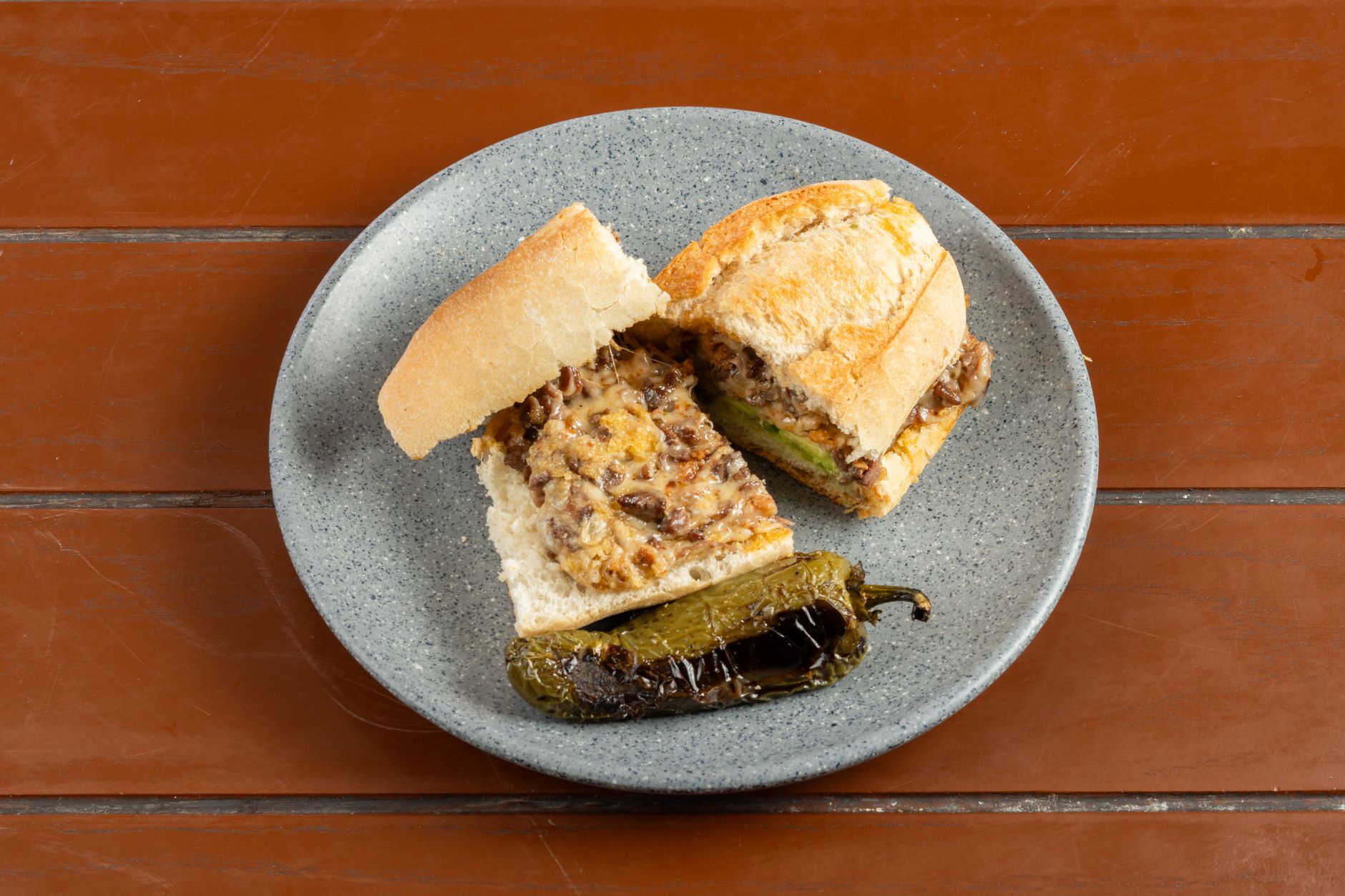
Mabel’s Deli‘s version follows a similar path to tradition: shaved beef, sautéed onions and peppers, provolone, and chipotle mayo on a hoagie roll — a slight departure from Philadelphia’s most purist version with the addition of chipotle mayo, but well within the range of accepted variations most cheesesteak lovers would recognize.
Frequently Asked Questions
Who invented the Philly cheesesteak?
Pat Olivieri, in the 1930s, at a hot dog stand in South Philadelphia that became Pat’s King of Steaks.
What cheese is authentic on a cheesesteak?
Cheez Whiz, American, or provolone are all considered authentic; provolone is generally the choice for the traditional experience.
Are onions and peppers authentic on a cheesesteak?
They’re a common and accepted addition, but not part of the original recipe, which was simply beef and cheese.
What bread should I use for a cheesesteak?
A soft hoagie-style roll; Amoroso rolls are the traditional Philadelphia choice, though any sturdy soft roll works.
Where can I get a Philly cheesesteak near Poncha Springs?
Mabel’s Deli inside Poncha Market serves one for $9.99.
Is Cheez Whiz really used on authentic cheesesteaks?
Yes — it’s one of the three accepted authentic cheese options in Philadelphia, alongside American and provolone, despite its polarizing reputation elsewhere.
What’s the difference between a cheesesteak and a Philly sub?
A cheesesteak specifically features thinly shaved, griddled beef with cheese; a sub can include a much wider range of cold or hot fillings on the same style of roll.
Want the real thing? See our full Mabel’s Deli menu guide before your next stop at Poncha Market.
For more on the sandwich’s origin and Philadelphia’s cheesesteak culture, see Visit Philadelphia’s official tourism site.
Leave a Reply