
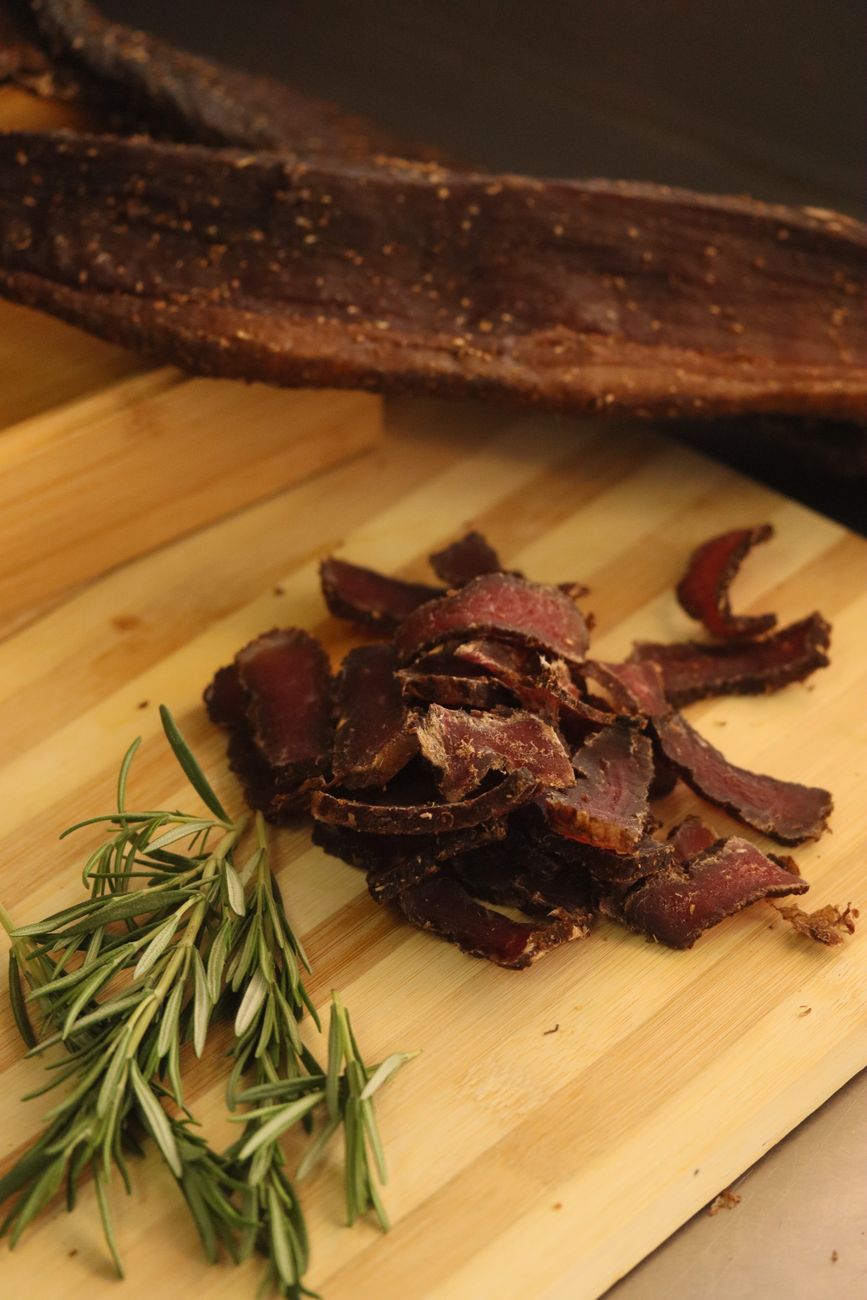
Beef jerky is a staple road trip and convenience store snack, but the drying technique behind it is genuinely ancient, predating refrigeration by centuries as a practical way to preserve meat for long journeys.
Here’s where the technique came from and how modern jerky is actually made.
It’s also a good example of a food that hasn’t changed dramatically in principle over centuries, even as manufacturing methods and seasoning options have expanded considerably.
Origins in Indigenous Preservation Methods
The word “jerky” comes from the Quechua word “ch’arki,” meaning dried, salted meat, used by Indigenous peoples of the Andes long before European contact. Similar drying techniques were independently developed by Indigenous groups across North America, who dried bison and other meats to preserve them without refrigeration.
How Jerky Is Actually Made
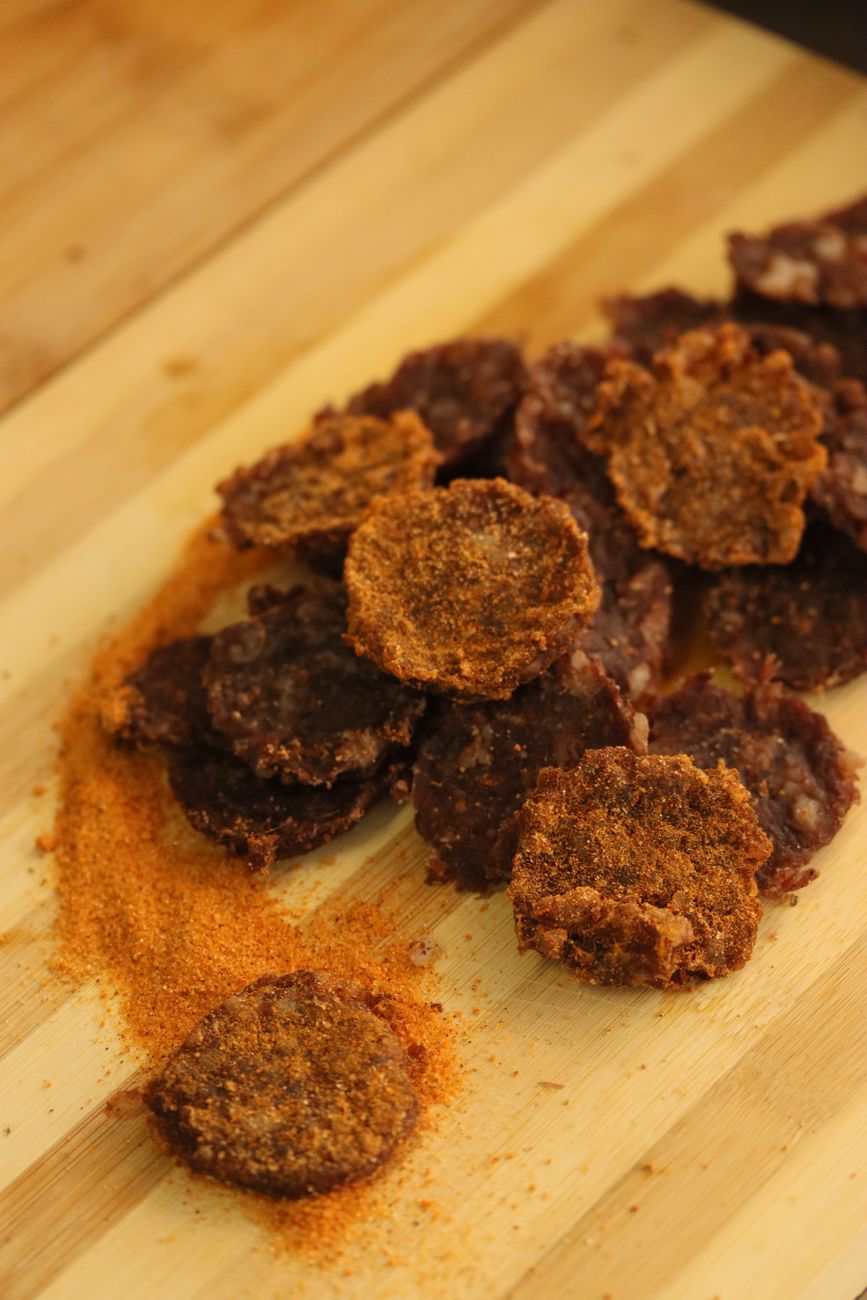
Modern jerky production involves slicing lean meat thinly, marinating it in salt and seasonings, and then drying it slowly at a low temperature until most of the moisture is removed. This process inhibits bacterial growth, which is what allows jerky to stay shelf-stable at room temperature for extended periods without refrigeration.
Why Lean Cuts Matter
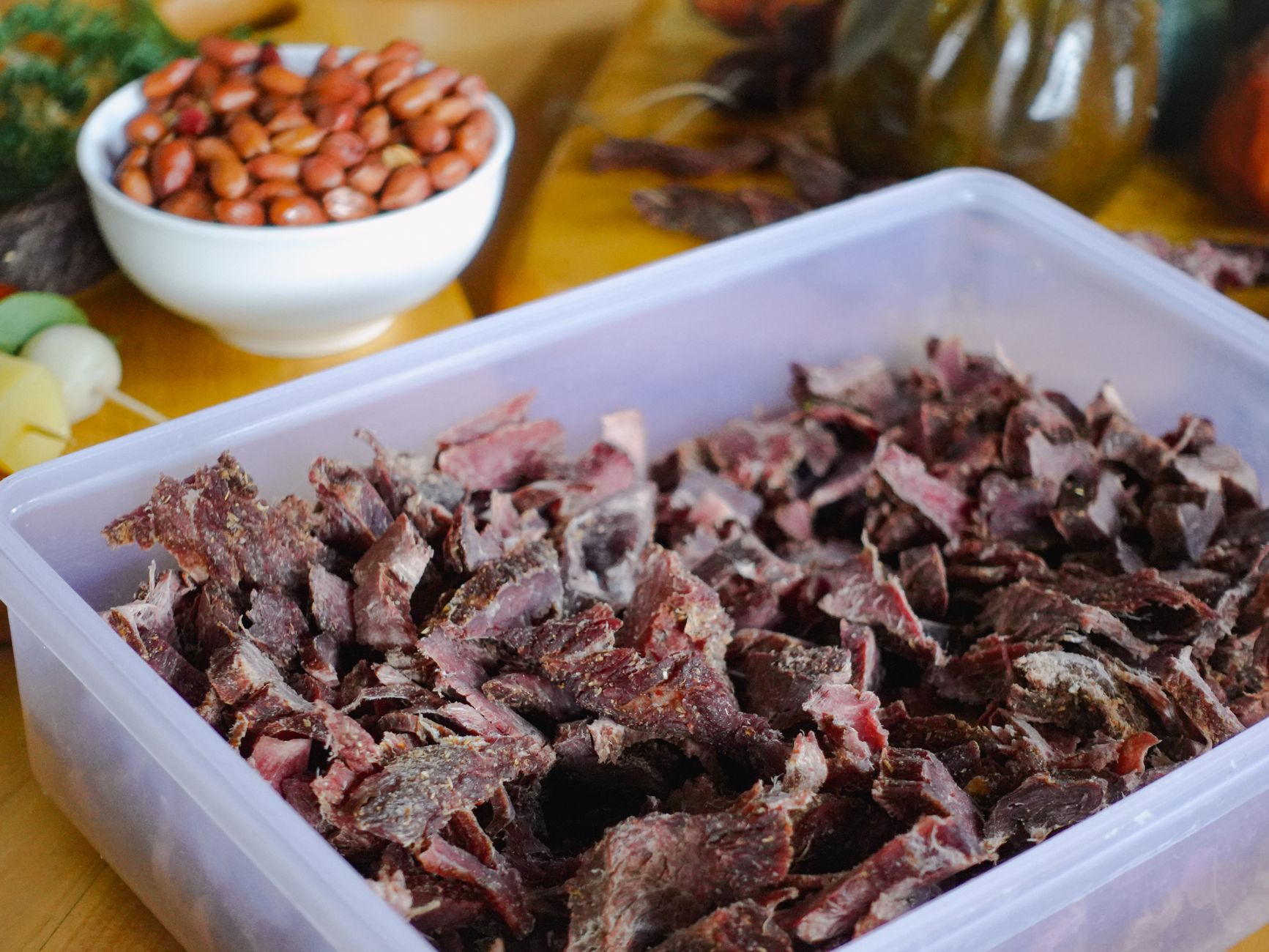
Jerky is almost always made from lean cuts of meat, since fat doesn’t dry the same way muscle tissue does and can turn rancid faster during the drying and storage process. This is a practical, safety-driven choice rather than simply a matter of taste.
A Global Tradition Under Different Names
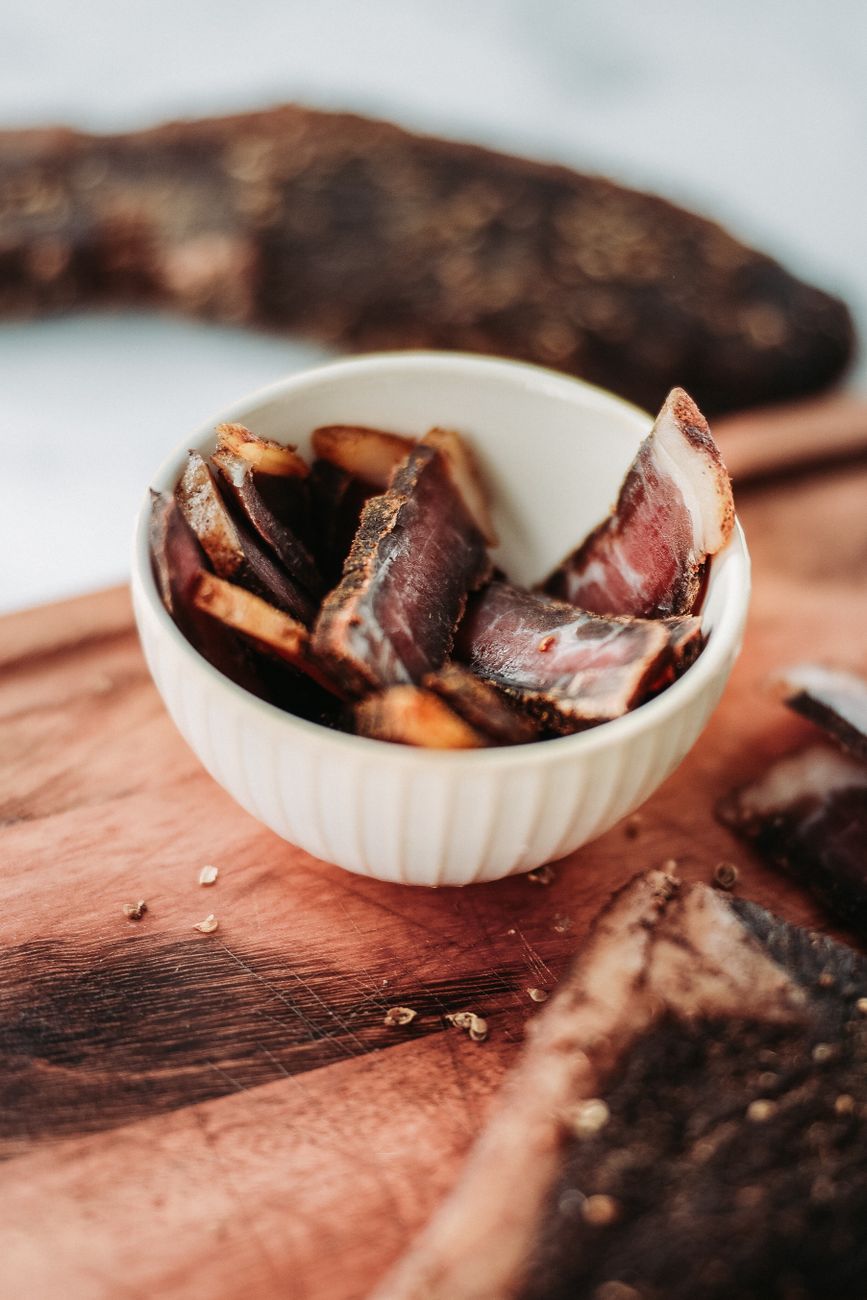
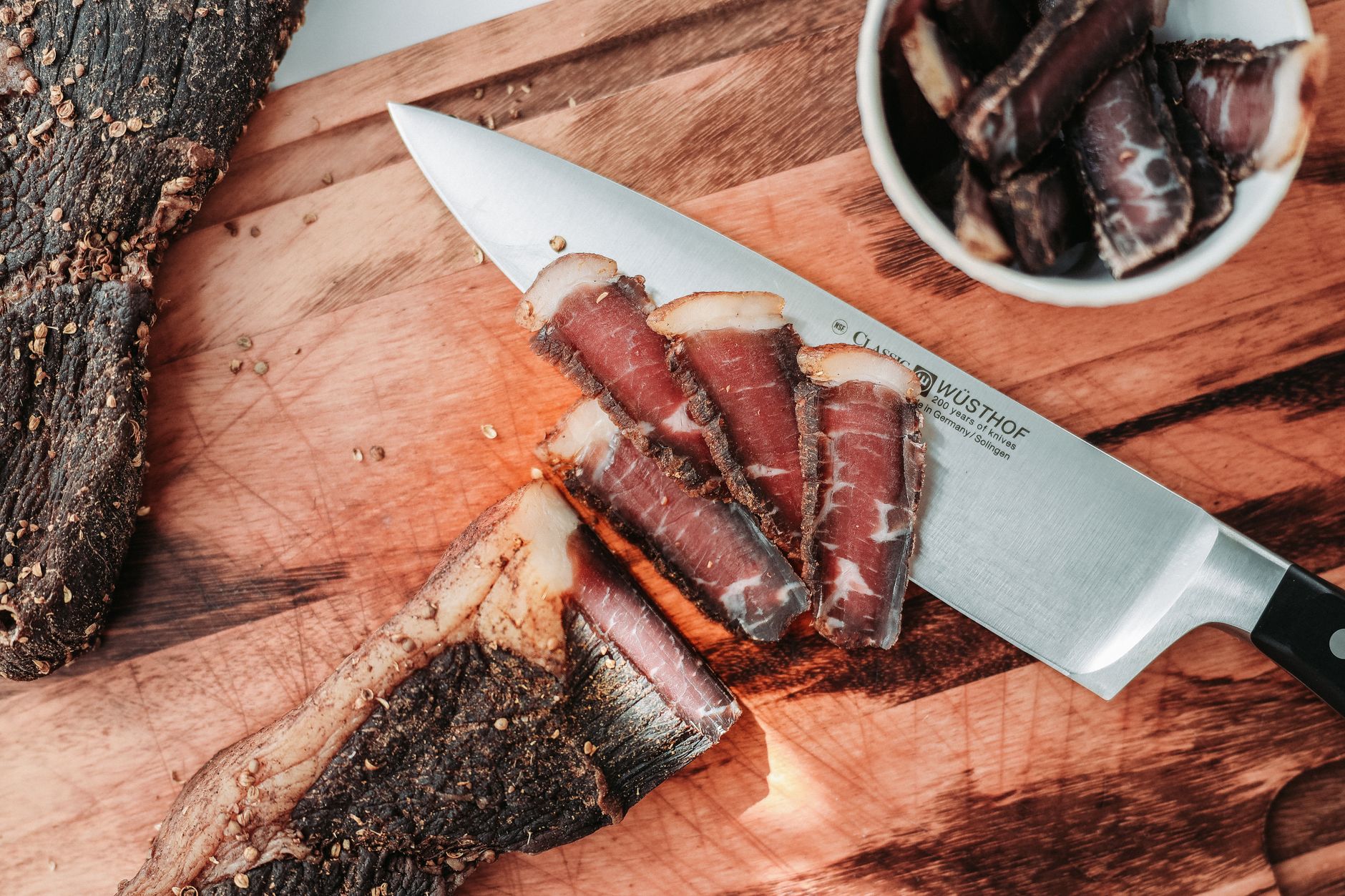
Dried meat snacks exist across many cultures under different names — South African biltong, for instance, is prepared with a vinegar-based marinade and air-dried rather than smoked, giving it a different flavor and texture from typical American beef jerky despite sharing the same basic preservation principle.
Frequently Asked Questions
Where does the word “jerky” come from?
From the Quechua word “ch’arki,” meaning dried, salted meat, used by Indigenous peoples of the Andes.
Why is jerky made from lean meat?
Fat doesn’t dry the same way muscle tissue does and can turn rancid faster, making lean cuts the safer, more practical choice.
How does drying preserve the meat?
Removing most of the moisture inhibits bacterial growth, allowing the meat to stay shelf-stable without refrigeration.
Is biltong the same as beef jerky?
Not exactly — biltong is typically vinegar-marinated and air-dried rather than smoked, giving it a different flavor and texture from typical American jerky.
Is jerky a good road trip snack?
Yes — its shelf stability and protein content make it a practical option; see our road trip snacks guide for more.
How long does commercial beef jerky last unopened?
Typically up to a year, thanks to the low moisture content and preservatives used in commercial production.
Is homemade jerky as shelf-stable as store-bought?
Generally not quite as stable, since it usually lacks the same preservatives; homemade jerky is best refrigerated and eaten within a few weeks.
Stocking up for the road? See our best road trip snacks and drinks guide.
For more on meat preservation history, see Wikipedia.
Leave a Reply