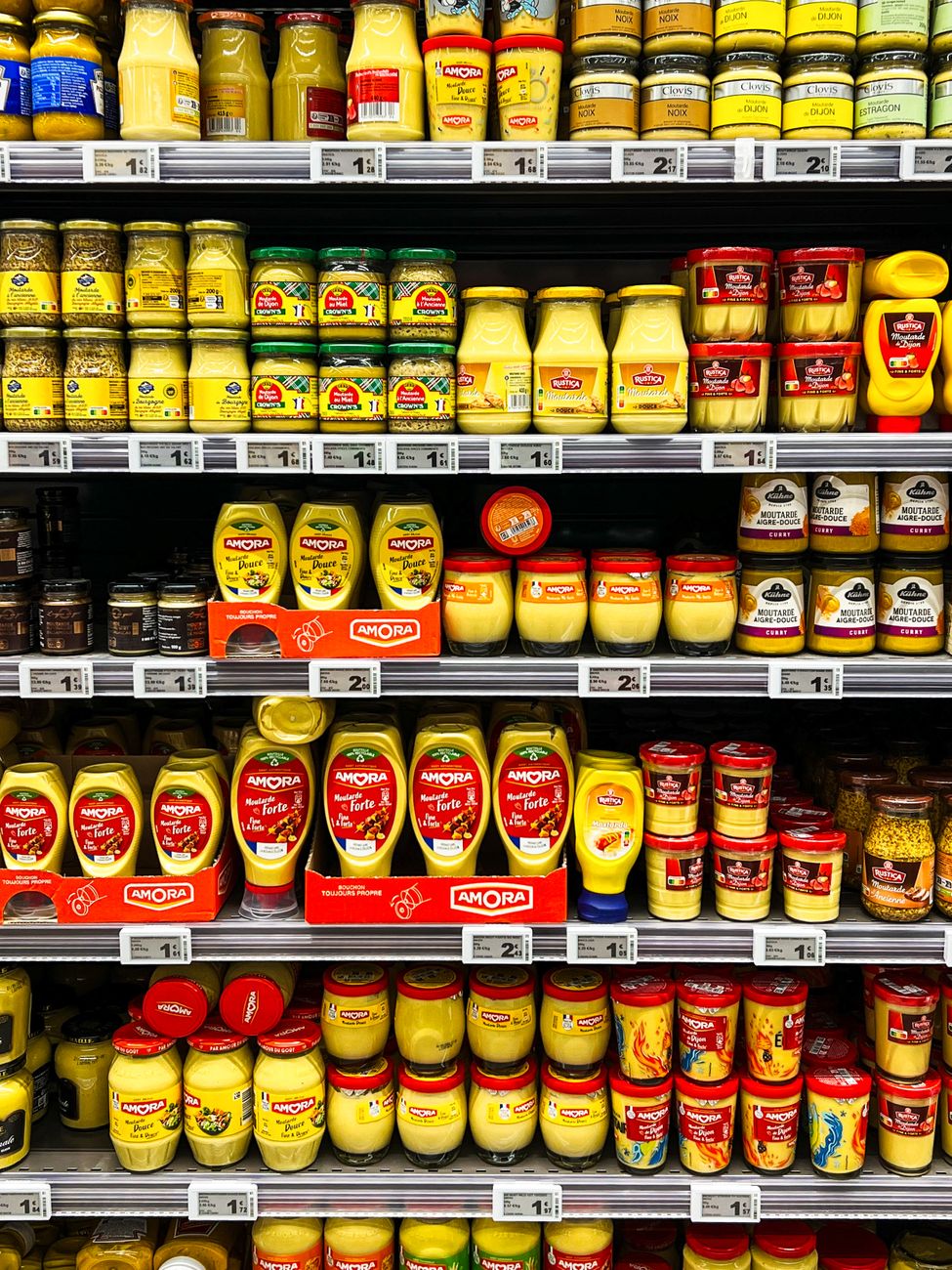
Mustard seems simple until you’re standing in front of a shelf with a dozen varieties, each promising something slightly different. The core ingredient is always mustard seed, but how it’s prepared changes the flavor dramatically.
Here’s a practical breakdown of the three most common types and where each one actually belongs.
Understanding these differences also helps explain why a recipe or a deli sandwich might call for one specific type rather than treating all mustard as interchangeable.
All three start from the same mustard seed, which makes the flavor spread between them genuinely surprising the first time you taste them side by side rather than assuming they’re just variations on the same bottle.
Yellow Mustard
Yellow mustard, the classic American squeeze-bottle condiment, gets its color from turmeric and its mild flavor from a base of ground yellow mustard seeds, vinegar, and water. It’s the mildest of the three, which is exactly why it’s the standard choice on hot dogs and casual sandwiches.
Dijon Mustard
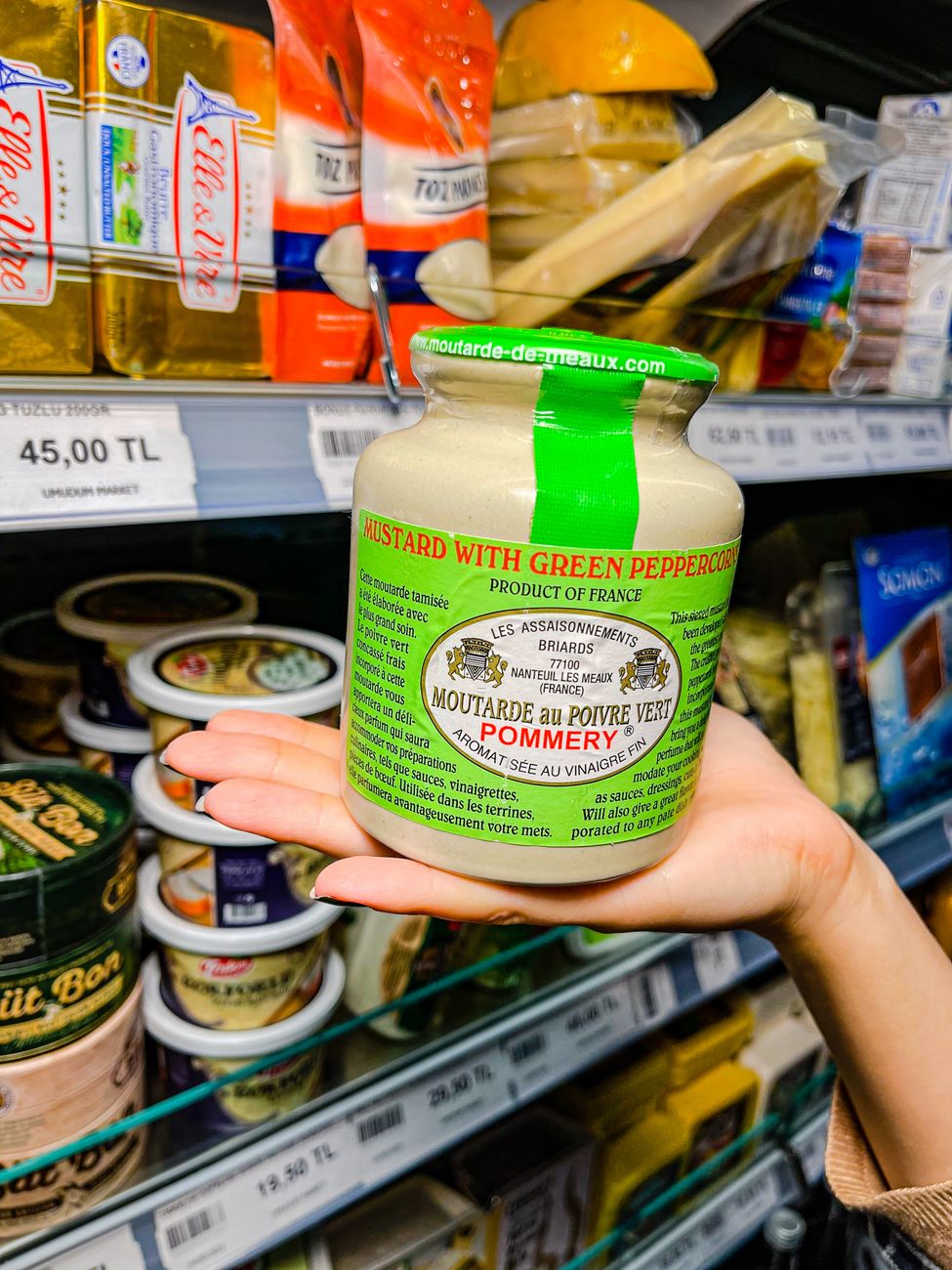
Dijon mustard originated in Dijon, France, and uses brown or black mustard seeds along with white wine or verjuice instead of vinegar, giving it a sharper, more complex flavor than yellow mustard. It’s a common base for vinaigrettes and sauces, not just a standalone condiment.
Spicy Brown Mustard
Spicy brown mustard uses coarsely ground brown mustard seeds with less vinegar than yellow mustard, giving it a grainier texture and more pronounced heat. It’s a common pairing for pastrami, corned beef, and other bold deli meats that can stand up to its stronger flavor.
Which Mustard Suits Which Sandwich
| Mustard | Flavor | Best For |
|---|---|---|
| Yellow | Mild, tangy | Hot dogs, burgers, casual sandwiches |
| Dijon | Sharp, complex | Vinaigrettes, sauces, ham sandwiches |
| Spicy Brown | Bold, grainy | Pastrami, corned beef, bold deli meats |
Frequently Asked Questions
What gives yellow mustard its color?
Turmeric, combined with ground yellow mustard seeds, vinegar, and water.
Is Dijon mustard spicier than yellow mustard?
Yes, generally — Dijon’s brown or black seeds and wine base give it a sharper, more complex bite than mild yellow mustard.
What makes spicy brown mustard grainy?
It’s made from coarsely ground rather than finely ground mustard seeds, leaving visible texture in the finished condiment.
Which mustard is best on a pastrami sandwich?
Spicy brown mustard is the traditional choice, since its bold flavor stands up well to rich, heavily seasoned meats.
Can Dijon mustard be used in salad dressing?
Yes — it’s a common emulsifying base for vinaigrettes, helping oil and vinegar blend smoothly.
Does mustard need to be refrigerated after opening?
Yes, for best quality and flavor, though its vinegar content makes it fairly shelf-stable even at room temperature for a short time.
Can I mix mustard types together?
Yes — combining yellow and spicy brown, for instance, is a common way to build a custom heat level.
Want to try a bold mustard pairing? See our Mabel’s Deli menu guide for deli meat sandwiches.
For more on mustard varieties, see the National Mustard Museum.
Leave a Reply