6250 US Hwy 285, Poncha Springs, CO 81242

Open Daily · Summer 7:30AM–8PM

(719) 539-6089

Facebook Instagram

Category: Road Trip Food Tips

Practical food safety, packing, and breakfast tips specifically for eating well on a road trip.

  • How to Reheat a Sandwich Without Making It Soggy

    How to Reheat a Sandwich Without Making It Soggy

    A leftover sandwich reheated carelessly almost always turns out soggy, unevenly warmed, or both. The good news is that a few specific methods reliably avoid that outcome — it just takes choosing the right one for your situation rather than defaulting to the microwave out of habit.

    Here’s what actually works, ranked roughly from best to most convenient.

    The core problem with reheating any sandwich is that bread, meat, and vegetables all respond differently to heat — the trick is choosing a method that warms everything through without drying out the bread or turning fresh vegetables limp.

    The Oven Method (Best Overall)

    Wrap the sandwich in aluminum foil and place it in an oven preheated to 325°F for around 15 to 20 minutes. This heats the sandwich evenly without drying it out or leaving it soggy, making it the most reliable method if you have the time to wait for an oven to preheat.
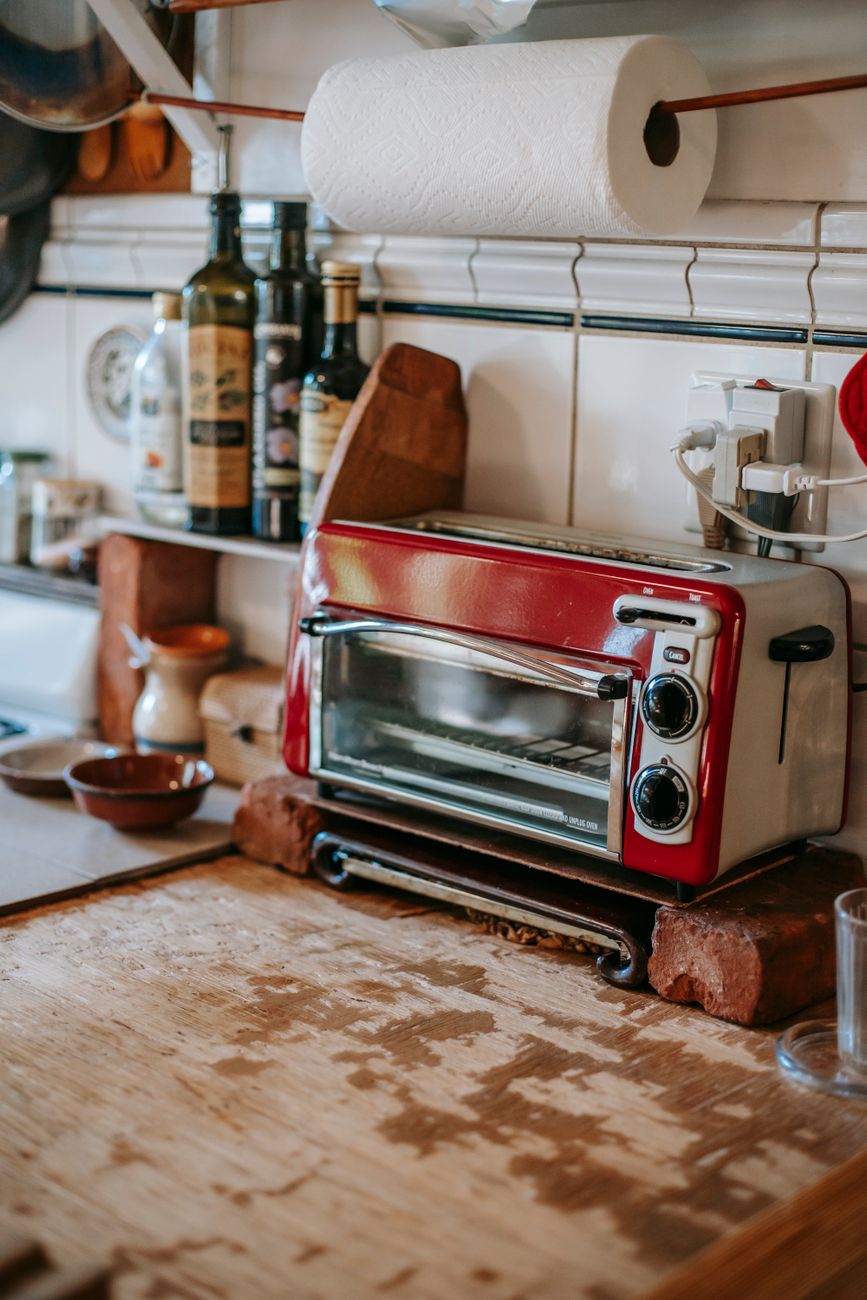
    Part of a kitchen with paper towels and a toaster oven standing on a shelf

    Toaster Oven or Air Fryer (Fast and Reliable)

    A toaster oven or air fryer set to around 350°F, with the sandwich wrapped in foil, reheats in about 10 minutes or less. The hot, circulating air gives the bread an evenly toasted texture that’s genuinely different from, and better than, microwave reheating — a good middle-ground option between the full oven method and the speed of a microwave.
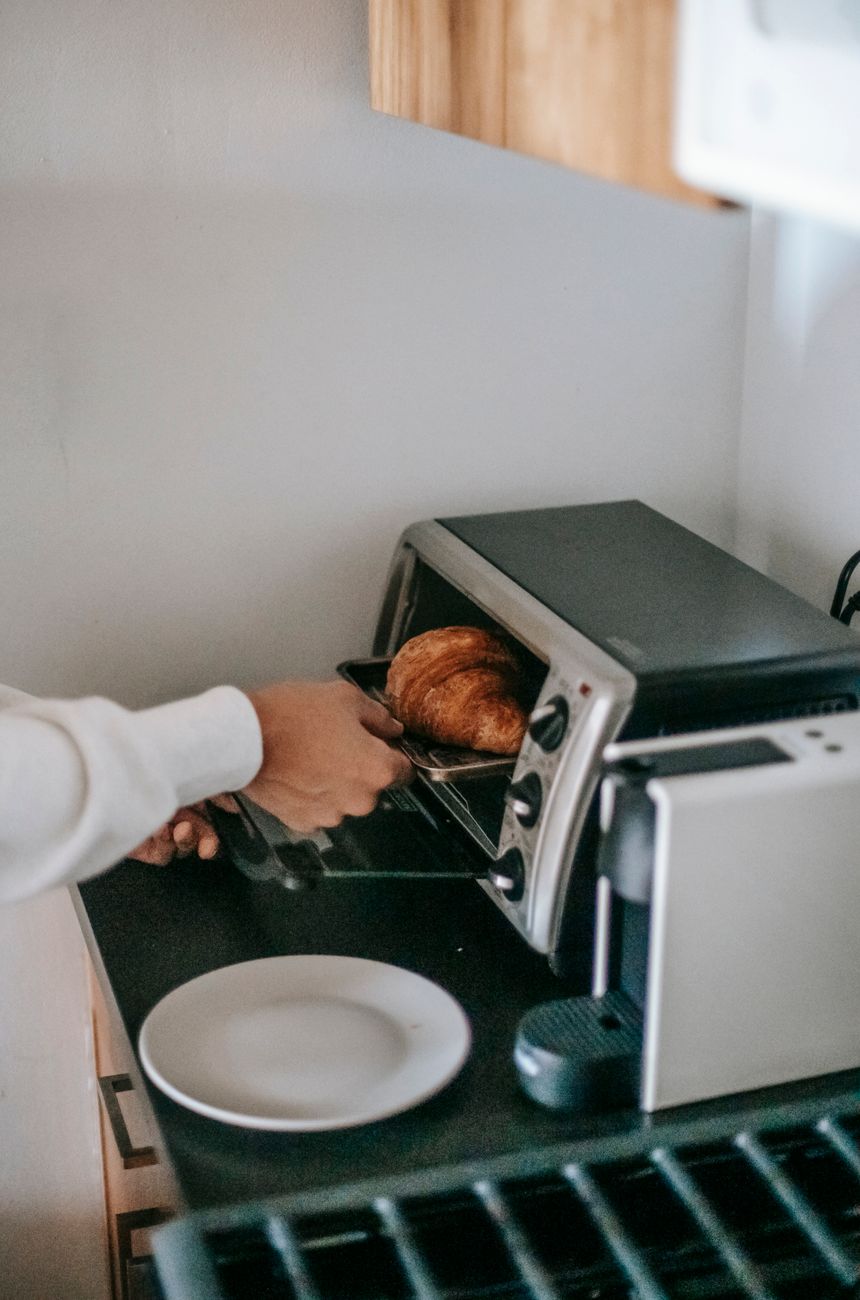
    From above of a person using a microwave oven while heating food

    Microwave (Fastest, Least Ideal)

    If a microwave is genuinely your only option, wrap the sandwich in a slightly damp paper towel rather than reheating it uncovered, and heat in 30-second intervals, checking between each round rather than running one long cycle. This traps just enough moisture to prevent the bread from drying out completely, though the texture still won’t match an oven or toaster oven result.
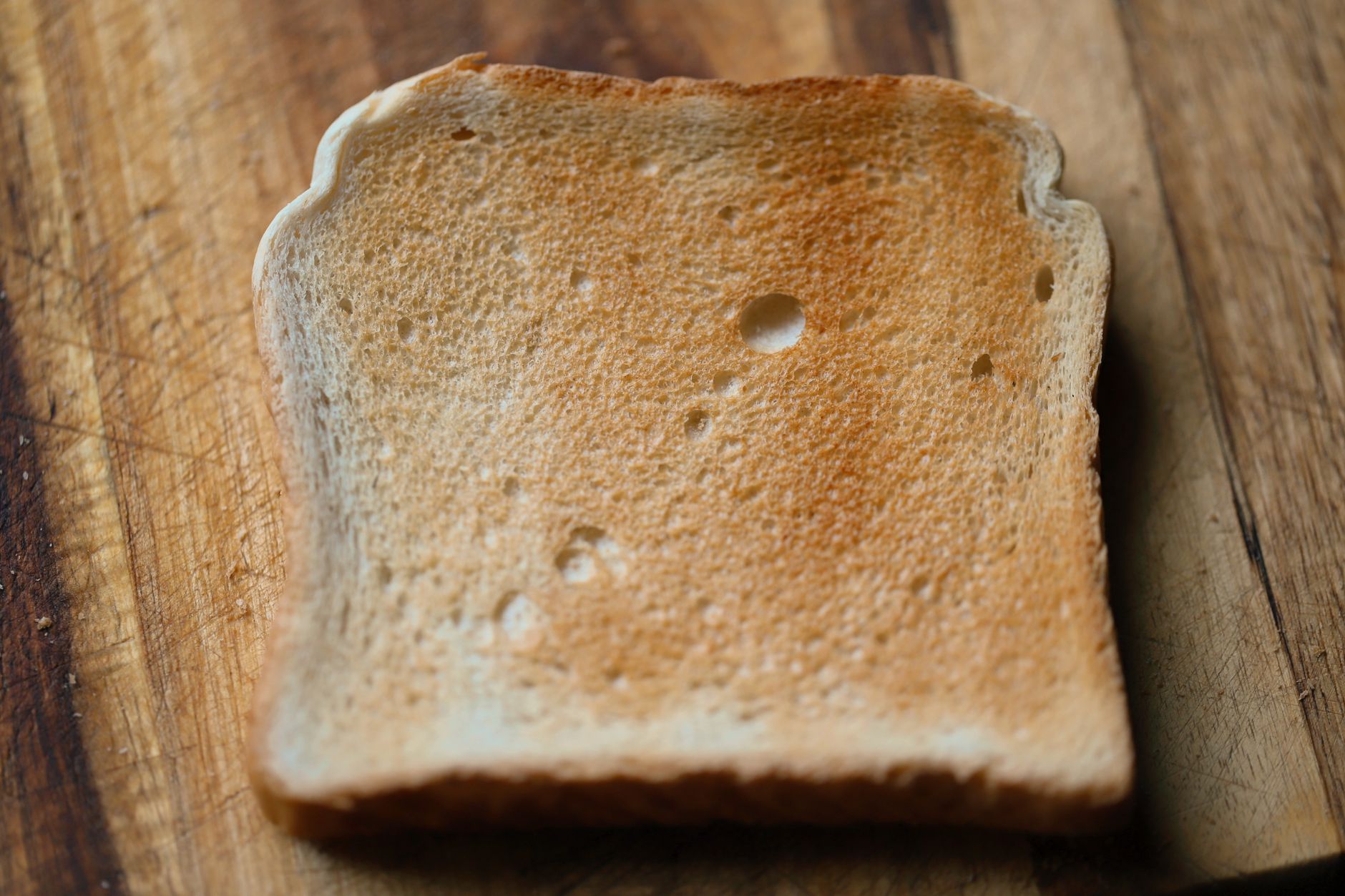
    A detailed view of a single slice of toasted white bread on a wooden surface

    Reheating Different Fillings

    Sandwiches with denser fillings, like a Reuben or a Philly-style sandwich, generally hold up better to reheating than sandwiches built around delicate deli meats and fresh vegetables, which are more prone to drying out or turning rubbery under heat.

    Remove Fresh Ingredients First

    Whatever method you use, removing lettuce, tomato, pickles, and other fresh, moisture-heavy ingredients before reheating and adding them back afterward prevents them from wilting or turning the whole sandwich soggy — a small extra step that meaningfully improves the final result regardless of which heating method you choose.
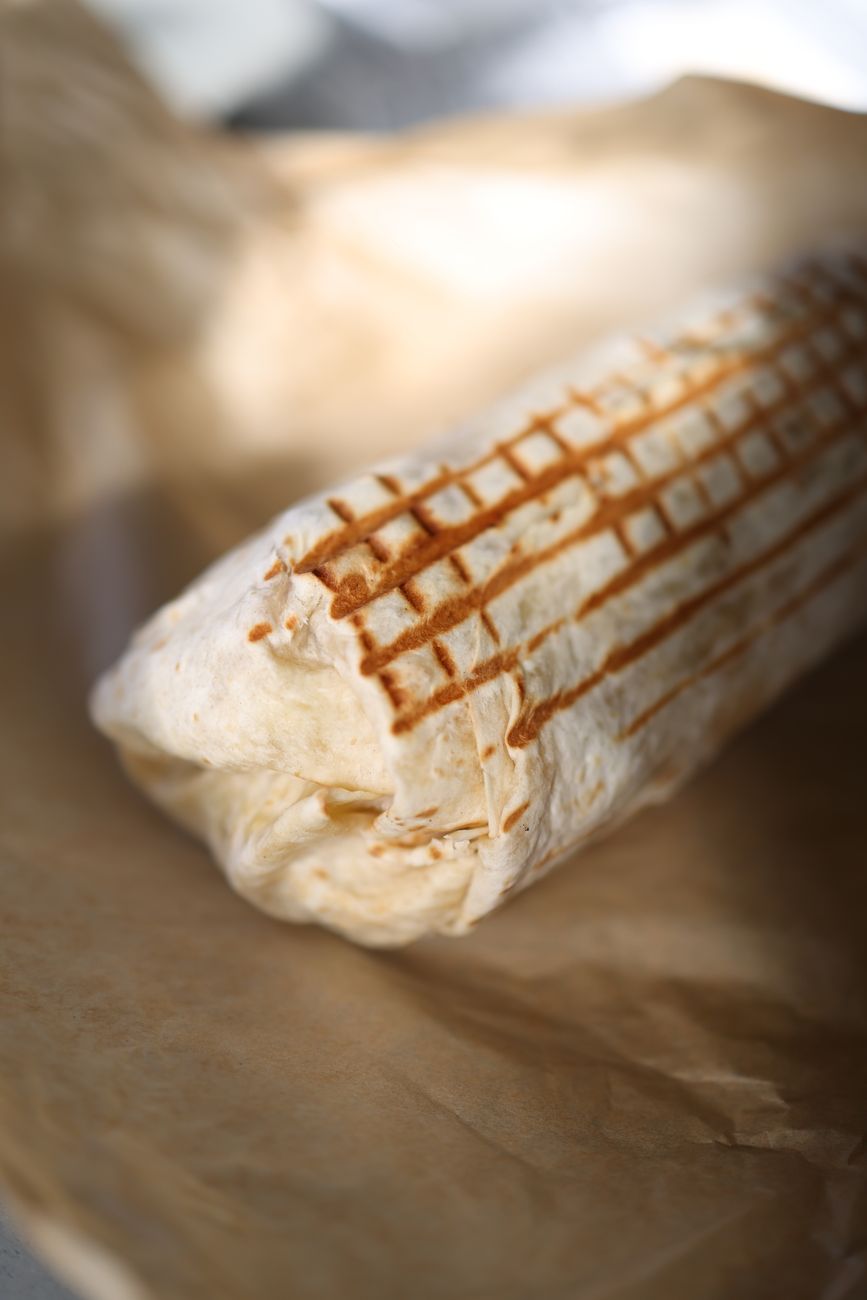
    Close-up of a freshly grilled wrap with toasted marks

    Frequently Asked Questions

    What’s the best way to reheat a sandwich?

    Wrapping it in foil and reheating in an oven at 325°F for 15 to 20 minutes gives the most even result without sogginess.

    Can I reheat a sandwich in the microwave?

    Yes, though it’s the least ideal method; wrapping it in a damp paper towel and heating in short 30-second intervals helps prevent it from drying out.

    Should I remove lettuce and tomato before reheating?

    Yes — fresh, moisture-heavy ingredients should be removed before reheating and added back afterward to avoid wilting or sogginess.

    Is an air fryer good for reheating sandwiches?

    Yes — the circulating hot air gives bread an evenly toasted texture, a genuine improvement over microwave reheating.

    How long does it take to reheat a sandwich in a toaster oven?

    About 10 minutes or less at around 350°F, wrapped in foil.

    Does the type of bread affect how well a sandwich reheats?

    Yes — denser breads like rye generally reheat better than very soft breads, which are more prone to turning gummy or soggy.

    Should I reheat a sandwich with the foil fully sealed or slightly open?

    Leaving the foil slightly open near the end of reheating helps release excess steam, which keeps the bread from turning soggy.

    Prefer it fresh instead? See our Mabel’s Deli menu guide for made-to-order sandwiches.

    For more food reheating guidance, see Real Simple.
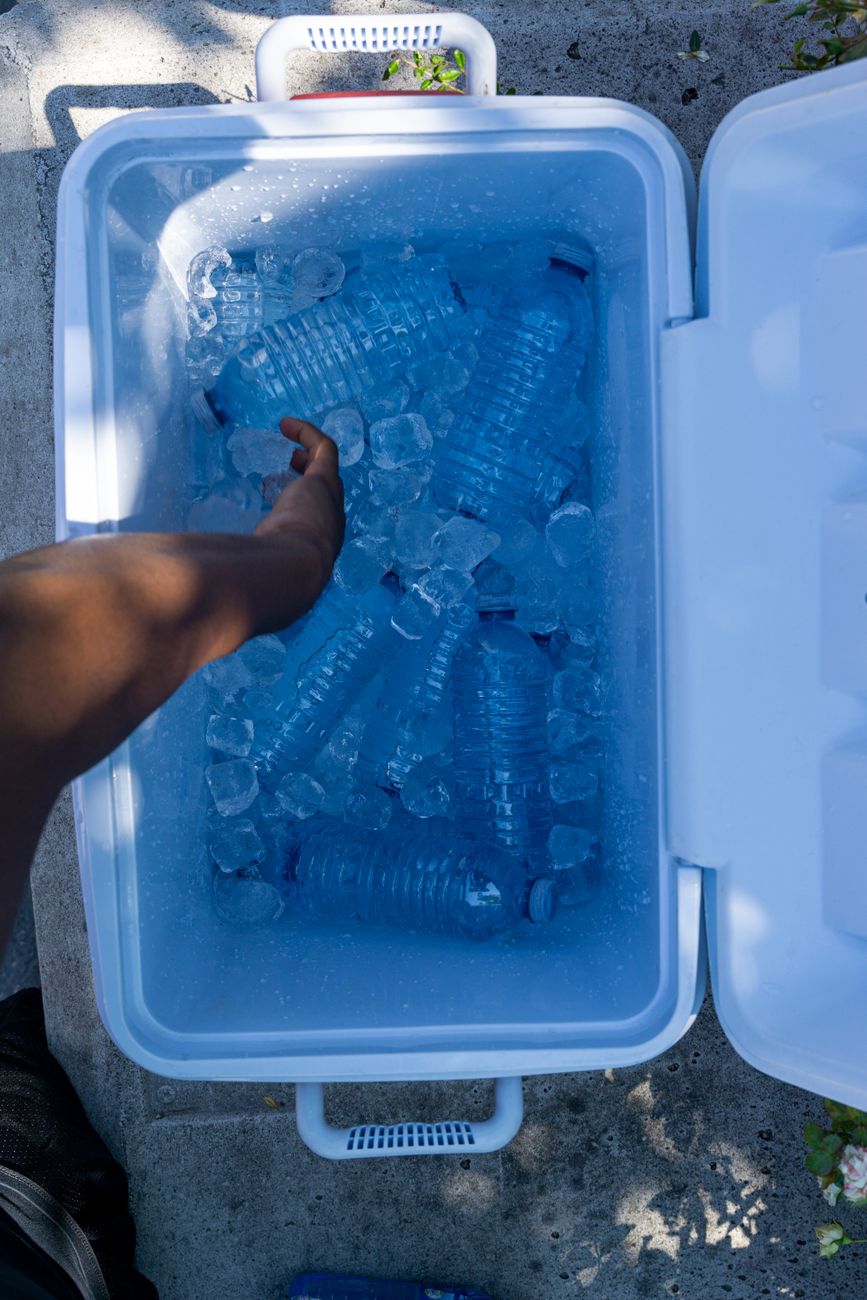
  • How to Pack a Cooler for a Road Trip

    How to Pack a Cooler for a Road Trip

    A well-packed cooler is the difference between food that’s genuinely safe to eat hours into a road trip and food that’s spent too long at an unsafe temperature. Here’s the actual food safety guidance behind packing one properly, not just general tips.

    Most of the real risk in cooler food safety isn’t exotic — it’s simple time and temperature management that’s easy to get sloppy about on a long drive.

    A well-packed cooler also just makes the trip more pleasant — nobody wants to dig through slushy meltwater looking for a cold drink halfway through a long stretch of highway.

    Preparing the Cooler

    Clean the cooler thoroughly before use, inside and out, with mild soap and warm water. About 24 hours before leaving, pre-chill the cooler by filling it with sacrificial bags of ice and water, then dump that out right before actually packing your food and drinks.

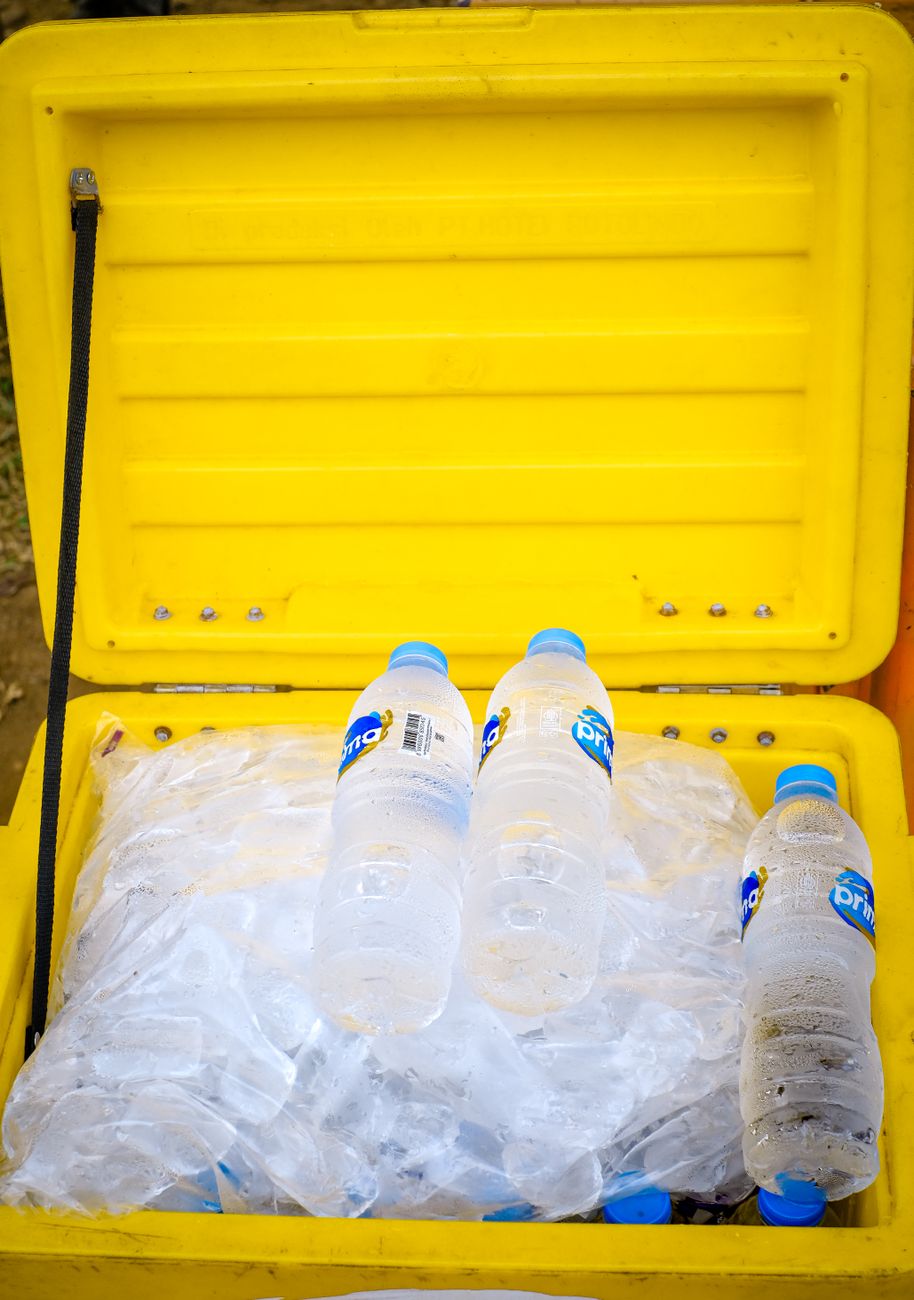
    Bottled water in a yellow cooler with ice, perfect for outdoor summer trips

    Layering Food Properly

    Pack food directly from the refrigerator rather than from room temperature. Layer with raw meat on the bottom (in its own sealed container to avoid cross-contaminating anything else), meals and dairy in the middle, and grab-and-go snacks on top where they’re accessed most often.

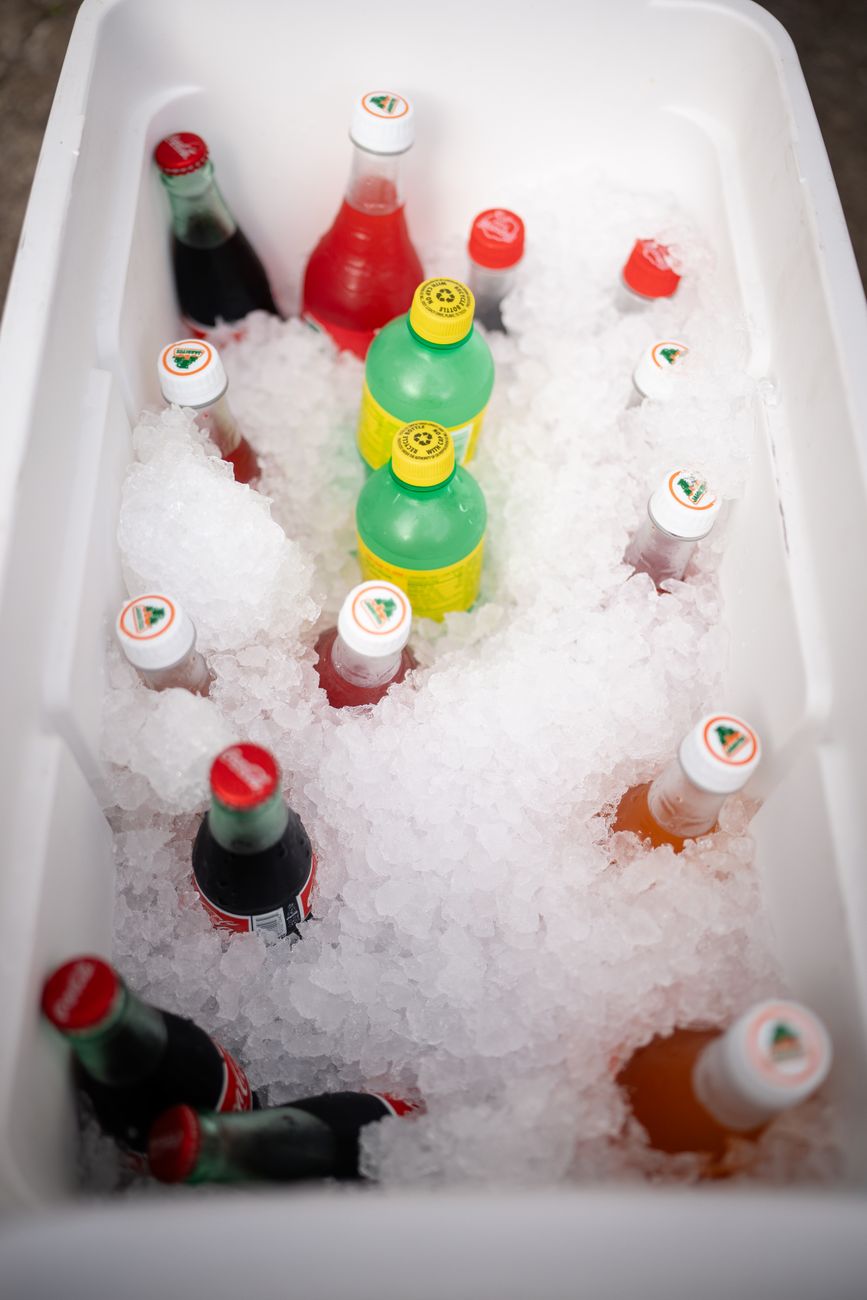
    A variety of beverage bottles chilled on ice inside a white cooler

    Ice and Temperature Control

    Use several inches of ice, or frozen gel packs, frozen juice boxes, or frozen water bottles, which double as both cooling and drinking water once thawed. Solid ice blocks hold cold longer than loose ice cubes or standard gel packs. Keep the cooler out of direct heat, ideally in an air-conditioned car cabin rather than a hot trunk, and open the lid only when necessary to preserve cold air.

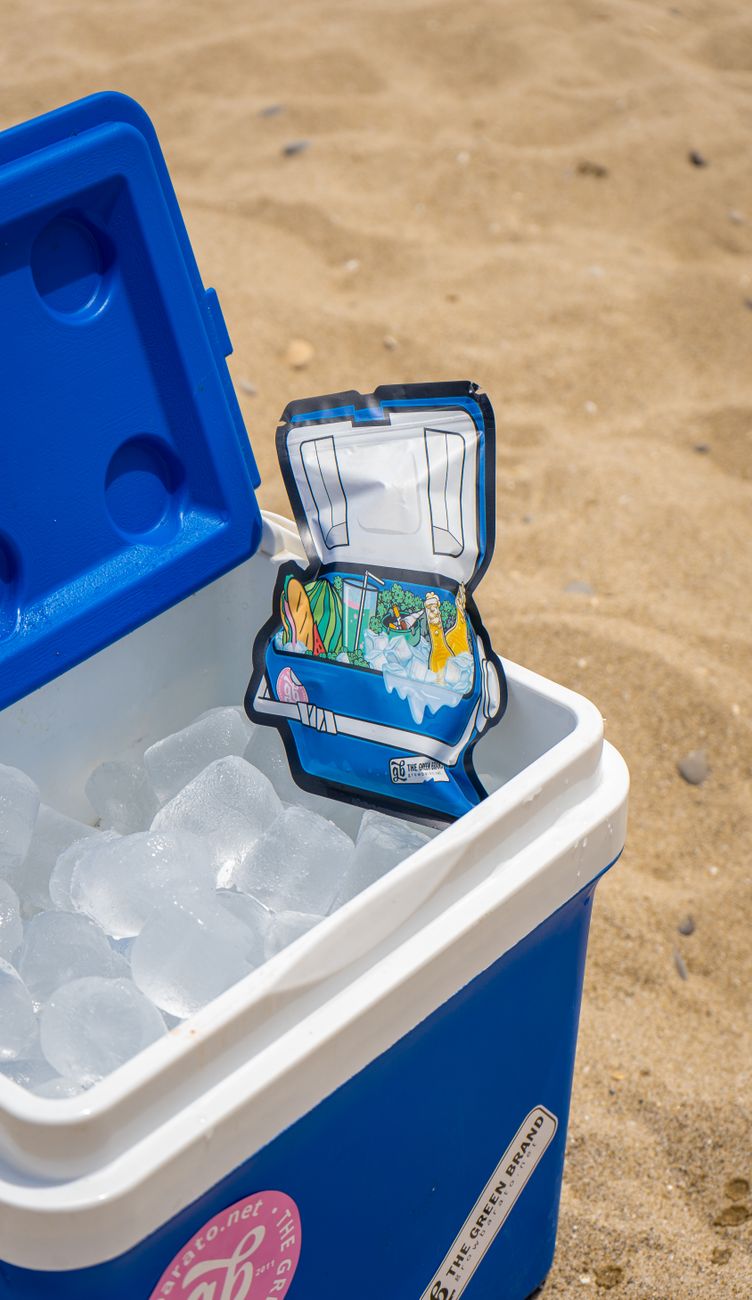
    A blue cooler filled with ice sits open on a sandy beach

    Draining Melted Ice Water

    Check the cooler periodically and drain accumulated meltwater rather than letting food sit submerged in it, since standing water actually transfers cold less efficiently than direct contact with ice or a frozen gel pack.

    The Real Safety Threshold

    Once food temperature rises above 40°F, it’s generally safe for roughly two hours before bacteria begin multiplying to risky levels — and that window shrinks to about one hour if the outside temperature is 90°F or higher. This is the specific number worth keeping in mind rather than a vague “don’t leave it out too long” rule.
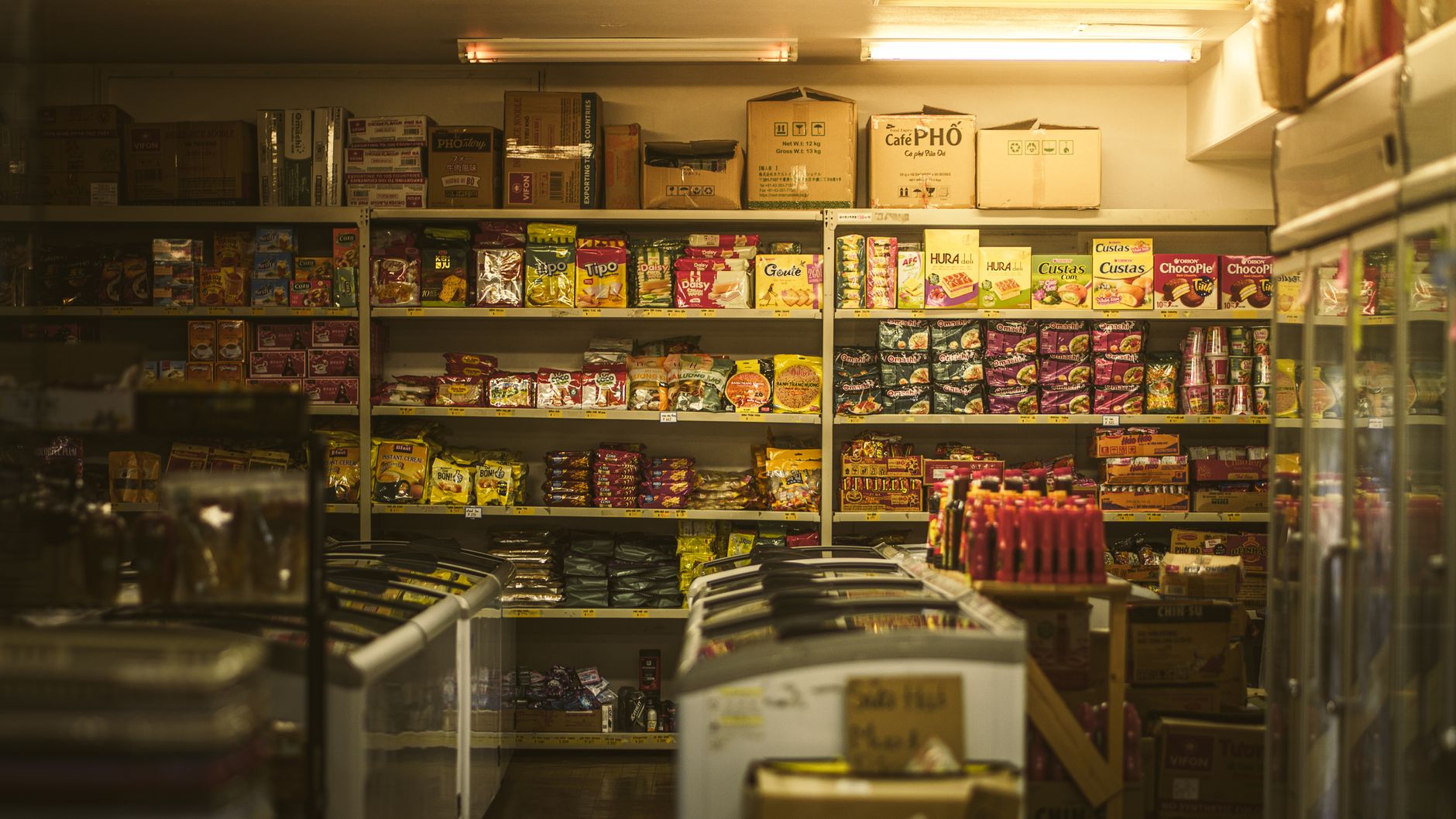
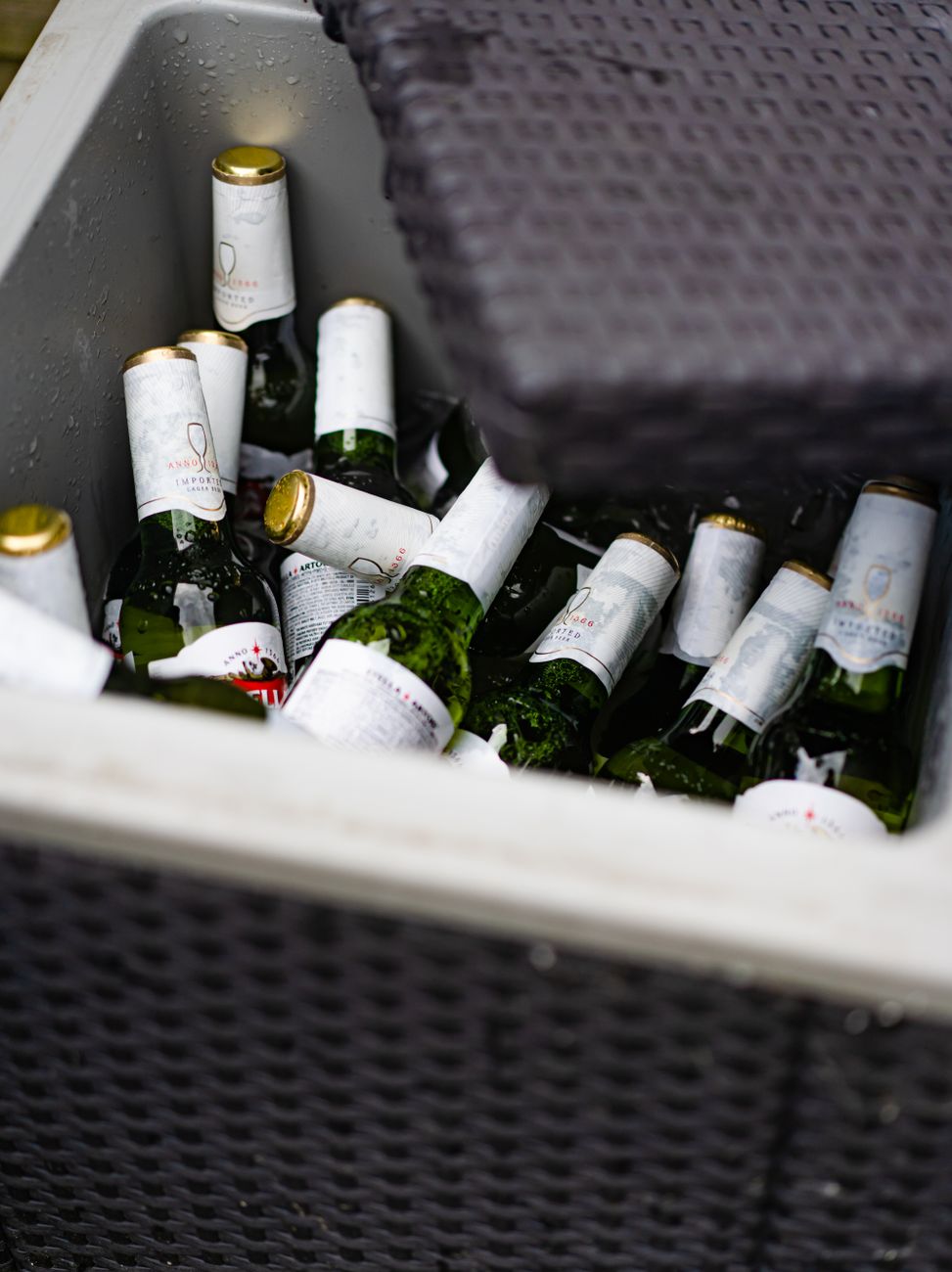
    Ice-cold bottles stored in a wicker cooler, perfect for summer gatherings

    Frequently Asked Questions

    How long is food safe once it warms above 40°F?

    Roughly two hours, or about one hour if the outside temperature is 90°F or above.

    Should I pre-chill a cooler before packing it?

    Yes — filling it with sacrificial ice about 24 hours ahead of time helps it hold cold more effectively once you pack real food and drinks.

    What’s the best way to layer a cooler?

    Raw meat on the bottom in a sealed container, meals and dairy in the middle, and grab-and-go snacks on top.

    Do ice blocks work better than ice cubes?

    Yes — solid blocks melt more slowly and hold cold longer than loose cubes or many standard gel packs.

    Should a cooler stay in the trunk or the cabin?

    The cabin, ideally air-conditioned, rather than a hot trunk, to help maintain a safe internal temperature longer.

    How often should I open the cooler during a road trip?

    As infrequently as possible — each time it’s opened, cold air escapes and warm air replaces it, shortening how long everything inside stays safely cold.

    Should drinks and food be packed in separate coolers?

    Where practical, yes — a separate drinks cooler gets opened far more often and keeps the food cooler’s temperature more stable throughout the trip.

    Stocking up before you go? See what’s available at Poncha Market for ice, drinks, and snacks.

    For detailed food safety temperature guidance, see the University of Minnesota Extension.

  • How to Make a Breakfast Croissant Sandwich at Home

    How to Make a Breakfast Croissant Sandwich at Home

    Swapping a standard bun or English muffin for a buttery croissant turns a basic breakfast sandwich into something that feels considerably more special, without actually requiring more effort. Here’s a simple recipe, along with a make-ahead version for busy mornings.

    Croissants bring a flakiness and richness that plainer breakfast breads don’t have, which is exactly why this version reads as a slight upgrade despite using largely the same core ingredients as any other breakfast sandwich.

    Because bakery croissants are widely available at grocery stores, this recipe doesn’t require any actual baking — just assembly and a short bake to melt the cheese and warm everything through.

    Ingredients

    • 1 bakery croissant, halved
    • 1–2 eggs, fried or scrambled
    • 2 slices bacon, cooked
    • 1 slice sharp cheddar cheese
    • Optional: spinach or other greens
    Delicious croissant sandwiches with fresh pickles and veggies

    Instructions

    1. Preheat an oven or toaster oven to 350°F.
    2. Slice the croissant in half and set aside.
    3. Cook the bacon until crispy, and fry or scramble the eggs until just set.
    4. Place the bottom half of the croissant on a small baking sheet, top with the egg, bacon, cheese, and greens if using.
    5. Add the top half of the croissant and bake for a few minutes until the cheese melts through.
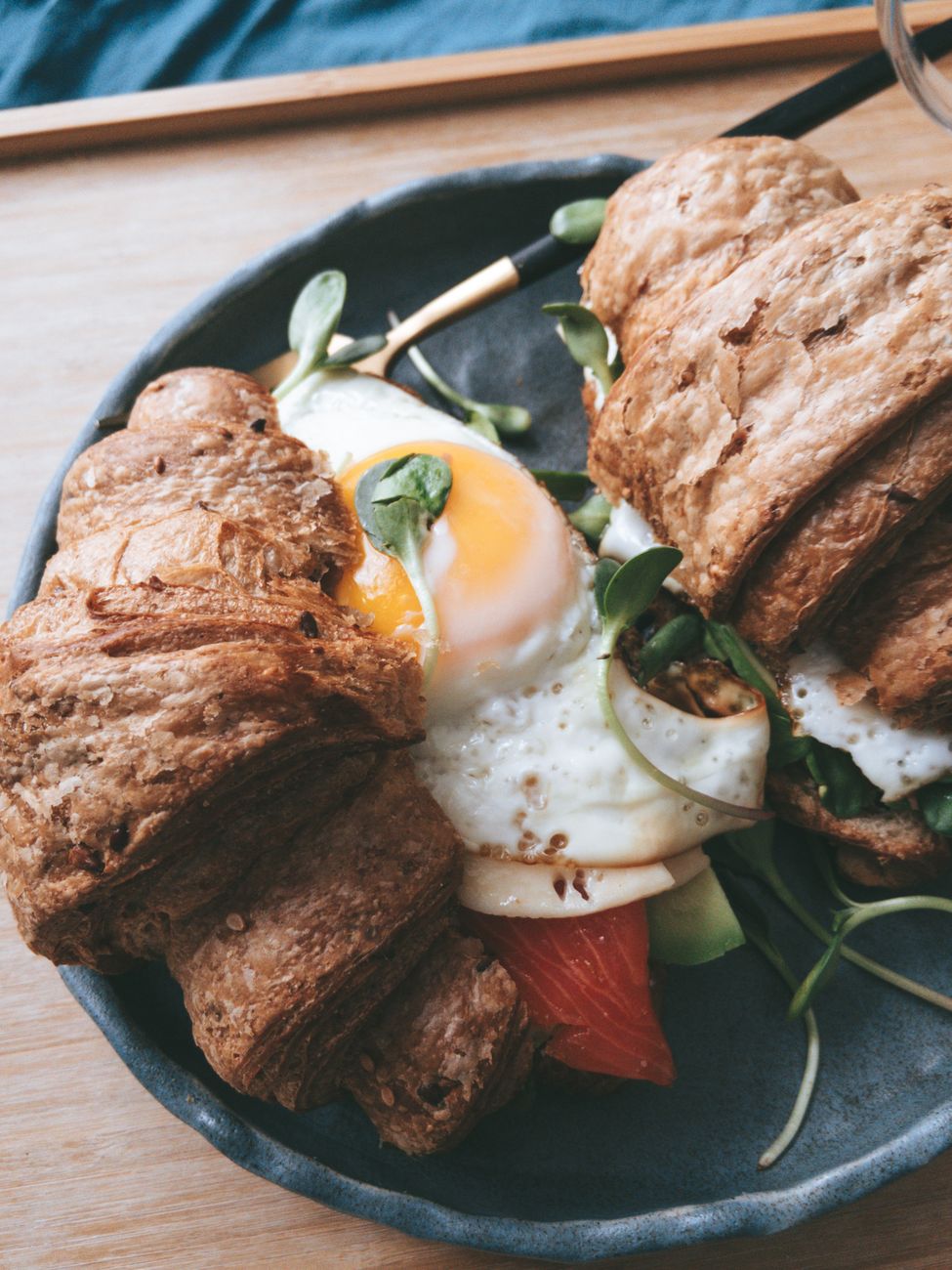
    Close-up of croissants with egg and vegetables

    Choosing a Croissant

    A plain, all-butter croissant works best for this recipe. Croissants with a sweet glaze or filling, like chocolate or almond, tend to clash with savory fillings and are better saved for a dessert pastry instead.

    Variations Worth Trying

    • Ham and cheddar, with fluffy scrambled eggs, for a milder alternative to bacon.
    • A vegetable version with sauteed spinach, tomato, and cheddar for a lighter, meat-free option.
    • Swapping cheddar for Swiss or provolone for a different flavor profile.
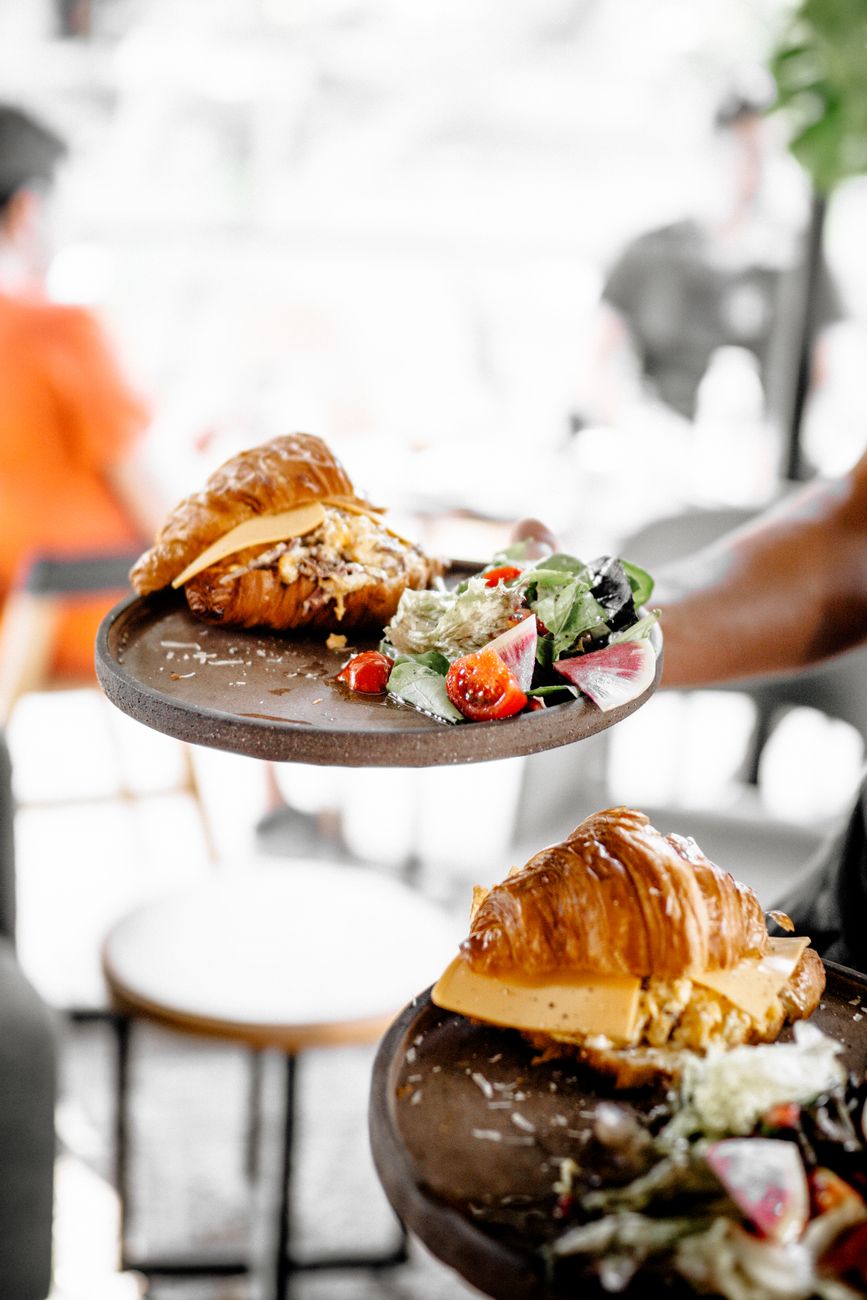
    Appetizing croissant sandwiches served with fresh salad

    Make-Ahead and Freezer Instructions

    These sandwiches freeze well, which makes them genuinely practical for busy mornings rather than a once-in-a-while treat. Assemble the sandwiches fully, wrap individually, and freeze; reheat directly from frozen in the microwave for a couple of minutes when you’re ready to eat.

    Two croissants filled with ham and melted cheese on plates

    Frequently Asked Questions

    Can I freeze croissant breakfast sandwiches?

    Yes — assemble them fully, wrap individually, and freeze; reheat from frozen in the microwave for a couple of minutes.

    What cheese works best on a croissant breakfast sandwich?

    Sharp cheddar is common, though Swiss or provolone both work well as alternatives.

    Can I make a vegetarian version?

    Yes — sauteed spinach, tomato, and cheese make a satisfying meat-free version.

    Should I toast the croissant before assembling?

    A brief bake after assembly, rather than toasting beforehand, is generally enough to warm everything through and melt the cheese.

    How is this different from a standard breakfast sandwich?

    The croissant’s buttery, flaky texture gives it a richer feel than a standard bun or English muffin, even with largely the same fillings.

    Can I use a plain croissant or does it need to be a bakery-style one?

    A standard bakery or grocery store croissant works fine; the main thing to avoid is one that’s overly sweet or filled, which can clash with savory fillings.

    What sides go well with a croissant breakfast sandwich?

    Fresh fruit or simple roasted potatoes are common, light pairings that don’t compete with the sandwich’s richness.

    Want the classic version instead? See our history of the breakfast sandwich and Mabel’s Deli menu guide.

    For more breakfast sandwich variations, see Food & Wine.

  • How to Brew Better Coffee on a Road Trip

    How to Brew Better Coffee on a Road Trip

    Gas station coffee gets a bad reputation, some of it deserved, but a genuinely good cup on the road doesn’t require much more equipment than a bit of planning. Whether you’re topping off at Poncha Market or brewing your own before a long stretch of driving, here’s how to actually do it well.

    Several portable brewing methods travel well and produce a noticeably better result than relying entirely on whatever’s already brewed at a convenience store counter.

    None of this requires an elaborate setup, either — most of these methods pack into a single bag alongside a bag of beans and take up barely more space than a phone charger and a set of cables.

    Portable Brewing Methods

    An AeroPress is lightweight, nearly indestructible, and brews a full-bodied cup in 3 to 4 minutes, making it a strong choice for car trips and camping alike. A percolator or moka pot works well over a campfire or stovetop and handles larger groups better than a single-serving method. Cold brew, made ahead using a French press, is a good option if you don’t have access to hot water but do have a cooler or refrigerator to store it in.

    From above of a person pouring aromatic hot coffee

    Beans and Grinding

    Pre-ground coffee loses flavor faster than whole beans, since more surface area is exposed to oxygen. Bringing whole beans and a small portable grinder, and grinding right before brewing, makes a genuinely noticeable difference in freshness compared to coffee ground days or weeks earlier.

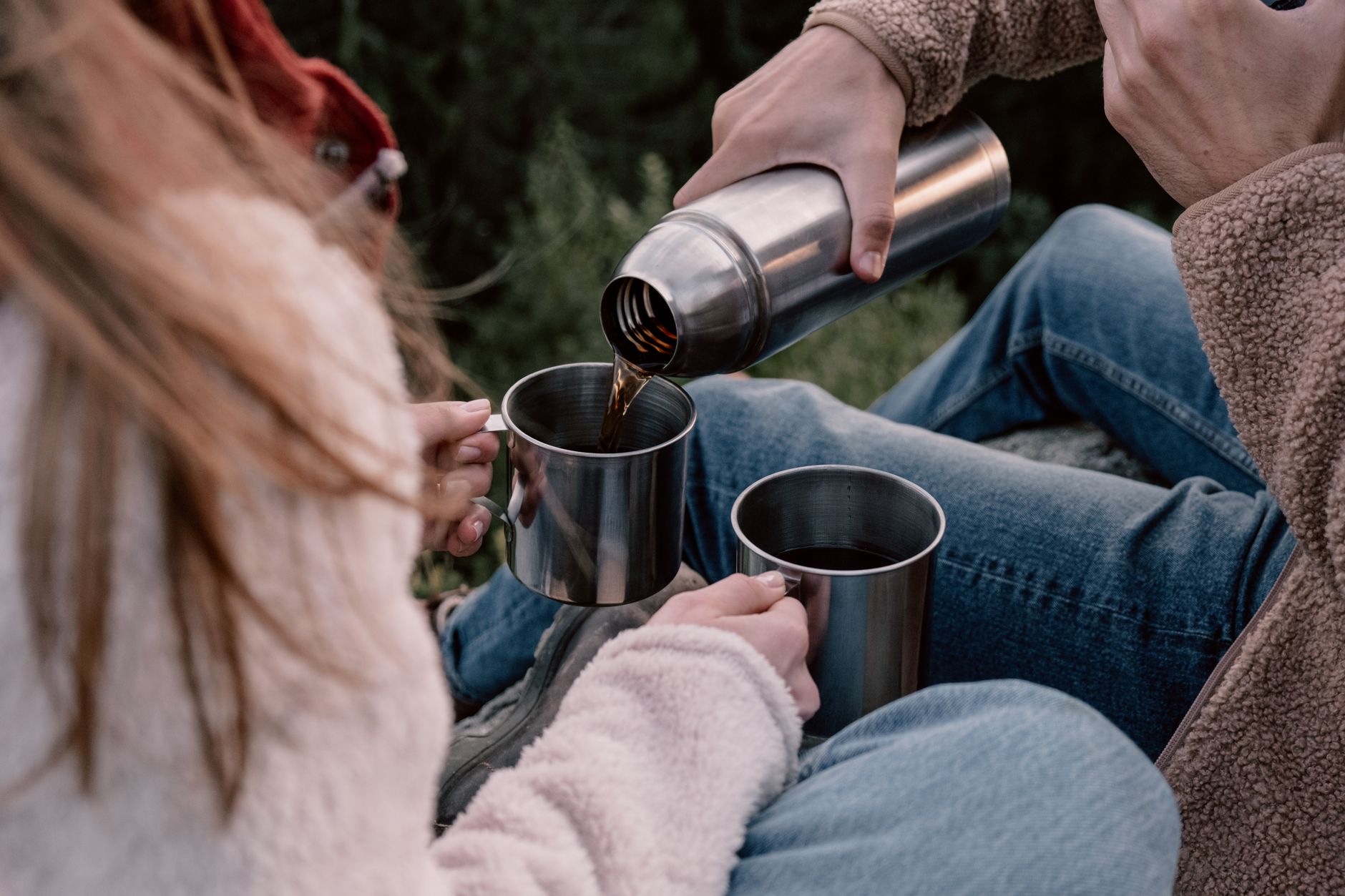
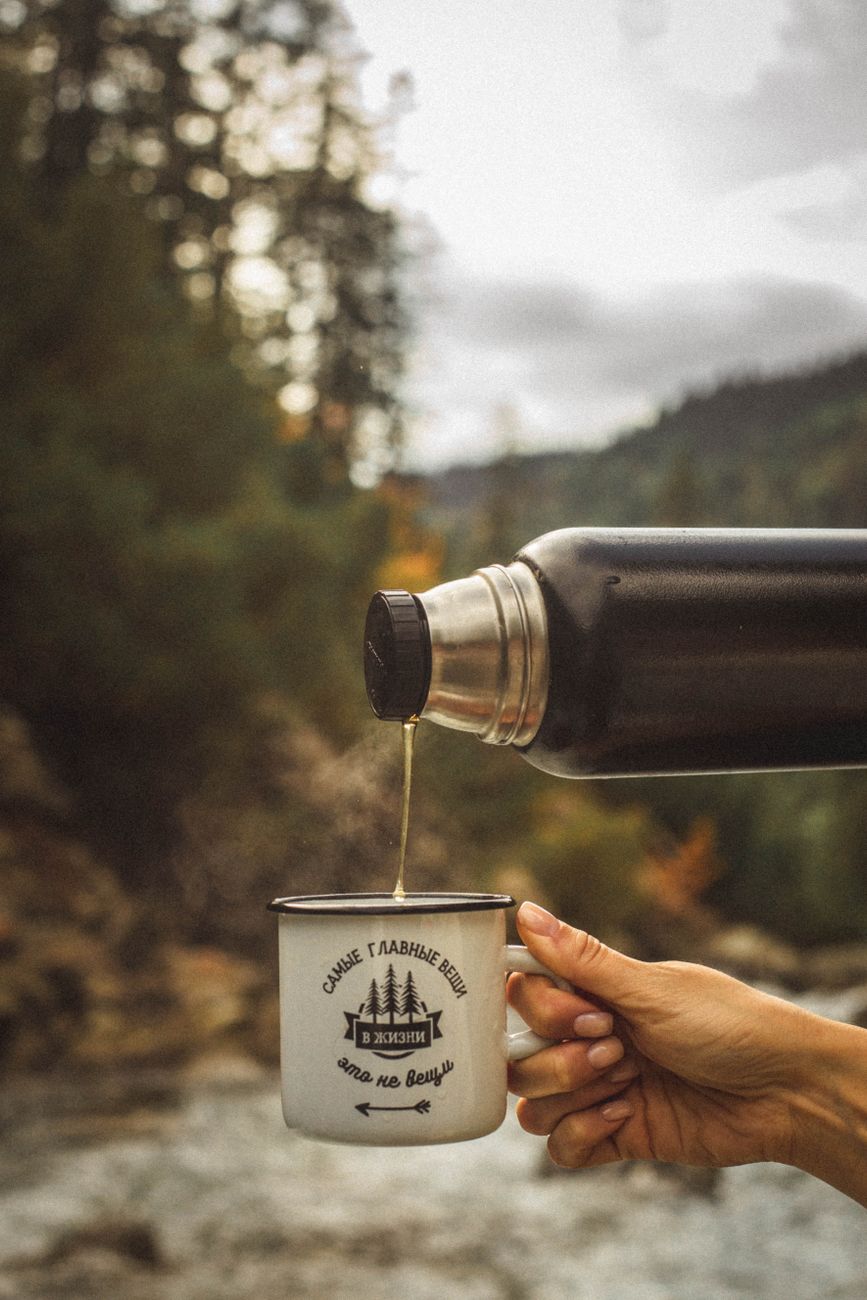
    A hand pours coffee from a thermos into a mug in an outdoor forest setting

    Storage Tips

    Treat coffee beans like a perishable ingredient rather than a shelf-stable pantry item — limiting oxygen exposure with an airtight container preserves freshness considerably longer than a loosely closed bag. This matters more on a longer trip where beans might sit in a car for several days between uses.

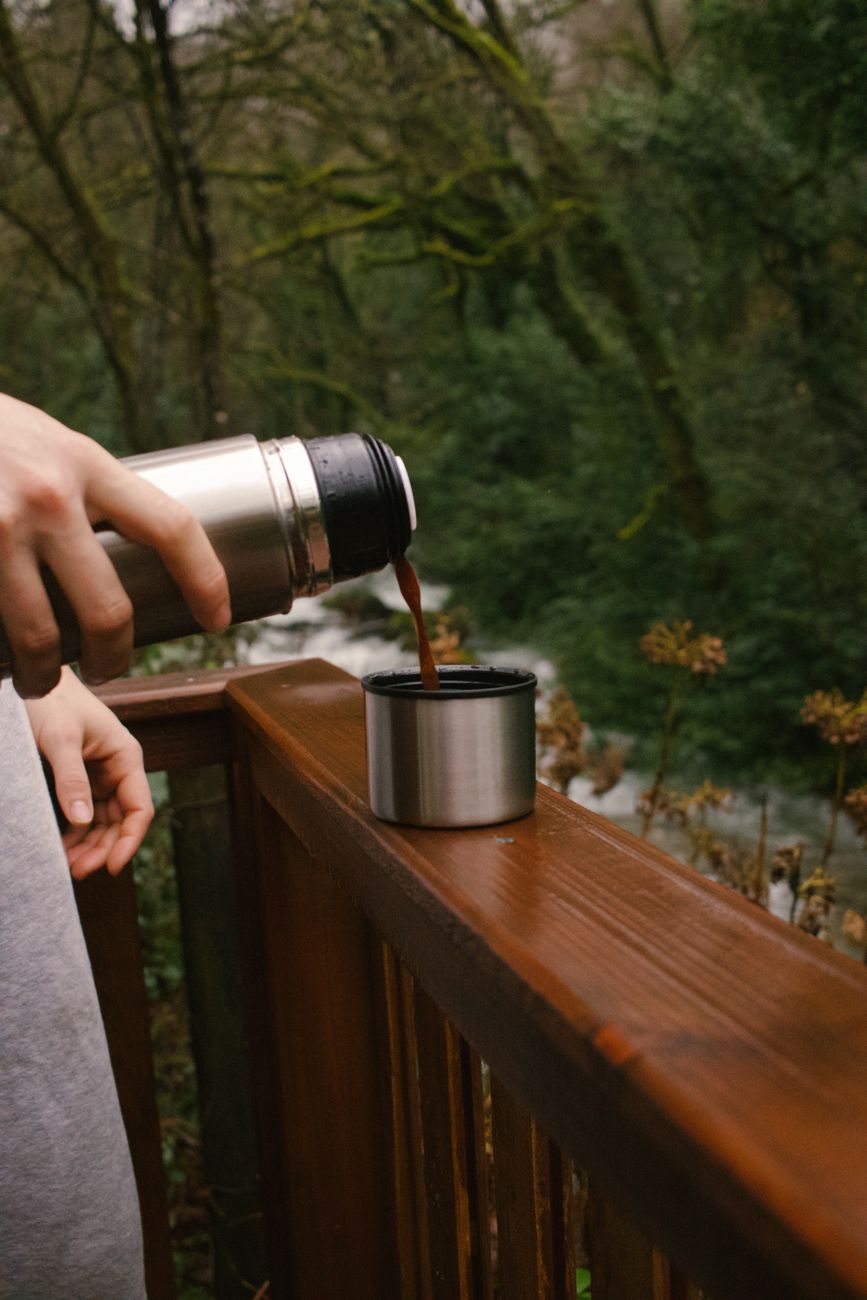
    Person pouring coffee from a thermos in a serene outdoor wooded area

    A Simple Rule for Better Road Trip Coffee

    Pour your cup immediately after brewing rather than letting it sit in a carafe or pot for an extended period, since coffee continues to change flavor, generally for the worse, the longer it sits on heat after brewing. This is a big part of why gas station pot coffee, which may have been sitting for hours, tastes noticeably worse than a fresh cup brewed on the spot.

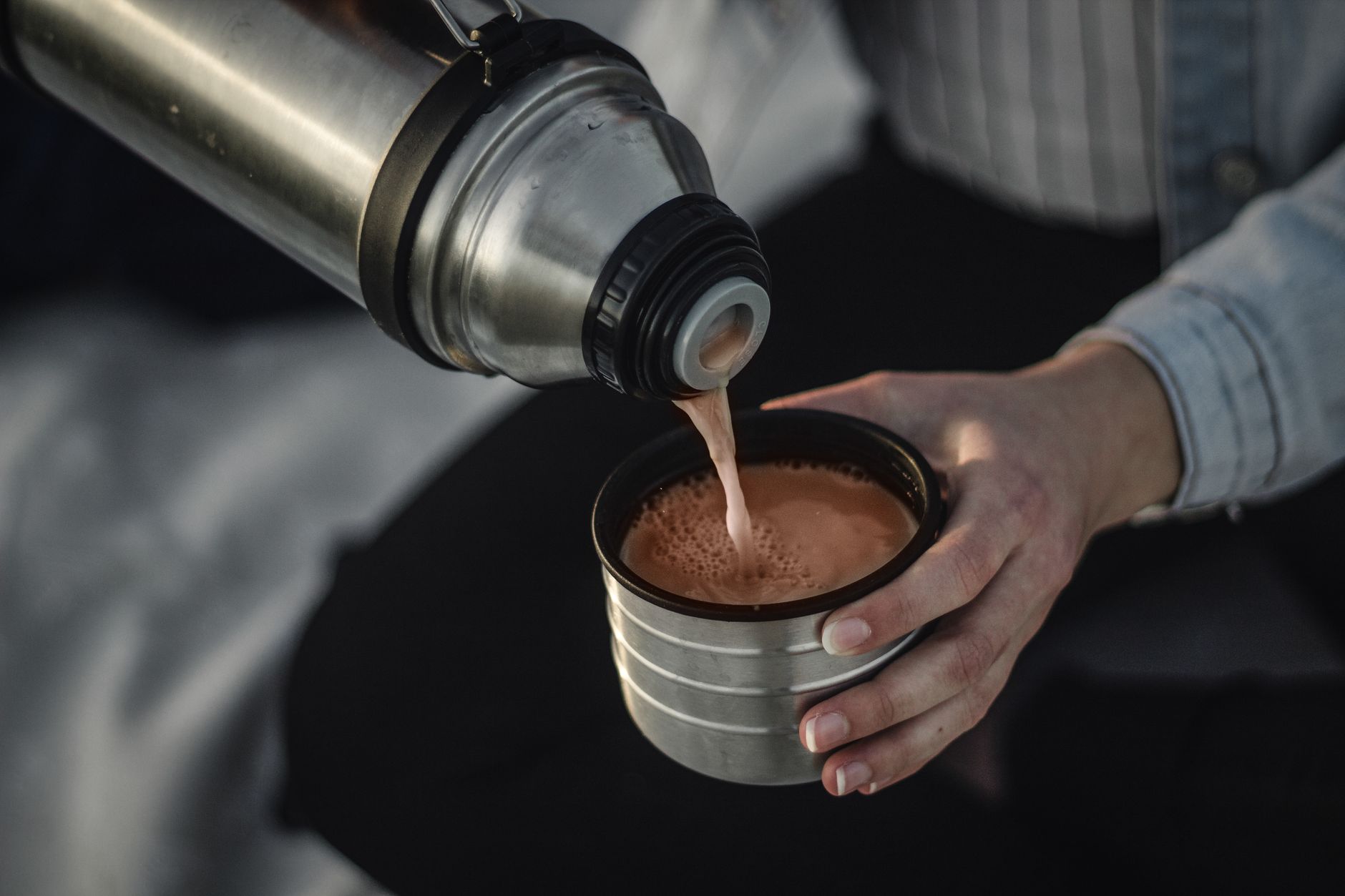
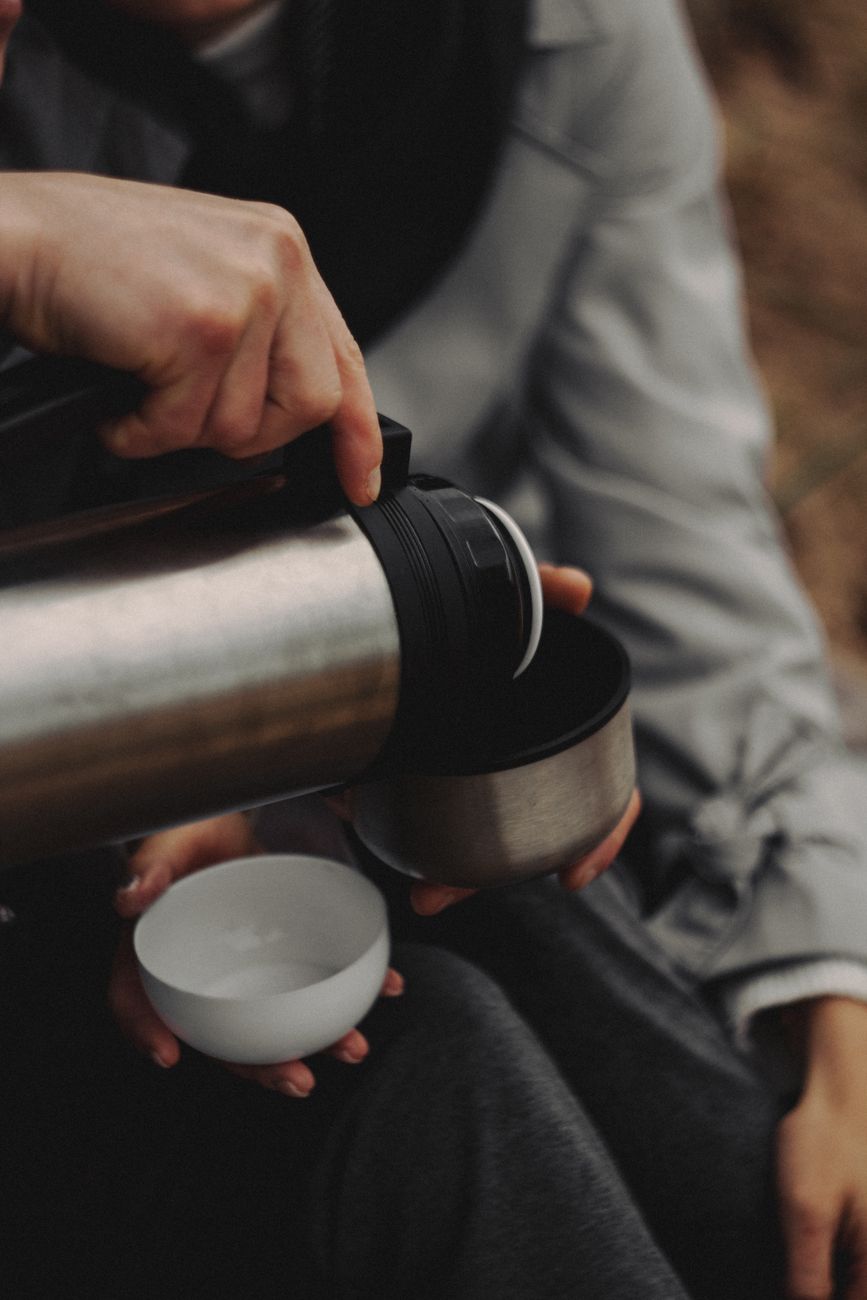
    A person pouring a hot beverage into a cup from a thermos

    Frequently Asked Questions

    What’s the best portable coffee brewer for road trips?

    An AeroPress is a popular choice for its durability and quick brew time, though a percolator or moka pot works better for larger groups.

    Should I bring pre-ground coffee on a road trip?

    Whole beans ground right before brewing hold flavor considerably better than pre-ground coffee that’s been exposed to air for days.

    Why does gas station coffee often taste stale?

    It’s frequently been sitting on a warmer for an extended period, which degrades flavor considerably compared to a freshly brewed cup.

    Can I make cold brew for a road trip?

    Yes — a French press works well for cold brew, and it’s a good option if you don’t have access to hot water but do have refrigeration.

    How should I store coffee beans while traveling?

    In an airtight container, limiting oxygen exposure, rather than a loosely closed bag.

    Is a percolator better than an AeroPress for group trips?

    Generally yes — a percolator or moka pot brews larger volumes at once, while an AeroPress is built for single servings.

    Does water quality affect road trip coffee?

    Yes — since coffee is mostly water, using clean, good-tasting water noticeably improves the final cup, especially when brewing with tap water from an unfamiliar area.

    Need a fuel stop for your coffee habit? Check what’s on hand at Poncha Market during your next road trip.

    For more on coffee freshness and brewing, see the National Coffee Association.

  • The History of the Breakfast Sandwich

    The History of the Breakfast Sandwich

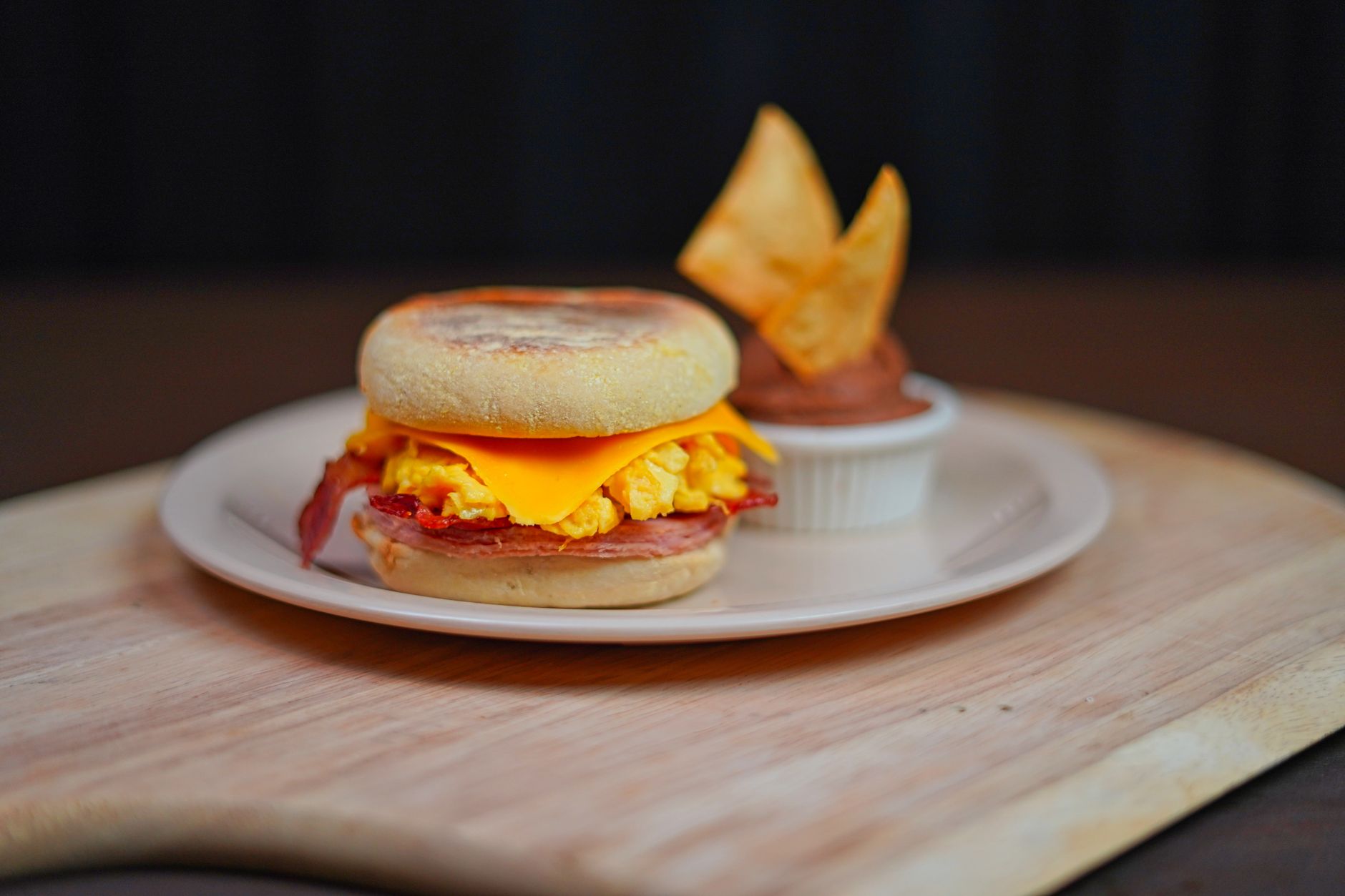
    The breakfast sandwich feels like a modern convenience-food invention, but its roots actually trace back to industrial-era Britain, decades before anything resembling a fast-food breakfast existed. It’s also a straightforward, real menu item at Mabel’s Deli inside Poncha Market, priced at $7.59.

    Here’s where the breakfast sandwich actually came from, and how it evolved into the version most people eat today.

    Understanding this history reframes the breakfast sandwich as something closer to a genuine working-class food tradition than a purely modern shortcut invented for convenience alone.

    It’s also a useful reminder that a lot of what feels like modern fast-food invention is actually a much older idea, repackaged and renamed for a new generation of busy eaters.

    Origins in Industrial Britain

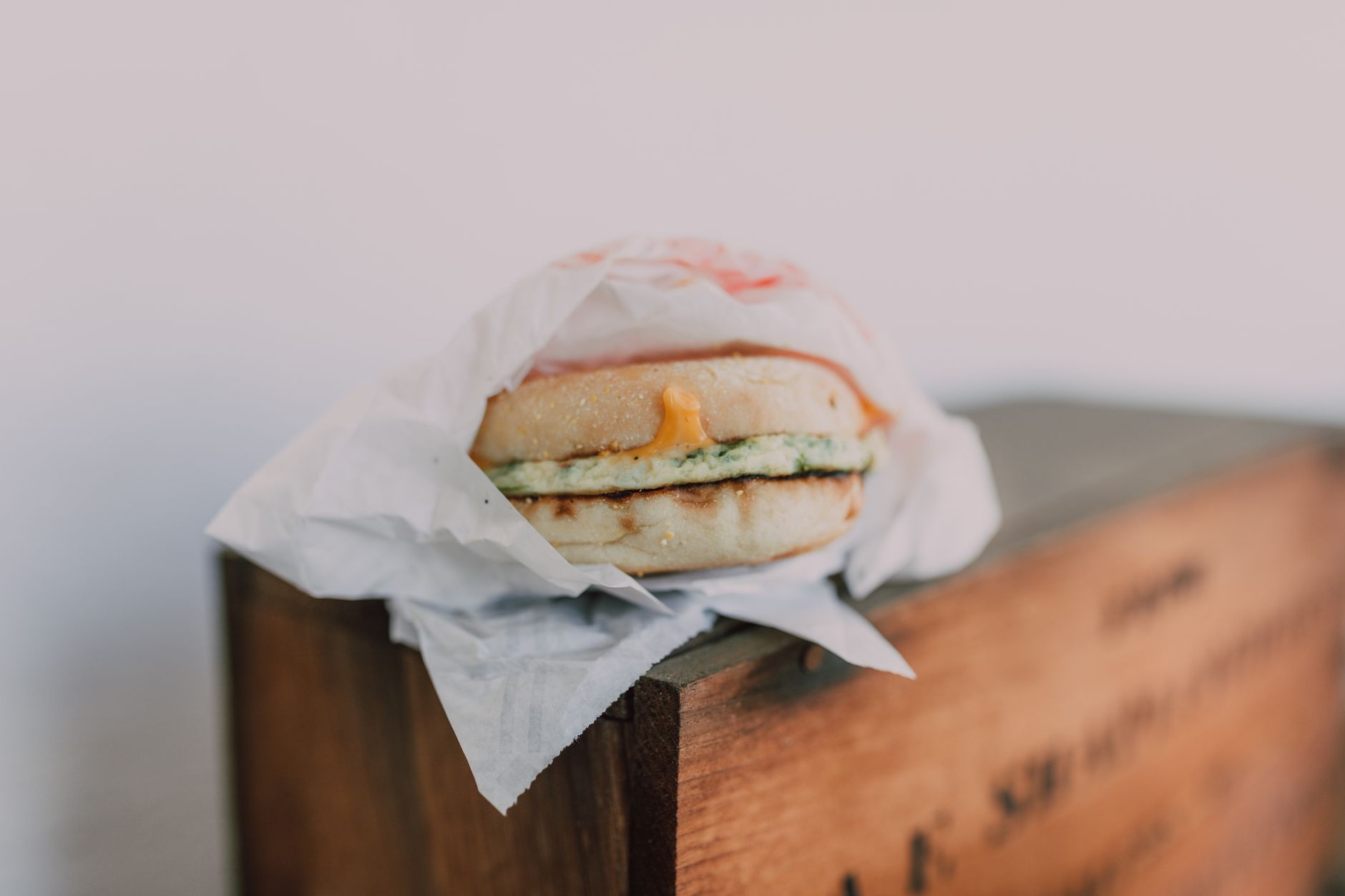
    The story begins in the early 19th century on the streets of East London, where vendors set up stalls to serve factory workers heading to their shifts each morning. British street vendors began selling “bap” sandwiches — egg and meat on a soft roll, named for the bread itself — to these crowds, functioning as a direct predecessor to the modern bacon, egg, and cheese sandwich.

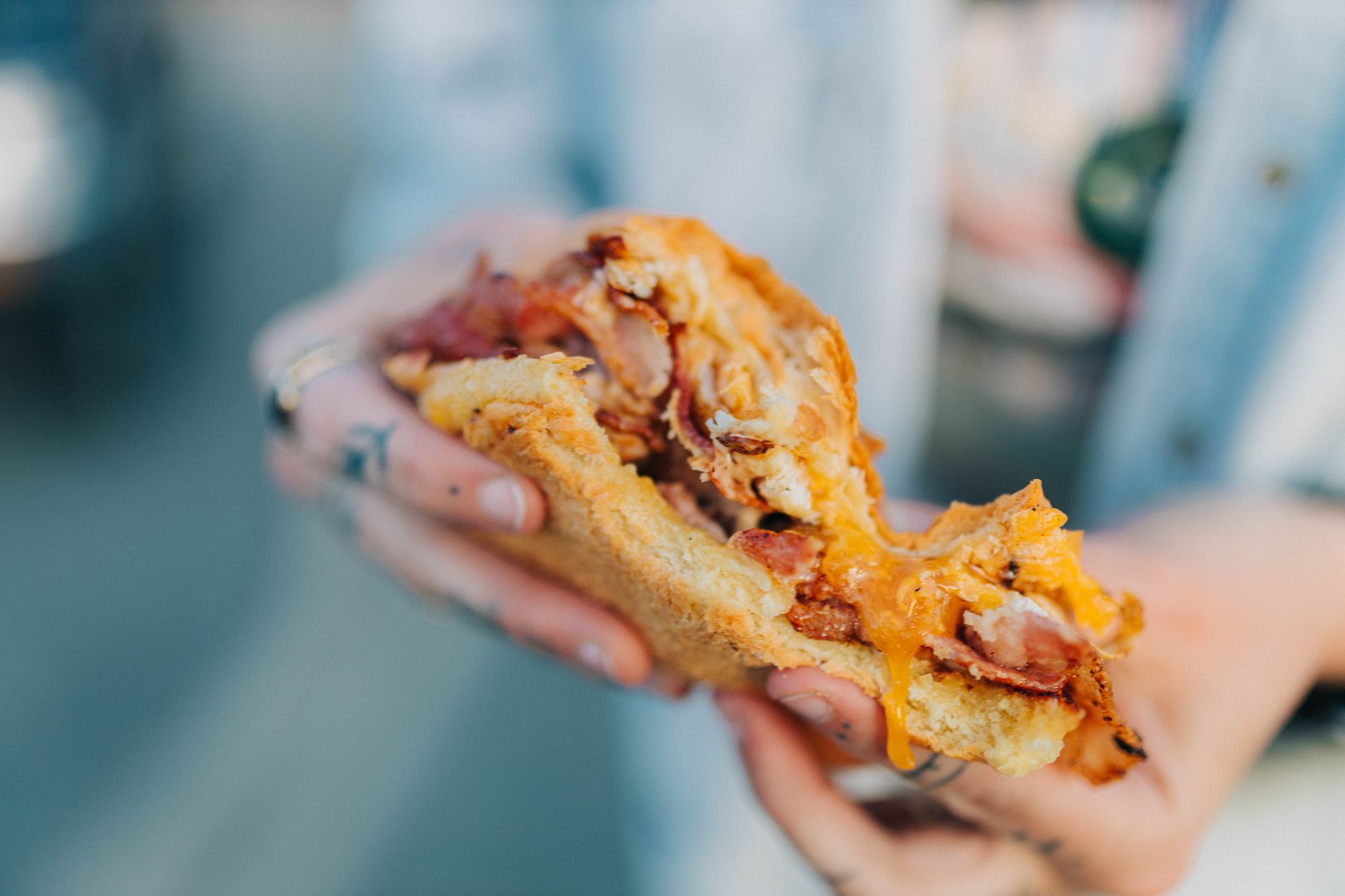
    Delicious bacon egg sandwich with melted cheese in hand

    American Variations

    Some food historians credit pioneers on the overland trail with introducing a version of quick breakfast to America through the Denver omelet, while others attribute an early American egg sandwich to Chinese chefs cooking at logging camps, adapting Egg Foo Yung into something portable. The sandwich’s rise in popularity specifically in New York City is often tied to its low cost and remarkably fast cooking time for busy workers.

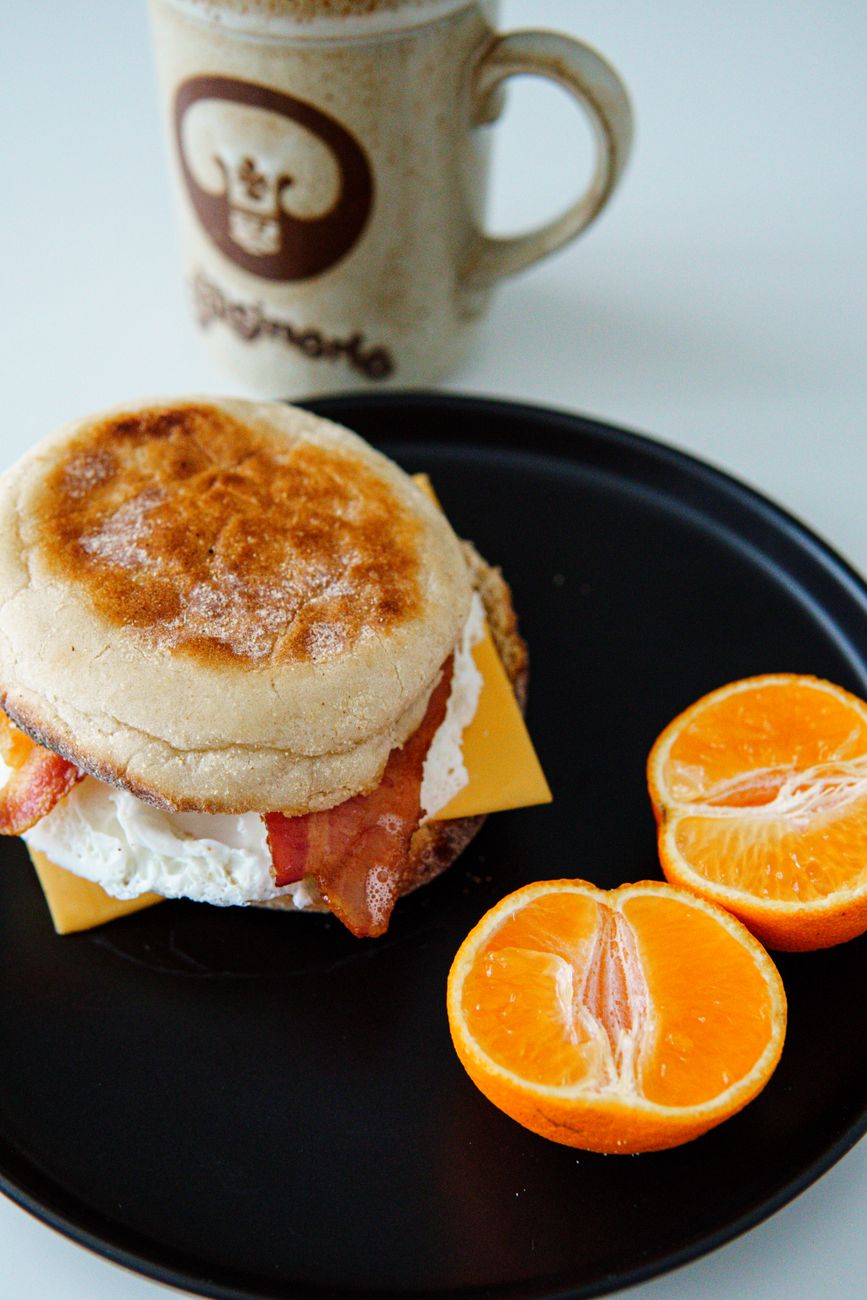
    Tasty breakfast with a bacon, egg, and cheese muffin

    The Egg McMuffin Moment

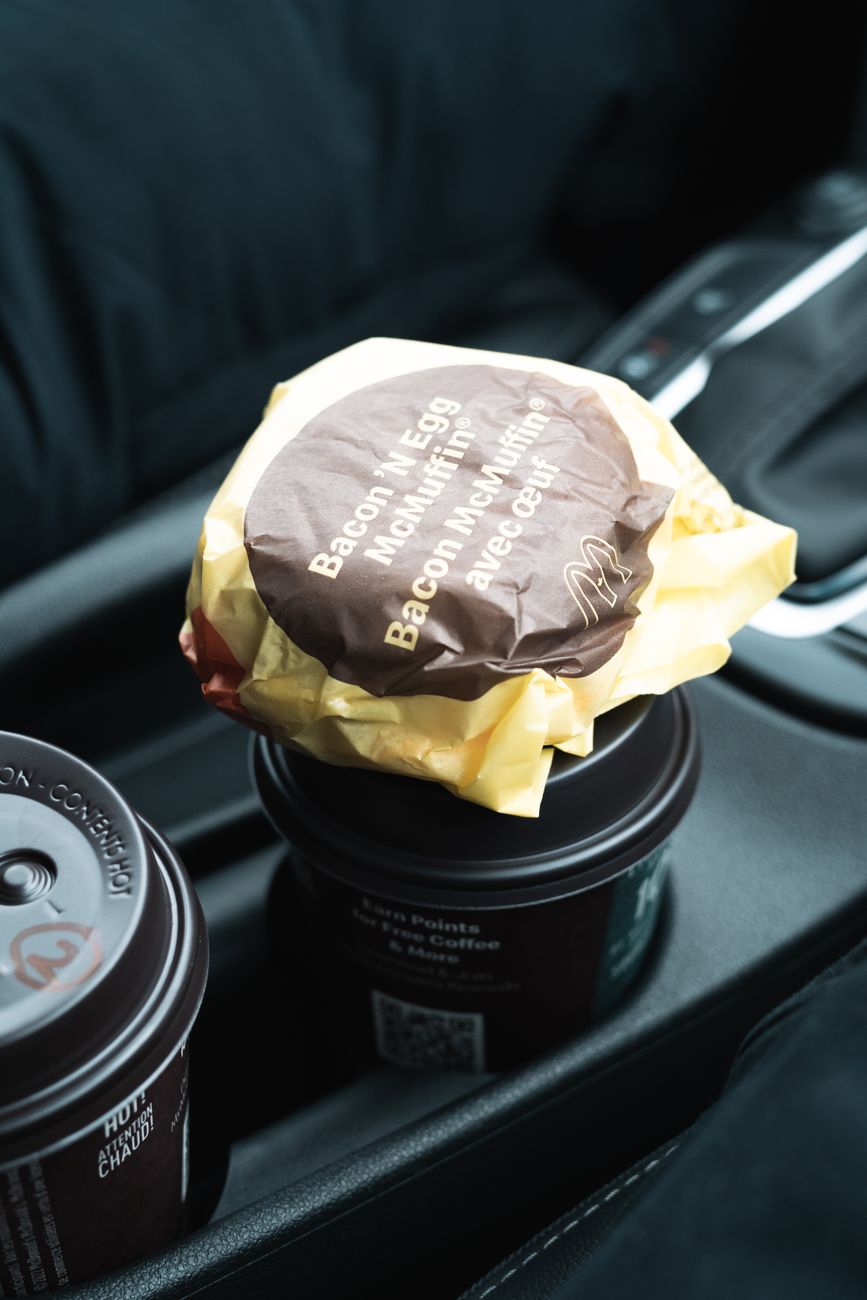
    The breakfast sandwich’s place in modern American food history was cemented when Herb Peterson, a McDonald’s franchise owner, invented the Egg McMuffin in the early 1970s — a genuinely pivotal moment that took a working-class street food and turned it into a mainstream, nationally recognized breakfast format.

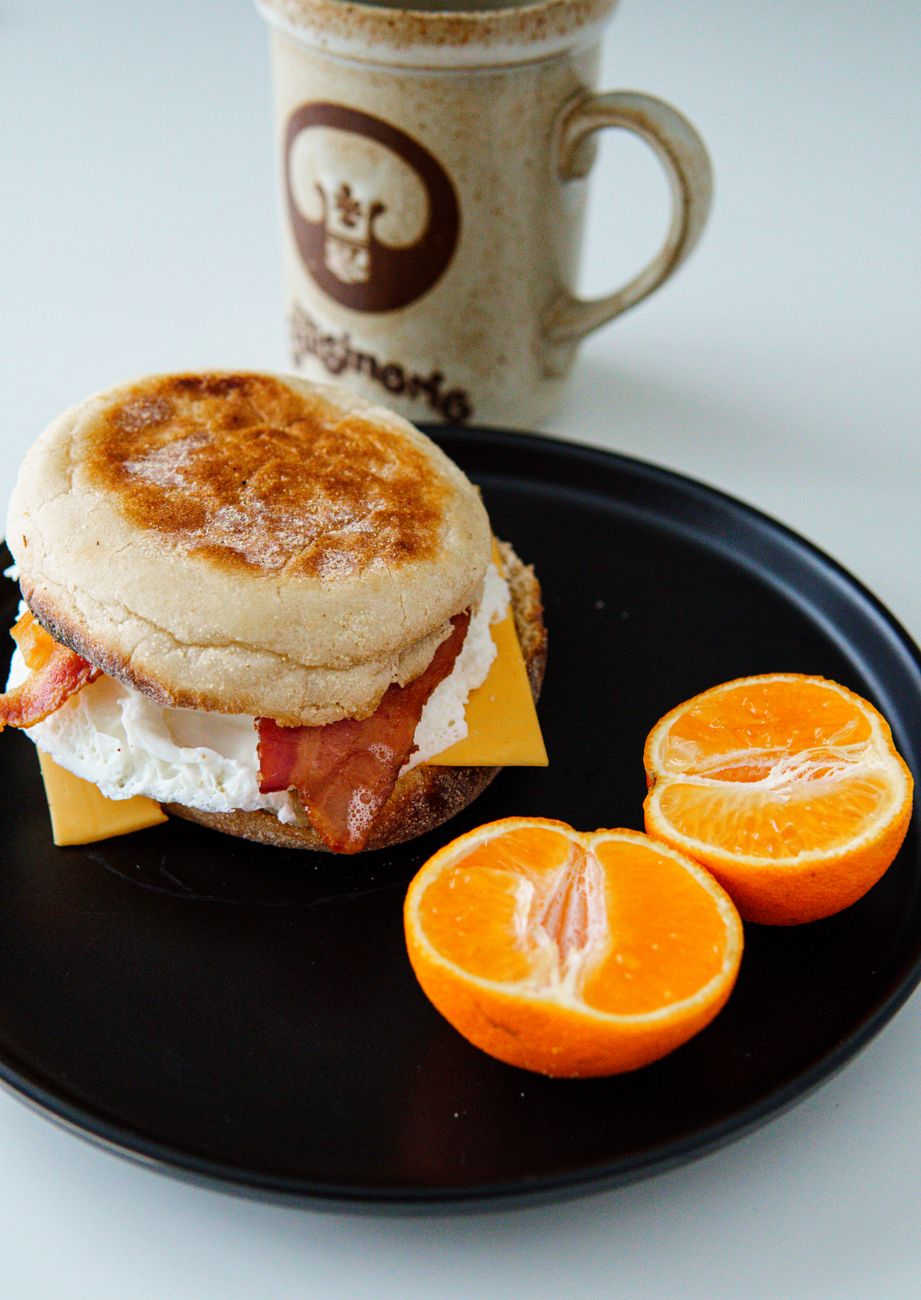
    Tasty breakfast featuring a bacon, egg, and cheese sandwich

    Why the Breakfast Sandwich Endures

    Its enduring popularity really comes down to solving the same problem it always has: everyone needs breakfast, and most people are too busy or too rushed in the morning to make something more elaborate themselves. That practical appeal parallels the emergence of the modern working commuter just as directly today as it did for factory workers in 19th-century London.

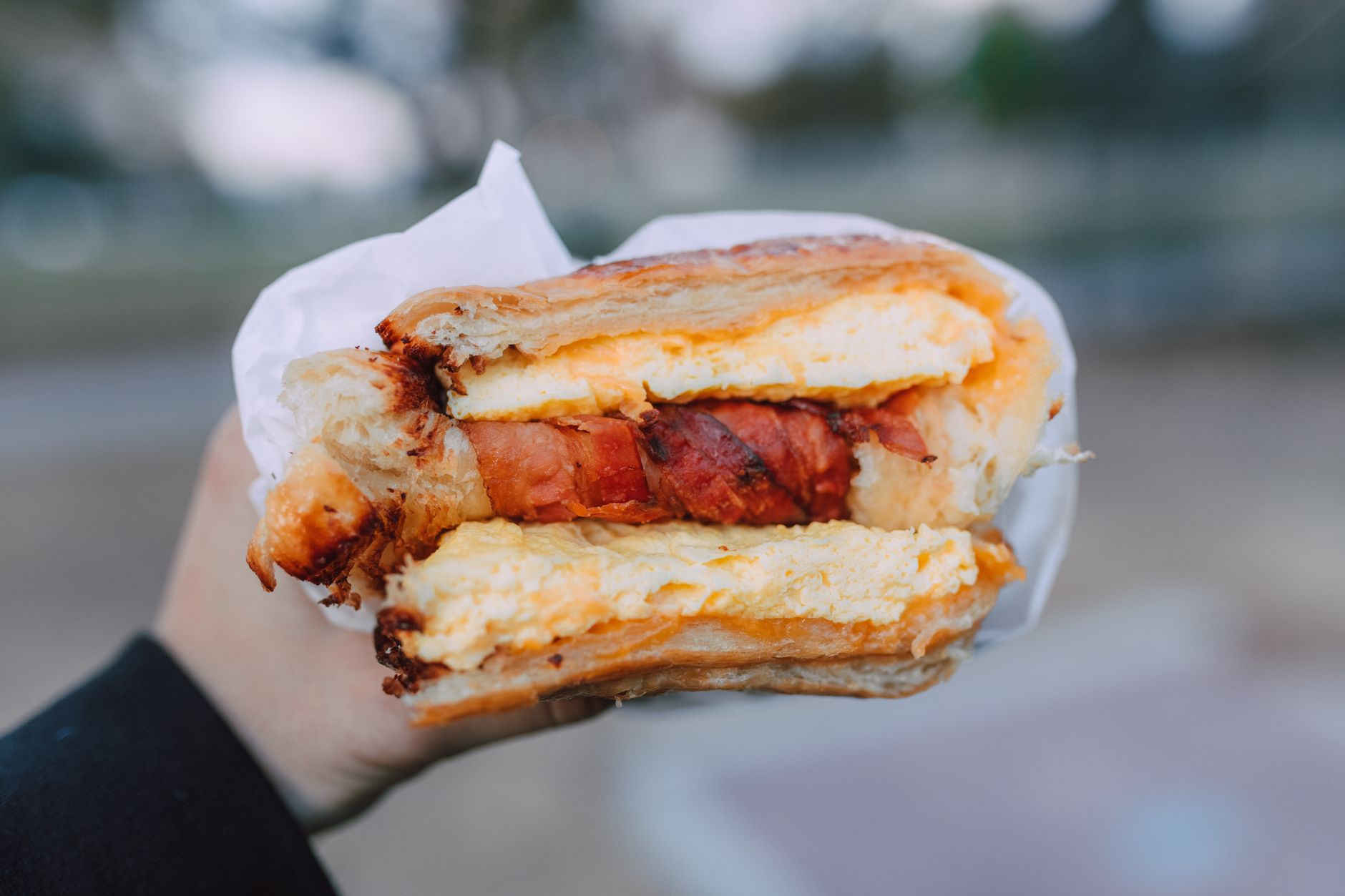
    Close-up of a delicious breakfast sandwich with cheese and bacon held in hand

    Frequently Asked Questions

    Where did the breakfast sandwich originate?

    Street vendors in industrial-era East London sold “bap” sandwiches of egg and meat on a soft roll to factory workers, a direct predecessor to today’s version.

    Who invented the Egg McMuffin?

    Herb Peterson, a McDonald’s franchise owner, in the early 1970s.

    Is the Denver omelet connected to the breakfast sandwich?

    Some historians credit overland trail pioneers with an early American quick-breakfast tradition tied to the Denver omelet, though this is one of several competing origin threads.

    Why is the breakfast sandwich so popular?

    It solves a genuinely practical problem — a filling, portable breakfast for busy people with limited time in the morning.

    Where can I get a breakfast sandwich near Poncha Springs?

    Mabel’s Deli inside Poncha Market serves one for $7.59.

    Did Chinese logging camp cooks really influence the breakfast sandwich?

    Some food historians point to this as one possible thread, tied to adapting Egg Foo Yung into a portable form, though the sandwich’s history has several competing origin stories rather than one single, confirmed source.

    Is the breakfast sandwich unique to the United States?

    No — its earliest documented form is British, though the sandwich as most Americans know it today was shaped heavily by U.S. fast food in the 1970s.

    Craving one before you hit the road? See our Mabel’s Deli menu guide for breakfast options.

    For more on breakfast sandwich history, see History.com.

  • Best Road Trip Breakfast Foods and Ideas

    Best Road Trip Breakfast Foods and Ideas

    Breakfast on a road trip usually comes down to two options: something quick and packaged, or a real hot breakfast at a stop along the way. Mabel’s Deli inside Poncha Market offers the second option — a breakfast sandwich, burrito, or smothered burrito, all made to order rather than sitting under a heat lamp.

    Here’s how to think through breakfast options for a road trip, whether you’re packing your own or stopping somewhere real.

    The right choice depends heavily on your schedule that day. An early departure with miles to cover before your first real stop calls for something different than a leisurely morning with time to sit down and eat properly.

    It’s worth planning breakfast the night before rather than figuring it out at 6 a.m. while everyone else is trying to load the car — a few minutes of prep the evening before makes the whole morning routine noticeably smoother.

    Packed Breakfast Options

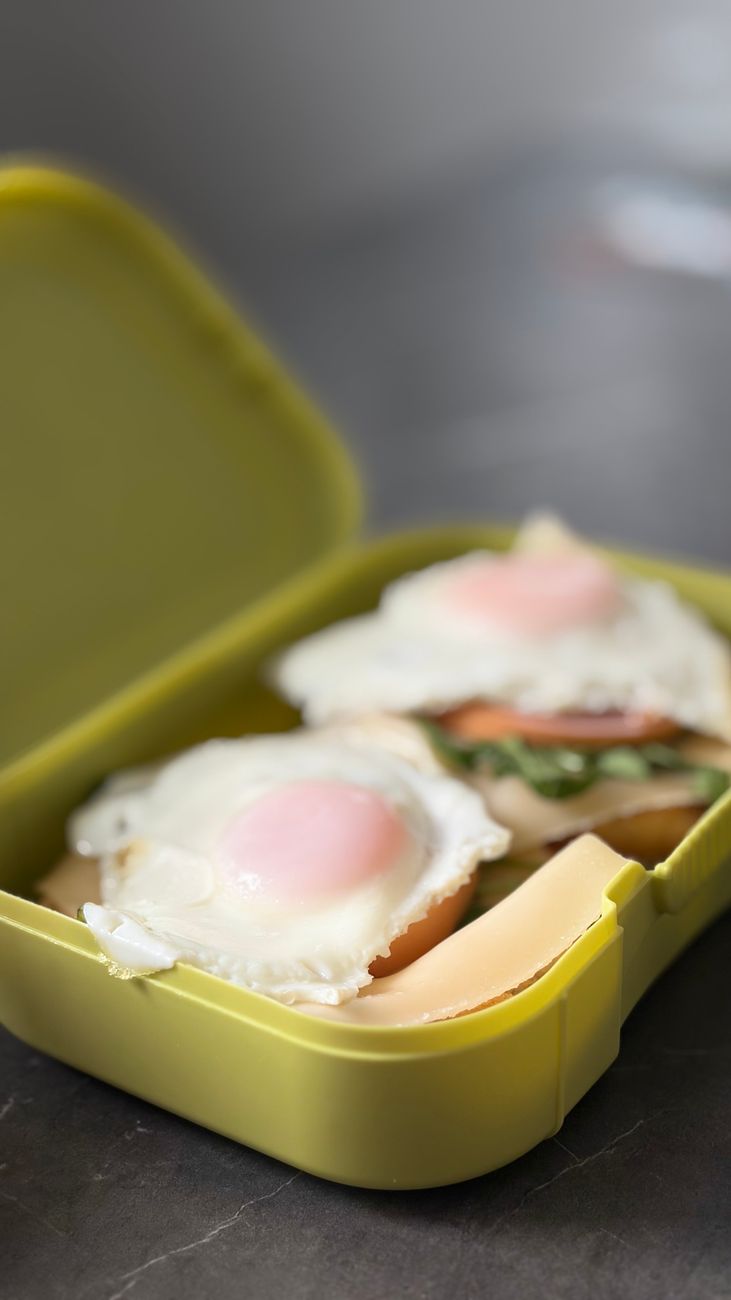
    • Hard-boiled eggs, prepared the night before, travel well and provide real protein without needing refrigeration for a few hours.
    • Overnight oats in a sealed container hold up well in a cooler and don’t require any morning prep.
    • Whole fruit — bananas, apples, oranges — is self-contained and doesn’t depend on how it’s been handled the way cut fruit does.
    • Breakfast bars or granola bars with modest sugar content are a reasonable middle ground between convenience and nutrition.
    Breakfast sandwiches with eggs packed in a bright yellow lunch box

    Why a Real Breakfast Stop Is Worth Planning For

    Packaged, cold options are fine for a quick start, but they don’t compare to a hot breakfast sandwich or burrito for actually keeping you full and alert through a long morning of driving. Planning at least one real breakfast stop into a longer road trip — rather than relying entirely on packed food — tends to make the whole first half of the day more comfortable.

    This is especially true on trips with real elevation gain, like driving through Colorado’s mountain corridors, where the physical demands of the drive itself (altitude, winding roads, longer stretches without services) make a genuinely filling breakfast more valuable than it would be on a flat interstate drive.

    Close-up of a breakfast muffin and coffee cups inside a car

    What to Order at a Real Stop

    At a stop like Poncha Market, a breakfast sandwich or burrito made to order is a meaningfully better option than a pre-wrapped, heat-lamp version — see our gas station food safety guide for more on why that distinction matters beyond just taste. A smothered burrito, specifically, is a good choice if you have a few extra minutes to sit and eat rather than driving while you finish it.

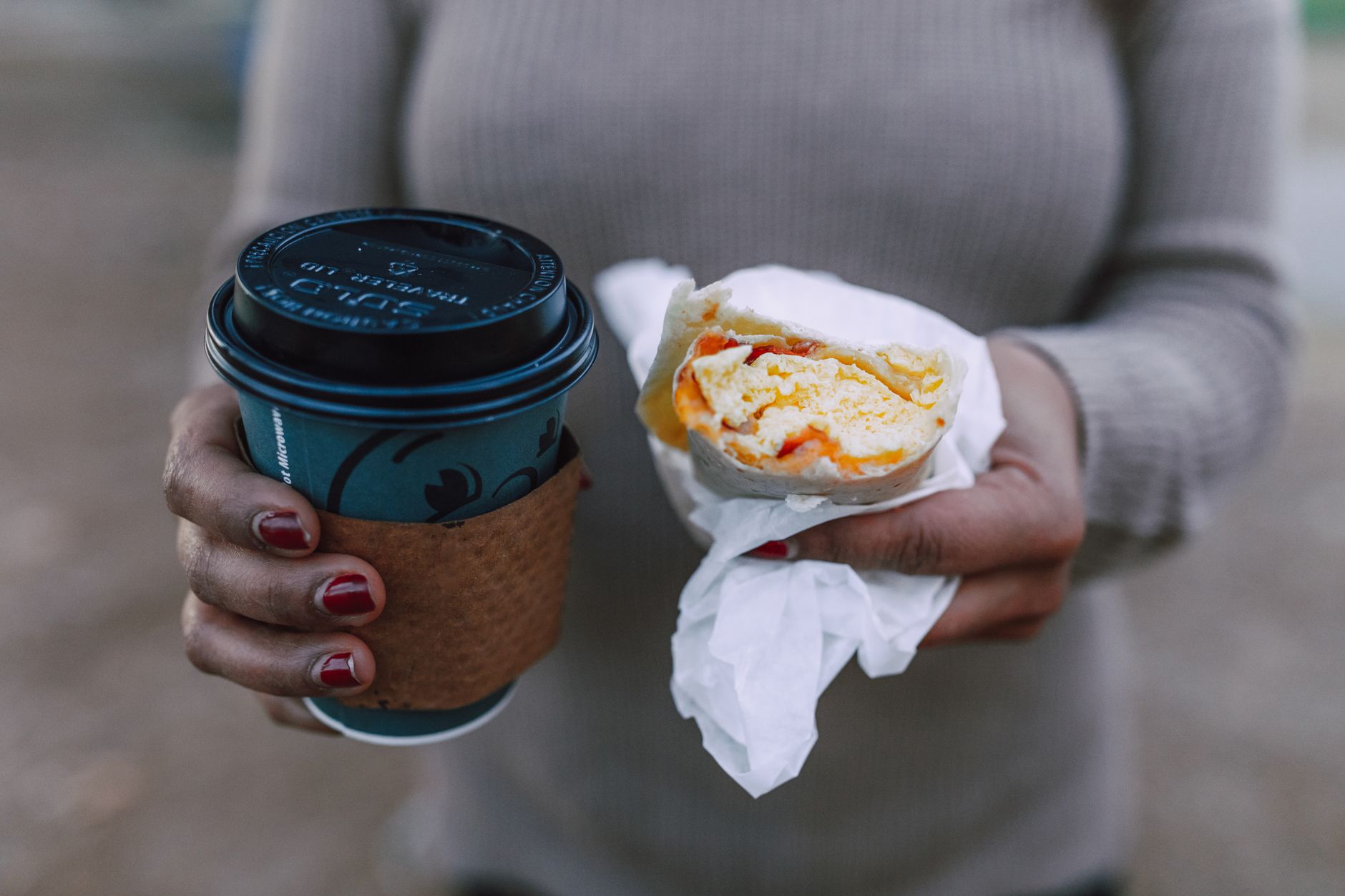
    For a genuinely hands-free option to eat while driving, a wrapped, unsmothered breakfast burrito or a standard breakfast sandwich is the more practical choice — both hold together well enough to eat one-handed at a stoplight or while a passenger drives.

    Whoever isn’t driving should generally be the one eating first if a group is sharing hot food in a moving vehicle — a simple, practical safety habit that avoids a driver juggling breakfast and the road at the same time.

    A woman holding a hot coffee cup and a breakfast sandwich

    Coffee and Caffeine Strategy

    Coffee helps with alertness on an early start, but it works best alongside real food rather than on an empty stomach, which can leave you jittery rather than genuinely more awake. Pairing coffee with an actual breakfast, even a modest one, tends to produce steadier energy through the first few hours of driving than coffee alone.

    It’s worth pacing caffeine across the morning rather than front-loading it all in one large cup before departure. A second, smaller coffee an hour or two into the drive tends to sustain alertness more evenly than one large dose that wears off right when you need it most.

    For more on brewing better coffee on the road, see our guide to brewing coffee on a road trip. And for more on the sandwich itself, see our history of the breakfast sandwich and breakfast croissant sandwich recipe.

    A serene morning scene of coffee preparation in a home kitchen

    Frequently Asked Questions

    What’s the best packed breakfast for a road trip?

    Hard-boiled eggs, overnight oats, and whole fruit all travel well without refrigeration for a few hours and provide more staying power than sugary packaged options.

    Should I stop for a hot breakfast on a road trip?

    If your schedule allows, yes — a hot, made-to-order breakfast tends to keep you fuller and more alert than cold packed food alone.

    Is coffee alone a good breakfast strategy?

    Not ideally — pairing coffee with real food generally produces steadier energy than caffeine on an empty stomach.

    What breakfast options are available at Poncha Market?

    A breakfast sandwich, burrito, and smothered burrito, all made to order at Mabel’s Deli.

    How early should I plan a breakfast stop?

    Early enough to avoid rushing through it — a genuinely hot, sit-down breakfast is worth a few extra minutes compared to eating while driving.

    Should I prep breakfast the night before a road trip?

    Yes — a few minutes of prep the evening before makes the morning departure noticeably smoother than figuring out breakfast while everyone’s already trying to load the car.

    Does elevation change how much breakfast I need?

    Higher elevation and more physically demanding driving conditions, like mountain corridors, make a genuinely filling breakfast more valuable than it would be on a flat, low-elevation drive.

    Should I drink all my coffee before leaving?

    Pacing it across the morning, rather than one large dose beforehand, tends to sustain alertness more evenly through the first few hours of driving.

    What’s the most hands-free breakfast option for driving?

    A wrapped, unsmothered breakfast burrito or a standard breakfast sandwich, both of which hold together well enough to eat one-handed without much mess.

    Planning your morning stop? See our Mabel’s Deli menu guide for breakfast sandwich and burrito options.

    For general nutrition guidance on building a balanced breakfast, see the Mayo Clinic.

  • Best Road Trip Snacks and Drinks: A Gas Station Convenience Store Guide

    Best Road Trip Snacks and Drinks: A Gas Station Convenience Store Guide

    A long drive runs on more than gas. What you eat and drink along the way affects energy levels, alertness behind the wheel, and how the whole trip feels by the time you arrive. A quick stop at a convenience store like Poncha Market can go one of two ways: a sugar-crash cycle of candy and soda, or a genuinely sustaining set of choices that keep you comfortable for hours.

    None of this requires turning a road trip into a health-food expedition. The goal here is simple, practical swaps — the kind you can make in the same thirty seconds you’d otherwise spend grabbing whatever’s closest to the register — that add up to a noticeably better drive by the time you’re several hours in.

    Why Road Trip Snacking Is Different

    Sitting for hours at a stretch, often with less activity than a normal day, changes what your body actually needs compared to a typical meal. Heavy, greasy food can make you sluggish behind the wheel; pure sugar gives a quick spike followed by a crash right when you need sustained focus. The goal isn’t strict health rules — it’s picking food that keeps you comfortable and alert for the next stretch of driving.

    This matters more on longer legs of a trip, or ones that involve real elevation change, like the climbs on either side of Poncha Market in central Colorado. Feeling sluggish or jittery is a bigger liability on a winding mountain grade than on a straight flat highway, which is exactly where a lot of road trips through this part of the state happen to run.

    A person’s hands holding a glass jar and a handful of assorted nuts

    Snacks That Actually Hold Up

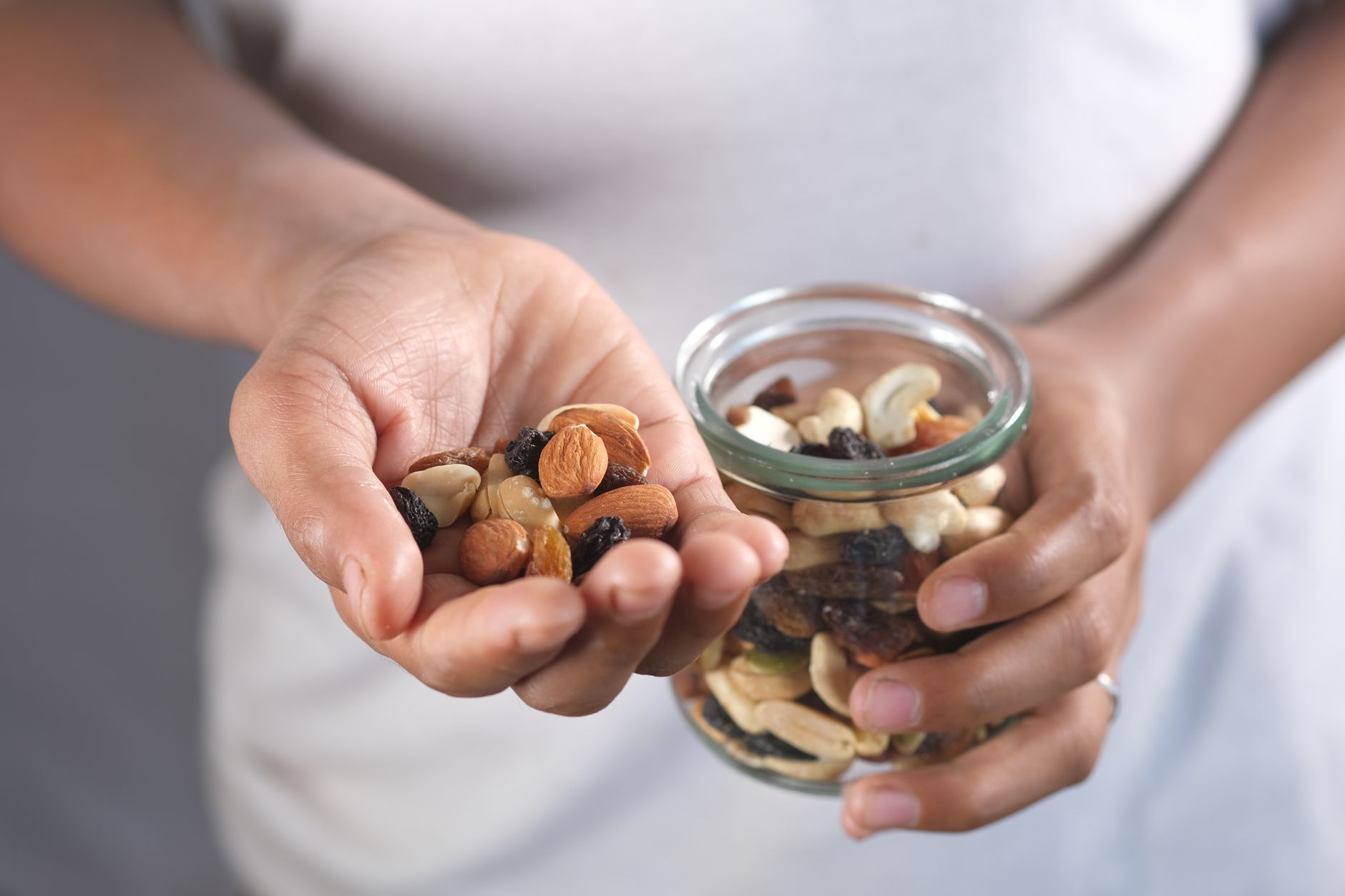
    • Nuts and trail mix — protein and fat combined help you feel fuller longer than a sugary snack of the same size, and they don’t need refrigeration.
    • Jerky — high in protein, shelf-stable, and satisfying in a way that a bag of chips generally isn’t.
    • Whole fruit — an apple or banana travels well and doesn’t rely on how a store handles pre-cut produce.
    • Granola or protein bars — a reasonable middle ground between convenience and actual nutrition, though it’s worth checking sugar content, since not all bars are created equal.
    • String cheese or other simple dairy snacks — a solid protein option if refrigeration along the way is reliable.

    None of these require a special health-food store — all of them are standard items at a typical convenience store, including Poncha Market‘s. The difference is simply choosing them deliberately rather than defaulting to whatever’s in the checkout-lane impulse rack.

    A close-up of assorted roasted nuts in stainless steel bowls

    What to Drink on a Long Drive

    Hydration matters more on a road trip than most people account for, especially at higher elevations like central Colorado, where dehydration sets in faster than at sea level. Water should be the default, not an afterthought.

    • Keep a cooler or refillable bottles in the car rather than relying entirely on single-use bottles bought one stop at a time.
    • Caffeine can help with alertness on a long drive, but relying on it instead of rest breaks or actual sleep is a real safety risk, not just a minor inconvenience.
    • Sugary sodas and energy drinks provide a short-term boost followed by a crash — useful occasionally, risky as a primary strategy for staying alert.
    • At higher elevations specifically, dehydration symptoms can be mistaken for simple fatigue, which makes deliberate, regular water intake more important on a mountain drive than on a flat one.

    A useful habit on longer trips is treating water the same way you’d treat fuel: check it, top it off, and don’t wait until you’re already thirsty to think about it. By the time thirst is noticeable, mild dehydration has usually already set in.

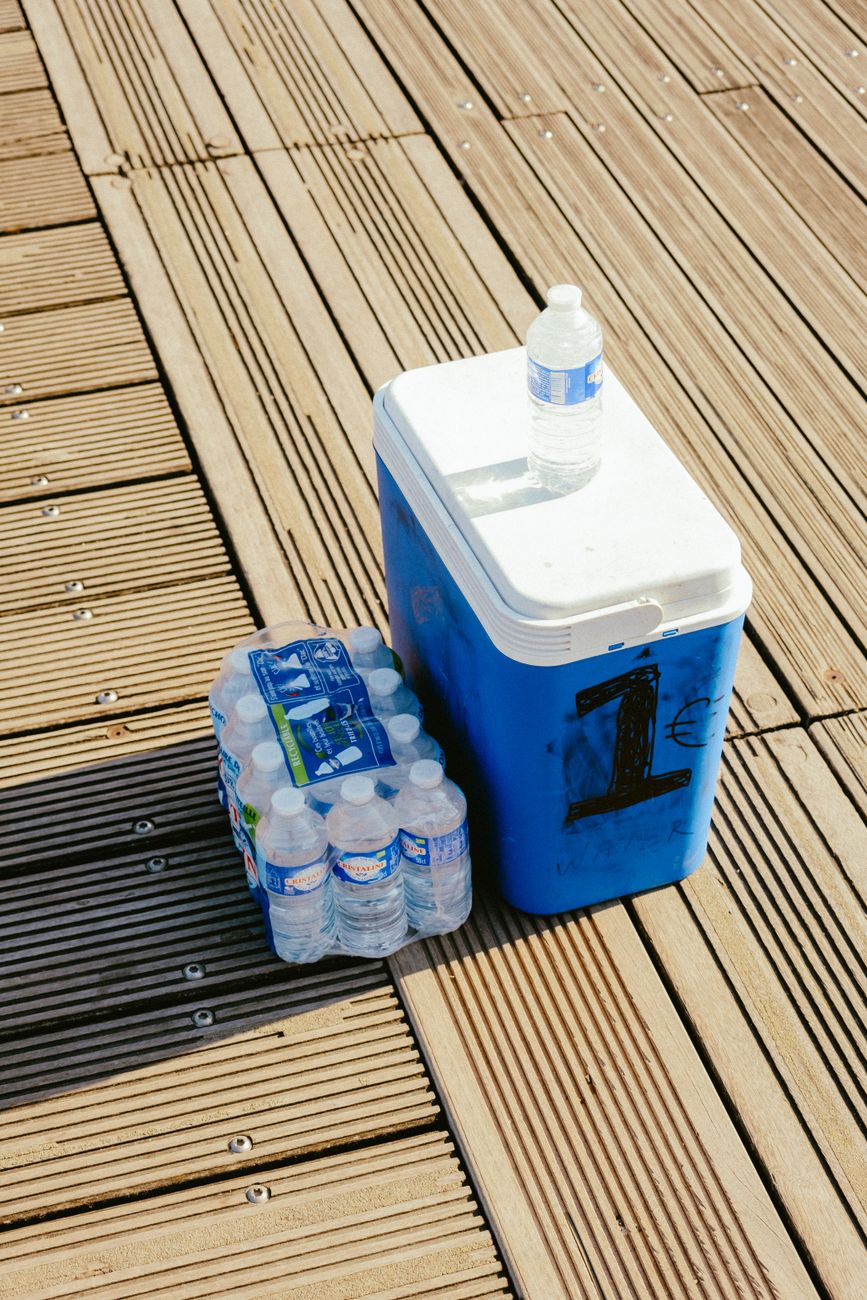
    A blue cooler with bottled water on a sunlit wooden deck

    Building a Better Convenience Store Stop

    A practical approach at a stop like Poncha Market is to think in terms of a small, balanced grab rather than one single item: a protein source (nuts, jerky), something with natural sugar (fruit), and water, rather than defaulting to whatever’s closest to the register.

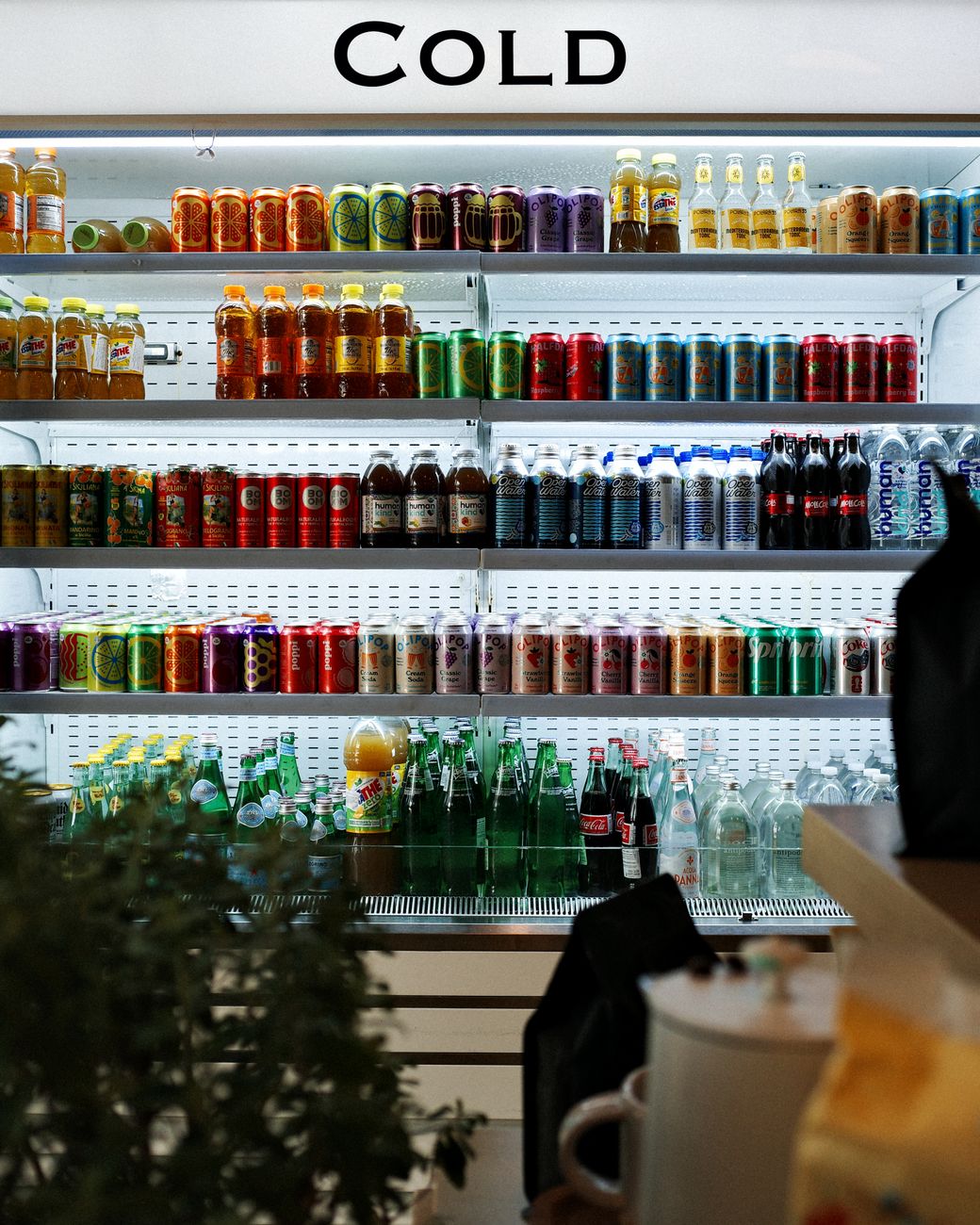
    A vibrant array of drinks showcased in a cold beverage refrigerator

    If you have more time — not just a fuel-and-go stop — a made-to-order option like Mabel’s Deli‘s sandwiches is a meaningfully better choice than packaged convenience food for a real meal, since it’s prepared fresh rather than sitting under a heat lamp or shelf.

    Thinking of stops this way — a “quick grab” versus a “real meal” — rather than treating every convenience store visit the same way, tends to produce better choices overall. A five-minute fuel stop calls for the nuts-and-water approach above; a longer break calls for an actual meal instead of stacking several packaged snacks together as a substitute for one.

    Over a multi-hour drive, several small good decisions like this tend to matter more than any single choice. Skipping one candy bar for a handful of nuts won’t transform a road trip, but making that kind of swap consistently at every stop adds up by the time you actually arrive.

    A Simple Snack Comparison

    OptionSustains EnergyNeeds Refrigeration
    Trail mix / nutsYes — protein and fatNo
    JerkyYes — proteinNo
    Whole fruitModerate — natural sugar plus fiberNo
    Candy / sodaNo — quick spike then crashNo
    Made-to-order sandwichYes — balanced mealPrepared fresh, not stored
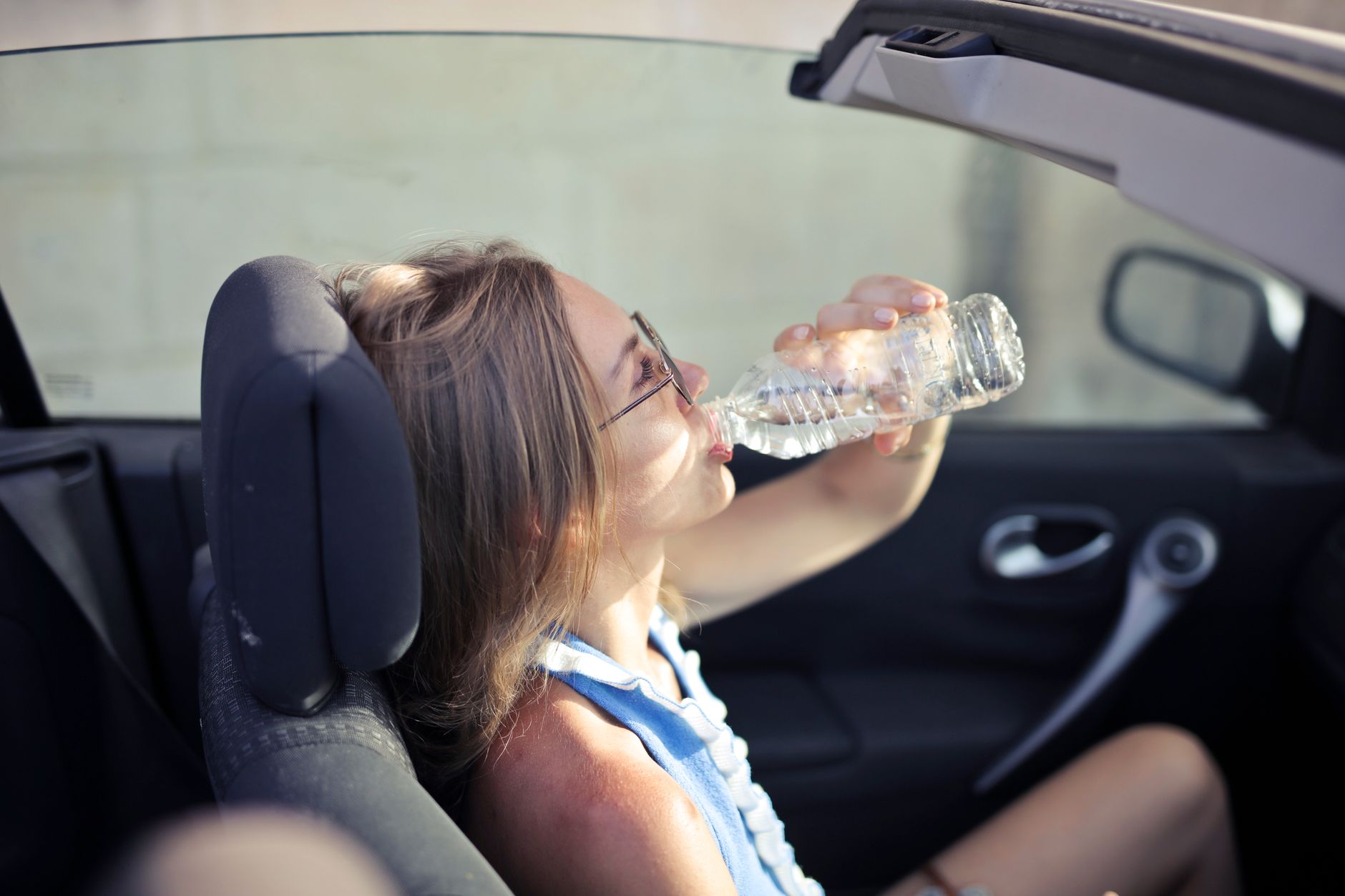
    A woman in casual clothes drinking water outdoors

    Frequently Asked Questions

    What are the healthiest gas station snacks?

    Nuts, jerky, whole fruit, and granola bars with modest sugar content are generally the best options available at a typical convenience store.

    Should I avoid caffeine on a road trip?

    Not necessarily, but it shouldn’t replace actual rest breaks or sleep — caffeine can mask fatigue rather than resolve it.

    How much water should I drink on a road trip?

    More than feels strictly necessary, particularly at higher elevations, where dehydration happens faster than most people expect.

    Is a gas station sandwich a good meal option?

    It depends entirely on how it’s prepared. A made-to-order deli sandwich, like those at Mabel’s Deli, is a meaningfully better option than a pre-packaged sandwich that’s been sitting in a case.

    What snacks should I avoid on a long drive?

    Heavy, greasy food and high-sugar snacks and drinks are both worth limiting — the first for alertness, the second to avoid an energy crash partway through the drive.

    How do I know if I’m getting dehydrated on a road trip?

    Fatigue, headache, and difficulty concentrating can all be early signs, and are easy to mistake for simple tiredness — regular water intake rather than waiting for thirst is the more reliable approach.

    Are protein bars a good road trip snack?

    Generally yes, though checking the sugar content is worth doing, since some bars are closer to candy than to a balanced snack despite the healthy marketing.

    Should I pack snacks before a road trip or buy them along the way?

    A mix of both works well — packing a few reliable staples from home as a backup, while still planning on buying fresh options like fruit or a real meal along the way.

    What should I drink instead of soda on a road trip?

    Plain water should be the default; unsweetened options like sparkling water are a reasonable alternative if you want variety without the sugar crash that comes with soda.

    Stopping for a real meal instead? See our Mabel’s Deli menu guide for a made-to-order alternative to packaged convenience food.

    For general guidance on balanced snacking and hydration, see the Academy of Nutrition and Dietetics.

  • Is Gas Station Food Safe? A Road Tripper’s Guide

    Is Gas Station Food Safe? A Road Tripper’s Guide

    “Gas station food” carries a reputation, and not always a fair one. Some of it is genuinely worth skipping. Some of it — a real deli counter making sandwiches to order, like Mabel’s Deli inside Poncha Market — is a different category entirely. Here’s how to tell the difference, and what actually matters for food safety on the road.

    It’s a fair question to ask, and a common one among road trippers who don’t want to gamble their day on a bad meal. The honest answer is that “gas station food” isn’t one category of risk — it covers everything from shelf-stable snacks that are essentially risk-free, to hot food that’s been sitting under a heat lamp far longer than it should have, to a genuine deli counter making food to order the same way a sandwich shop would. Lumping all of that together does travelers a disservice.

    The Real Risks Worth Knowing About

    Most gas station food safety issues aren’t dramatic; they’re about freshness and basic handling. A few specific concerns come up consistently in food safety guidance for convenience stores:

    • Hot food sitting too long. Heat-lamp items like hot dogs or nacho cheese are meant to be eaten soon after they’re made, not left rotating for hours. Food that requires temperature control should generally be eaten within about four hours of being removed from proper refrigeration or heating.
    • Cross-contamination at self-serve stations. Shared condiment pumps, tongs, and nozzles are only as clean as the last person and the last restocking.
    • Stale packaged goods. Donuts, pastries, and other baked goods can sit on a rack far longer than their quality suggests, even if they’re technically still within a sell-by date.
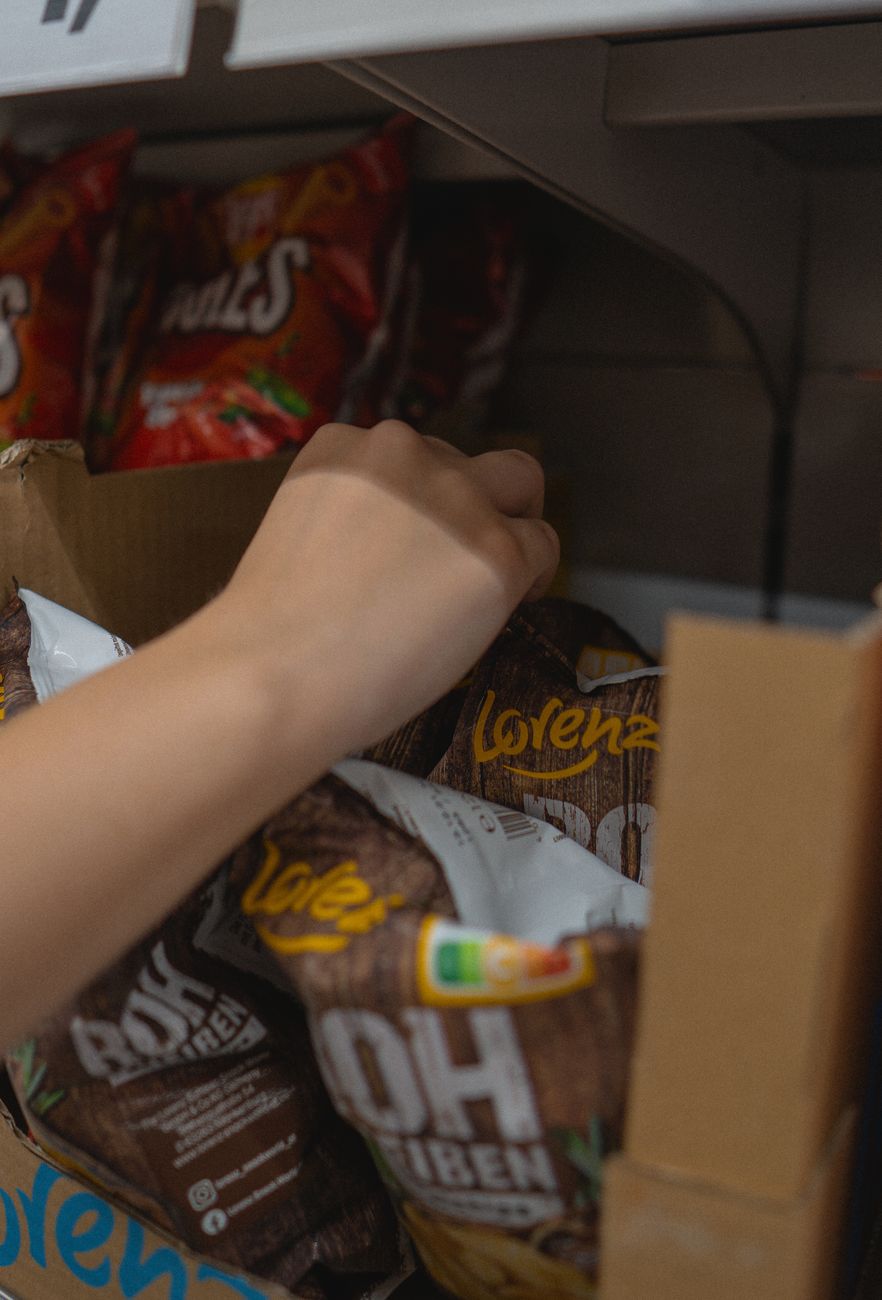
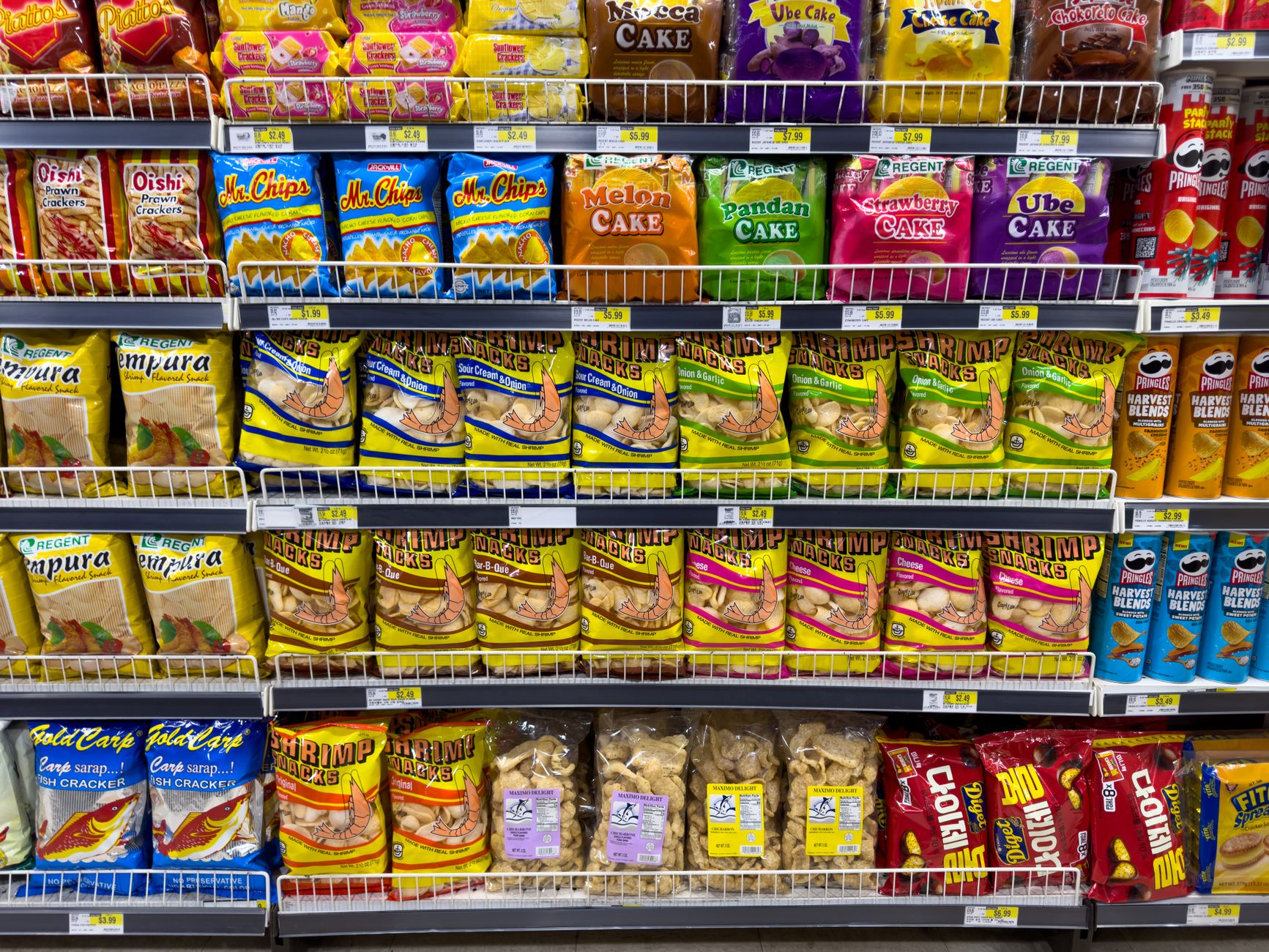
    Colorful snack packages neatly displayed in a store aisle

    None of this is meant to be alarming — the vast majority of gas station food, hot or packaged, is eaten every day without incident. The point is simply that a little observation goes a long way toward telling a genuinely safe stop from one worth skipping.

    Red Flags to Actually Watch For

    Food safety experts generally point to a handful of observable signs, rather than anything you need lab equipment to check:

    • A dirty or poorly maintained restroom is a strong indicator of how seriously the whole store treats cleanliness, food included.
    • Staff who aren’t washing hands, wearing gloves, or keeping food-prep surfaces clean while you’re watching.
    • A well-stocked hot food case at a store that otherwise looks neglected or nearly abandoned — a mismatch worth noticing.
    • Nacho cheese sauce and similar shelf-stable dispensed sauces left improperly stored; these have been linked to serious illness, including botulism, in isolated but well-documented past cases.
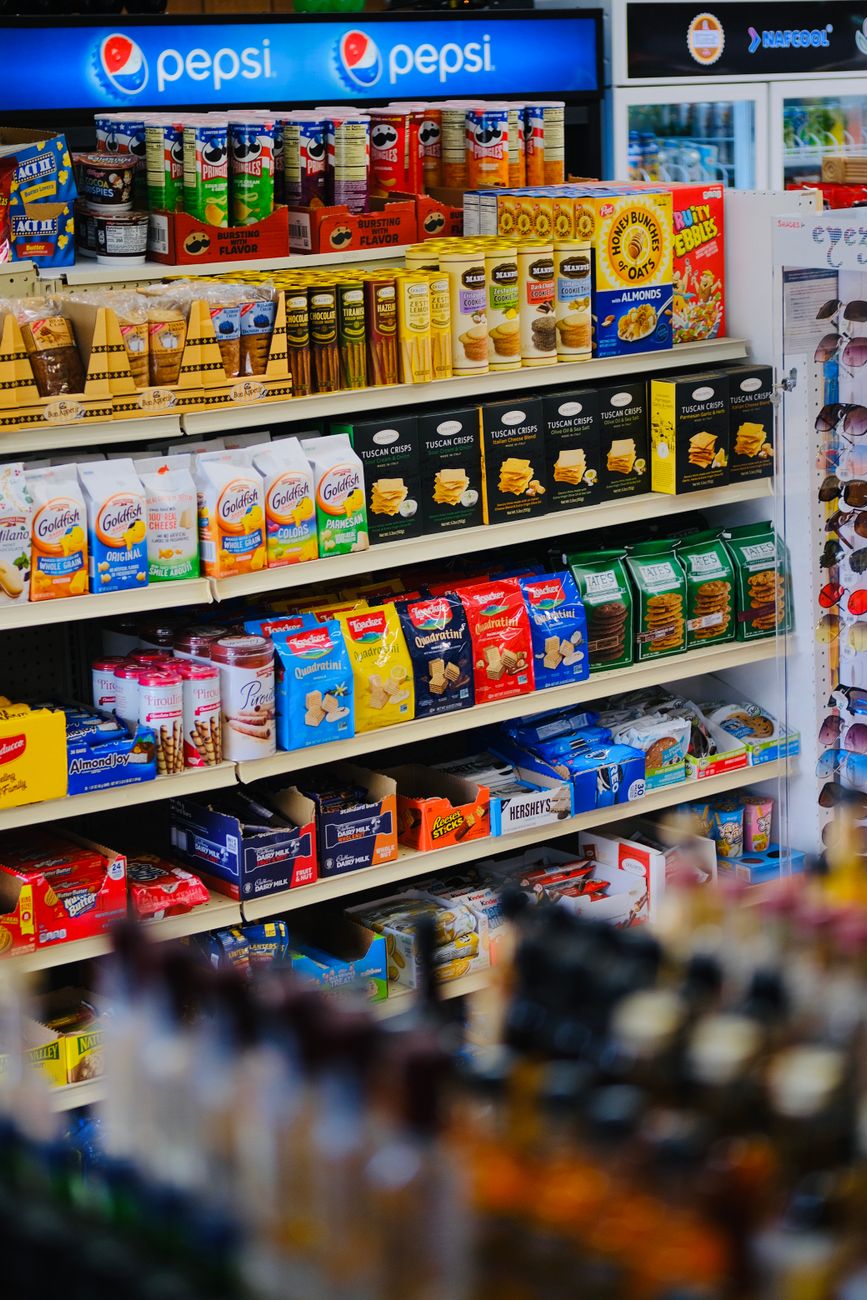
    A vibrant display of snacks and beverages on store shelves

    Safer Choices at a Typical Gas Station

    If you’re at a stop without a real kitchen or deli counter, packaged and shelf-stable options are generally the safer bet:

    • Jerky, roasted nuts, granola bars, and trail mix travel well and don’t rely on refrigeration being handled correctly.
    • Whole fruit — apples, bananas, oranges — is self-contained and doesn’t depend on store handling practices the way cut fruit does.
    • Sealed, packaged sandwiches from a refrigerated case are generally safer than food sitting under a heat lamp, provided the case itself is actually cold.

    The general rule of thumb food safety guidance repeats often is worth internalizing: the more a food item has been exposed to open air, ambient temperature, and repeated handling by other customers, the more it depends on that specific store’s practices to stay safe. A sealed granola bar doesn’t care how clean the store is. A scoop of cut fruit sitting in an open case absolutely does.

    This is also why road trip food advice consistently recommends packing a few shelf-stable items from home before you leave, rather than relying entirely on whatever’s available at your stops. It’s not about avoiding gas stations altogether — it’s about having a reliable backup that doesn’t depend on any single store’s standards.

    See our guide to packing a cooler for a road trip for the food safety details behind bringing your own backup supply.

    What Actually Makes a Deli Counter Different

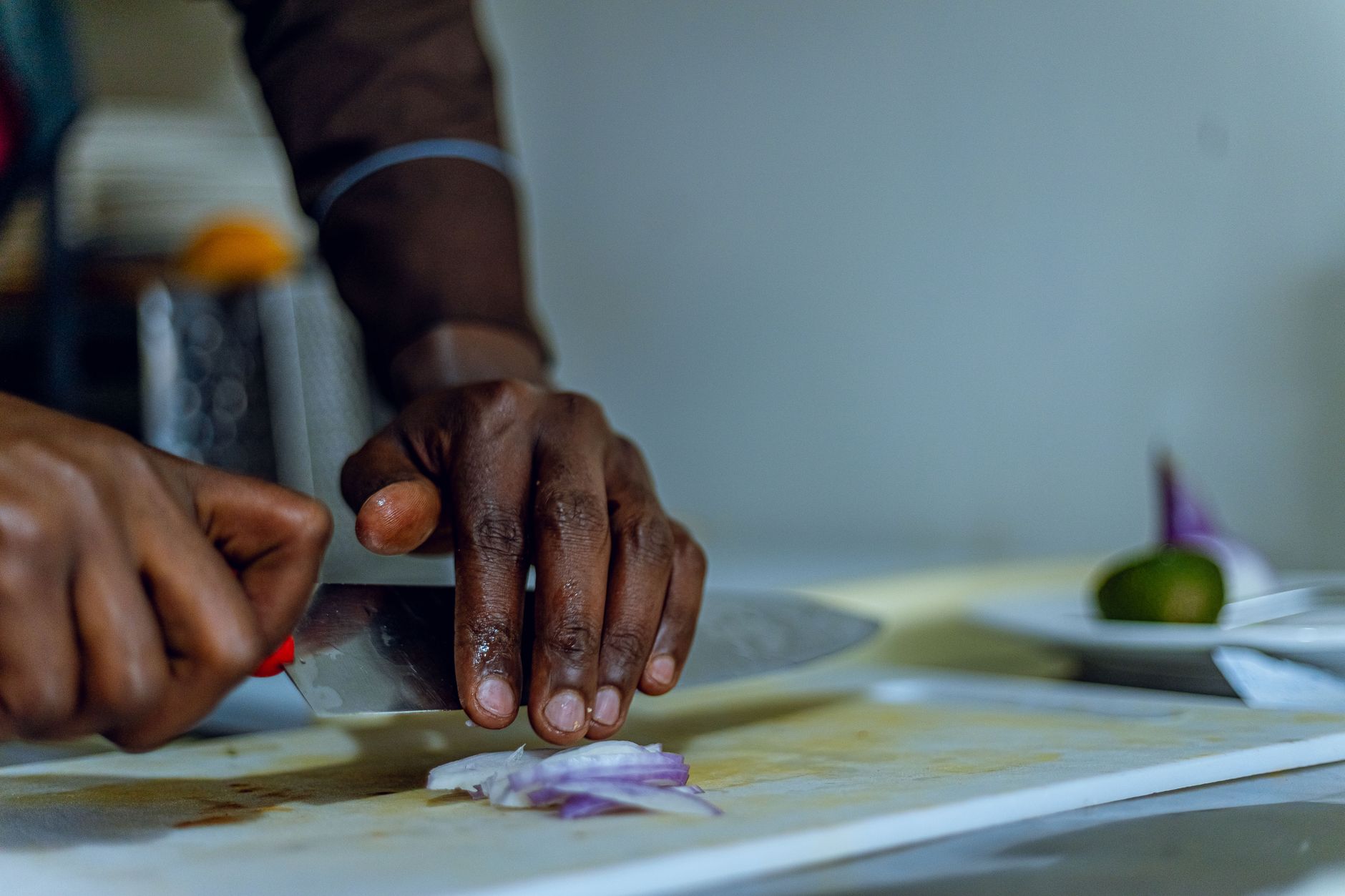
    The distinction that matters most isn’t “gas station” versus “not gas station” — it’s made-to-order versus sitting-out. At Mabel’s Deli, sandwiches are built when you order them, with vegetables cut fresh rather than pulled from a bin, which sidesteps most of the actual risk factors that make some gas station food questionable: extended sitting time, repeated handling, and unclear holding temperatures.

    Chef slicing a red onion on a cutting board with fresh ingredients

    That’s a genuinely different food safety profile than a hot dog that’s been rotating on a roller grill since morning, even though both would get filed under the same “gas station food” label by a skeptical traveler.

    The broader lesson generalizes well beyond any one stop: the “gas station food” label describes where a business is located, not how the food inside is actually prepared. A made-to-order counter inside a gas station has more in common, food-safety-wise, with a sandwich shop than it does with a heat-lamp hot dog case two pumps over — even though both are technically “gas station food” by location alone.

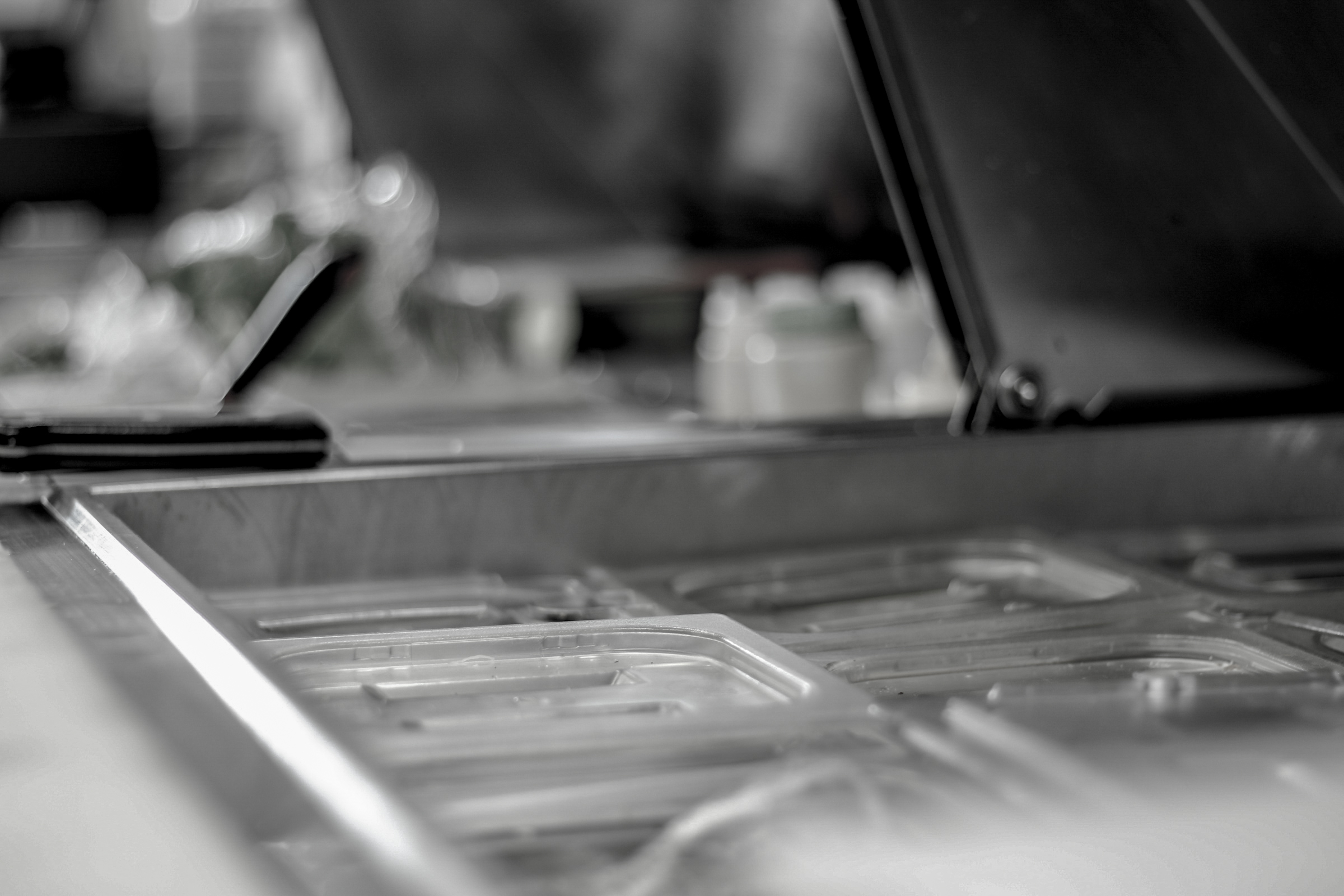
    Deli prep station at Poncha Market with fresh ingredients ready to order

    This distinction matters most for travelers on long, multi-stop road trips, where the temptation is to grab whatever’s fastest without really looking at what’s on offer. Taking thirty extra seconds to notice whether a counter is actually preparing food versus reheating something that’s been sitting for hours is a small habit that pays off more than people expect.

    A Simple Checklist Before You Buy

    CheckWhat It Tells You
    Restroom cleanlinessA proxy for overall store hygiene standards
    Staff hygiene practicesGloves, handwashing, and clean surfaces during prep
    Made-to-order vs. sitting outFresh preparation lowers most real risk factors
    General store upkeepNeglect in one area often reflects neglect elsewhere
    Shelf packed with a variety of snacks in a store

    Frequently Asked Questions

    Is gas station food generally safe to eat?

    It depends heavily on the specific location. Packaged snacks are almost always fine; hot food quality and safety vary a lot by store, staff practices, and how long items have been sitting out.

    What gas station foods should I avoid?

    Items that sit under heat lamps for extended periods, improperly stored dispensed sauces, and stale baked goods are the most commonly flagged concerns.

    What are the safest gas station snacks?

    Sealed packaged snacks like nuts, jerky, and granola bars, along with whole fruit, are generally considered the safest, lowest-risk options.

    Is a made-to-order deli safer than pre-made gas station food?

    Generally, yes — made-to-order preparation avoids the extended sitting time and repeated handling that create most of the actual risk in pre-made hot food cases.

    How can I tell if a gas station takes food safety seriously?

    Restroom cleanliness and visible staff hygiene practices are two of the most reliable, easily observable indicators.

    Should I avoid gas station food entirely on road trips?

    No — that’s more caution than necessary. The goal is knowing what to look for and what to choose, not avoiding these stops altogether, especially when a stop has a real made-to-order counter rather than only heat-lamp options.

    How long can perishable food safely sit out?

    Food requiring temperature control should generally be eaten within about four hours of leaving proper refrigeration or heating, a standard food safety benchmark that applies well beyond gas stations specifically.

    Want a genuinely different option? See our Mabel’s Deli menu guide for what made-to-order actually looks like at a real gas station stop.

    For detailed guidance on safe food handling and storage, see the USDA Food Safety and Inspection Service.