
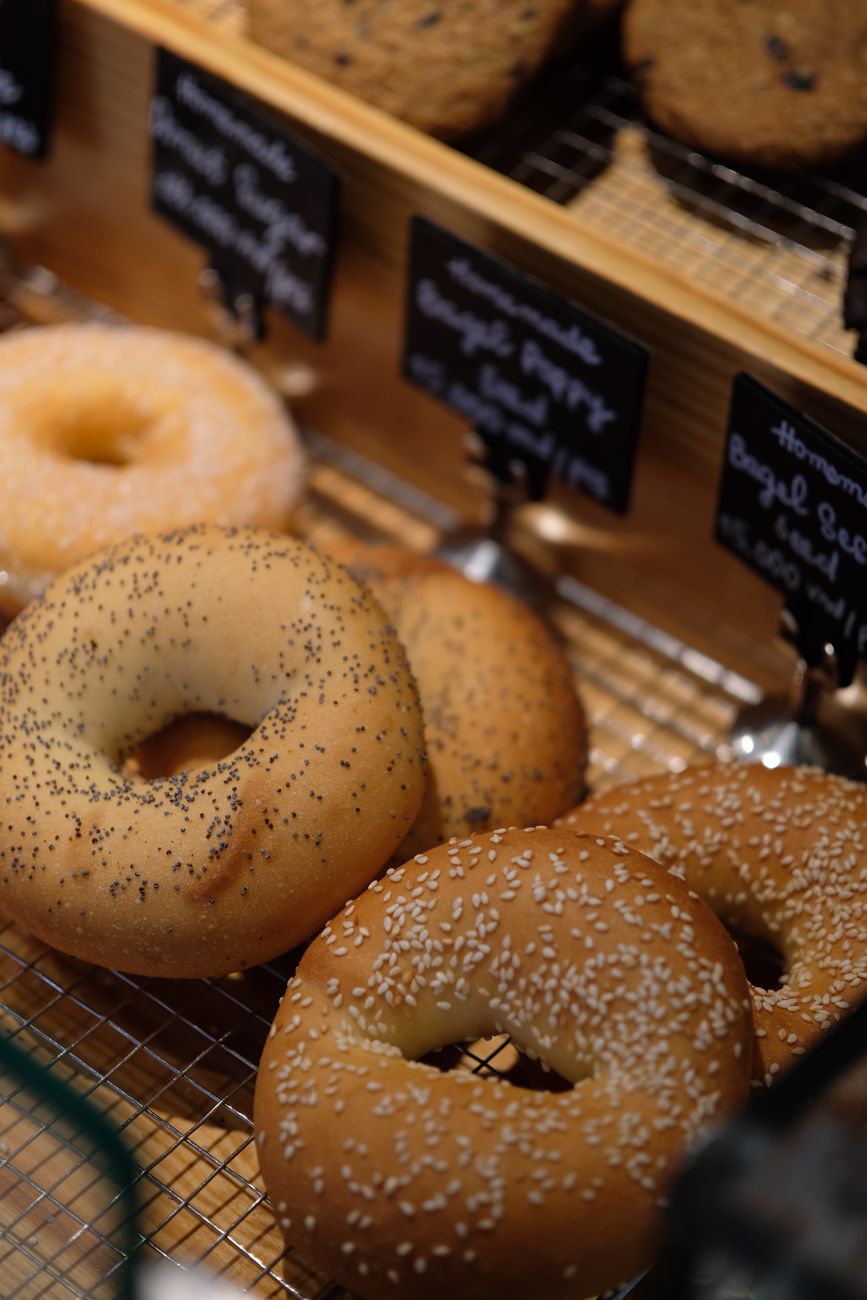
The bagel’s distinctive dense, chewy texture comes from a specific cooking method — boiling before baking — that traces back centuries, tied closely to Jewish communities in Central and Eastern Europe long before the bagel became a New York City staple.
Here’s where the bagel actually came from, and how it made its way to America.
Few breakfast staples carry as clear a documented lineage as the bagel, which makes it a genuinely interesting case study in how a specific immigrant community’s food became a mainstream national product.
Origins in Central Europe
The bagel’s documented history traces to Jewish communities in Poland as early as the 17th century, where round, boiled-then-baked breads were a staple food. One often-cited reference from 1610 in Krakow describes bagels being given as a gift to women after childbirth, suggesting the bread already held cultural significance by that point.

Why Boiling Before Baking Matters
Boiling the shaped dough briefly before baking gelatinizes the starch on the surface, creating the bagel’s characteristically shiny, chewy crust — a texture that simply baking the same dough without boiling wouldn’t produce. This step is the single technical detail that defines a genuine bagel.
Arrival in New York City
Jewish immigrants brought bagel-making traditions to New York City in the late 1800s and early 1900s, where bagel bakers formed a tight-knit trade union, Local 338, that controlled production for decades. The bagel remained largely a regional New York specialty until automated bagel-making machinery in the mid-20th century made mass production, and national distribution, possible.

The Everything Bagel and Lox Tradition
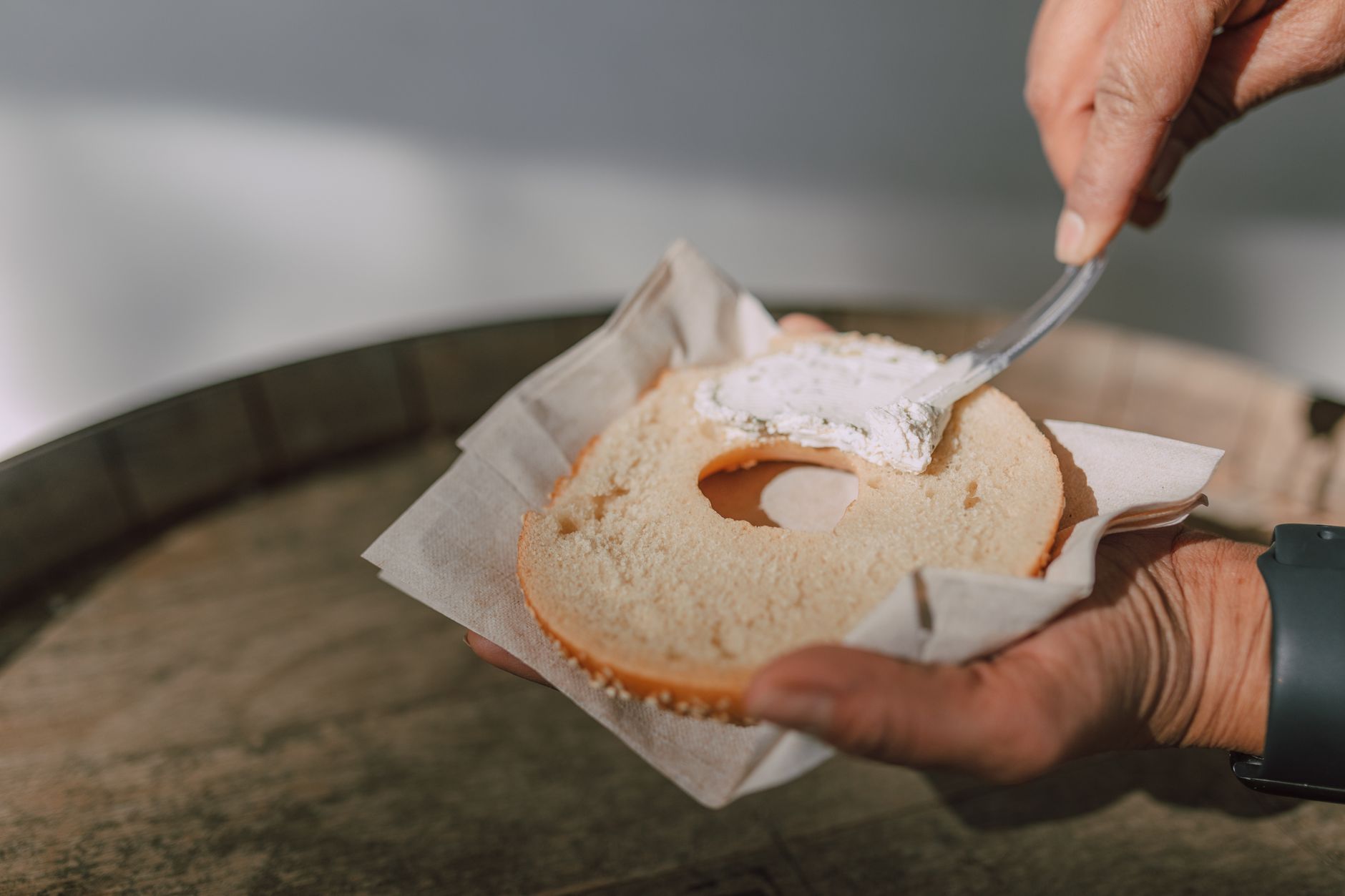
Topping a bagel with cream cheese, smoked salmon (lox), capers, and onion became a signature New York Jewish deli tradition, distinct from the plain or simply-seasoned bagels eaten in earlier European tradition. The “everything” bagel, topped with a mix of seeds and seasonings, is a later American addition to the format.

Frequently Asked Questions
Where did the bagel originate?
Jewish communities in Poland, with documented references dating to the early 17th century.
Why are bagels boiled before baking?
Boiling gelatinizes the surface starch, giving the bagel its shiny, chewy crust, which simple baking alone wouldn’t produce.
When did bagels arrive in America?
Jewish immigrants brought bagel-making to New York City in the late 1800s and early 1900s.
Is the lox and cream cheese bagel a European tradition?
No — it developed specifically as a New York Jewish deli tradition, distinct from simpler European bagel preparations.
What is the “everything” bagel topping?
A later American addition combining a mix of seeds and seasonings, not part of the bagel’s original European tradition.
What made mass bagel production possible?
Automated bagel-making machinery developed in the mid-20th century, which allowed production to scale well beyond what hand-rolling could support.
What was Local 338?
A tight-knit New York City bagel bakers’ union that controlled much of the trade’s production for decades before automation changed the industry.
Want more real delicatessen history? See our history of the American delicatessen.
For more on this bread’s documented history, see My Jewish Learning.
Leave a Reply