
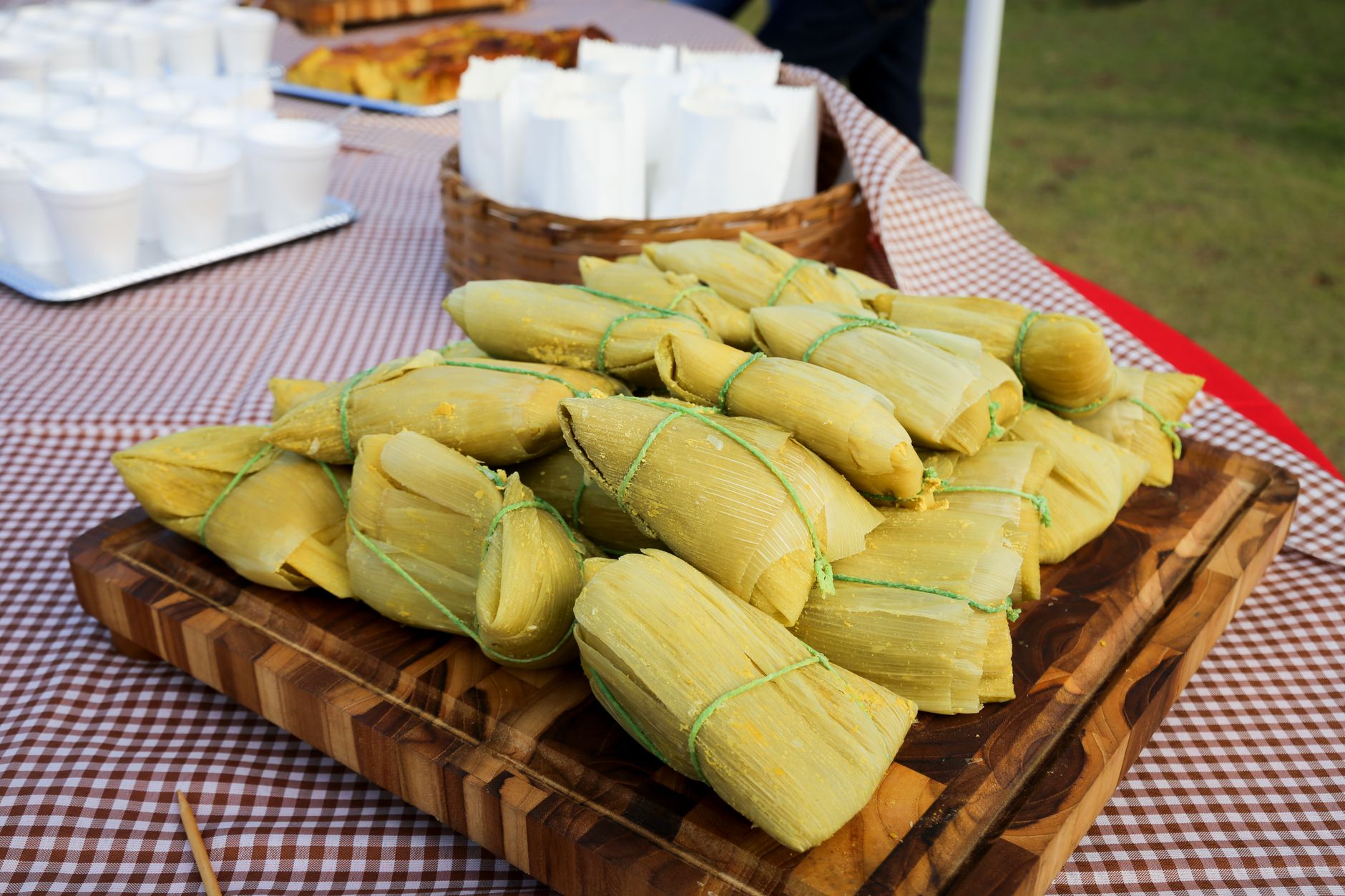
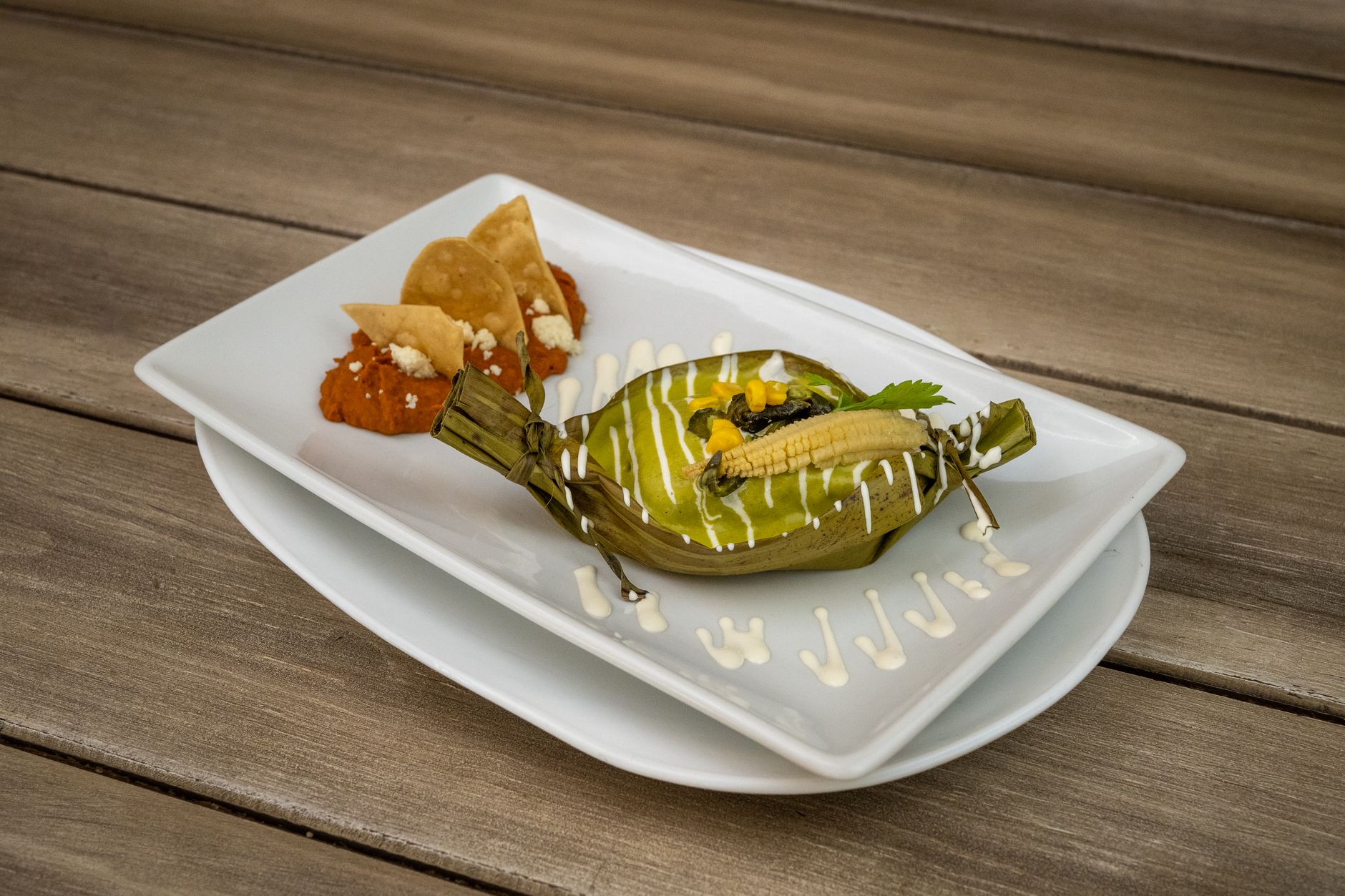
Tamales take real technique to master, but they’re genuinely achievable in a home kitchen with the right approach. They’re also a real menu item at Mabel’s Deli inside Poncha Market, served as a Tamale Supreme with egg and green or red chili, or by the order in sets of pork or beef.
Here’s a beginner-friendly path through the process, from masa dough to steaming.
The biggest hurdle for most first-time tamale makers isn’t the flavor — it’s the dough consistency and the folding technique, both of which take a bit of practice to get comfortable with. This guide focuses on getting those two fundamentals right.
Tamales are also traditionally a group project in many households, with multiple people assembling them assembly-line style rather than one person doing the whole batch alone. If you’re attempting them for the first time, recruiting a helper for the assembly step alone can make the process considerably less daunting.
That communal aspect is a genuine part of the tradition, not just a practical shortcut — tamale-making gatherings, sometimes called tamaladas, are a real social occasion in many households, especially around the winter holidays, where the labor-intensive process becomes a shared event rather than a chore.
If you’re making tamales alone for the first time rather than as part of a group gathering, it’s worth setting aside a genuinely relaxed afternoon rather than trying to squeeze the process into a rushed weeknight — the assembly step alone takes real time even for an experienced cook.
Don’t let the total time commitment discourage a first attempt, though. Most of that time is passive steaming rather than active hands-on work, so a first tamale-making afternoon is more about patience than intense labor from start to finish.
What You’ll Need
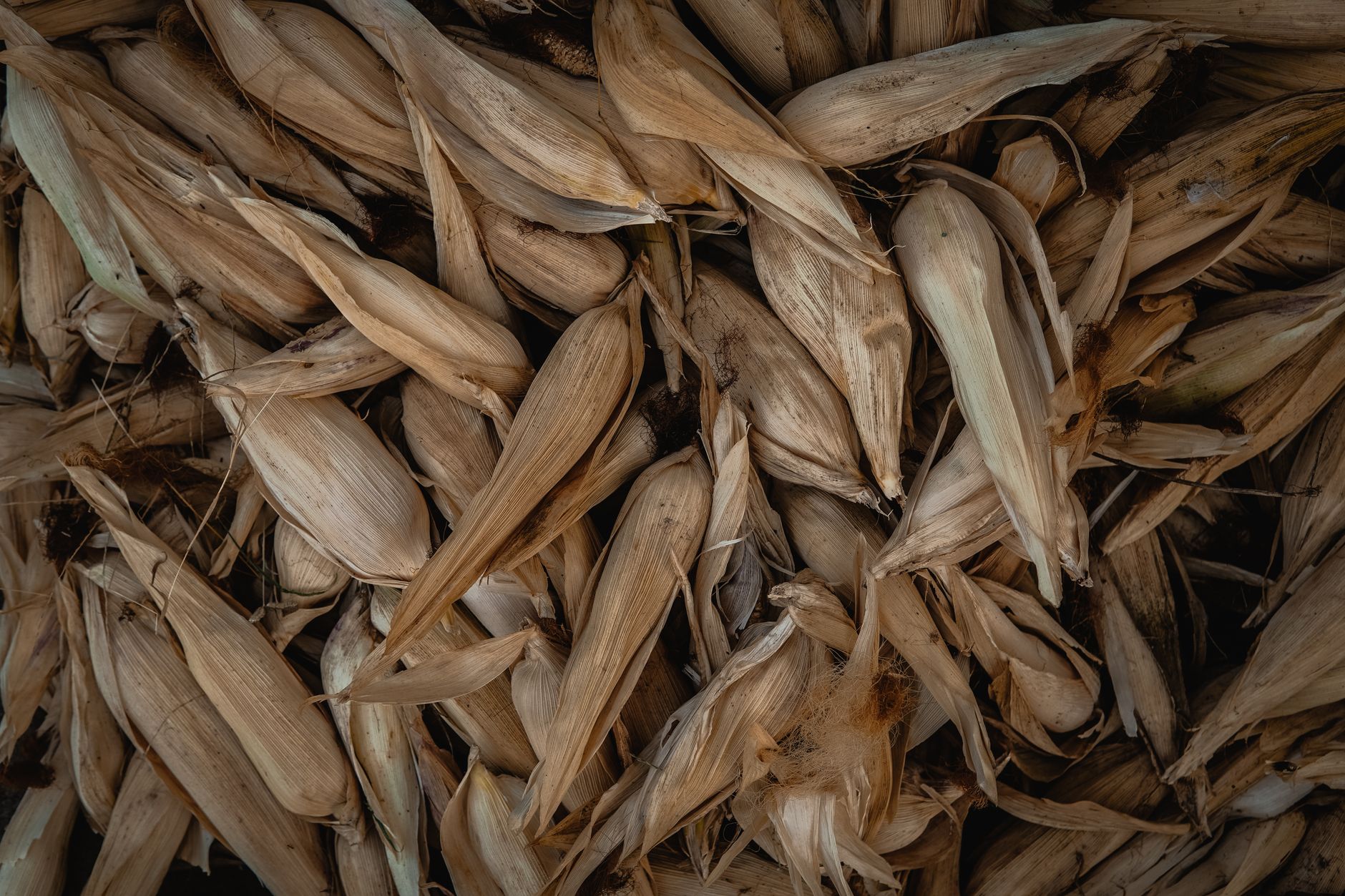
- Dried corn husks, soaked in water for at least an hour before using
- Masa harina (dried corn flour) or prepared masa
- Lard or vegetable shortening, softened
- Broth or stock
- Baking powder
- Salt
- Your choice of filling (pork, beef, chicken, or a vegetarian option with cheese and chile)
Step 1: Prepare the Masa Dough
- Soften the lard first, whisking it until smooth and airy — this is a genuinely important early step that affects the final texture.
- In a separate bowl, mix the masa harina with baking powder and salt.
- Work the softened lard into the dry mixture with your hands until it resembles coarse breadcrumbs.
- Gradually add broth, beating continuously, until the dough reaches the consistency of a thick cake batter — light, smooth, and free of lumps.
- Season slightly on the salty side; the flavor mellows once the tamales are steamed.
Step 2: Assemble the Tamales
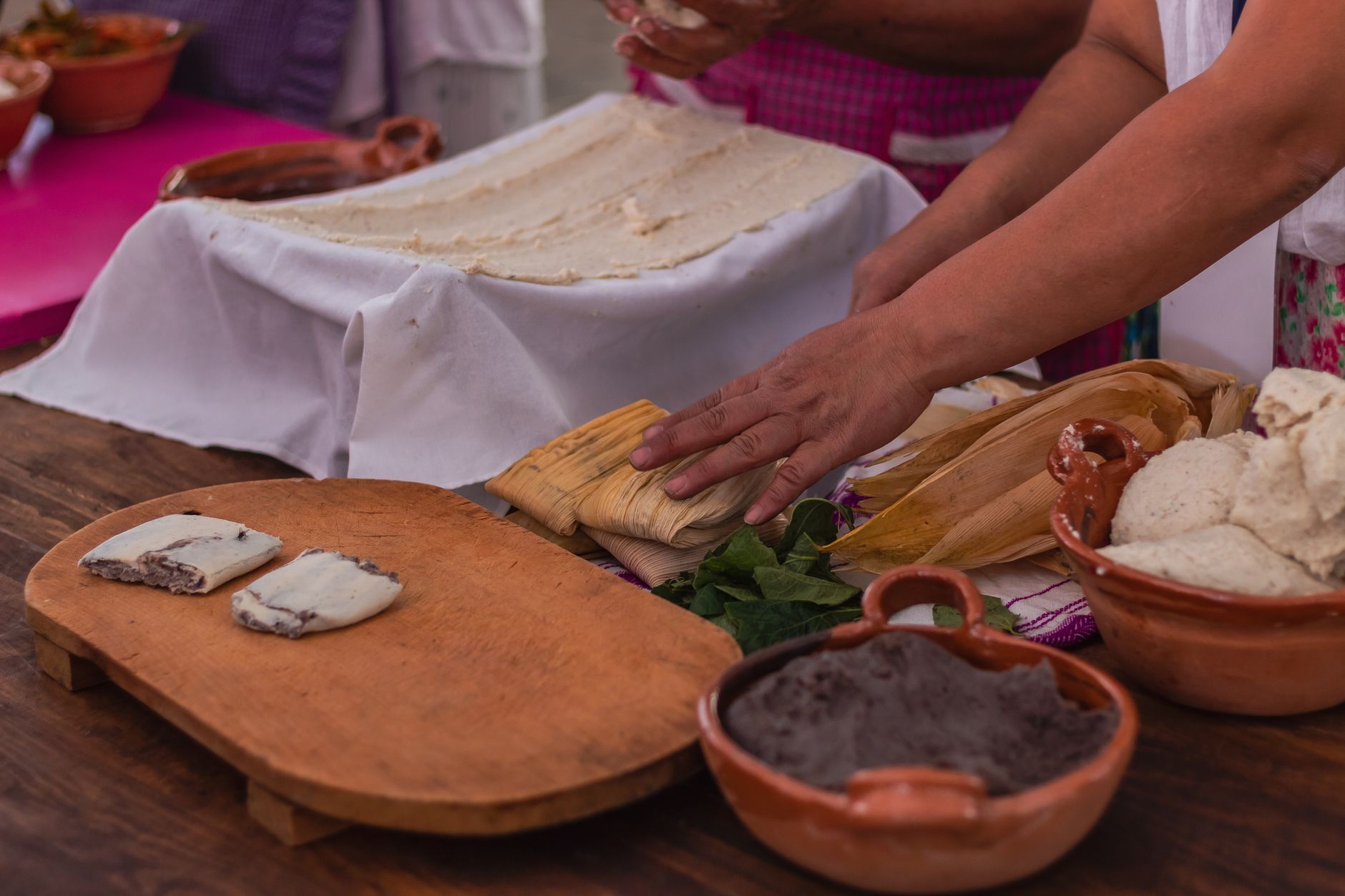
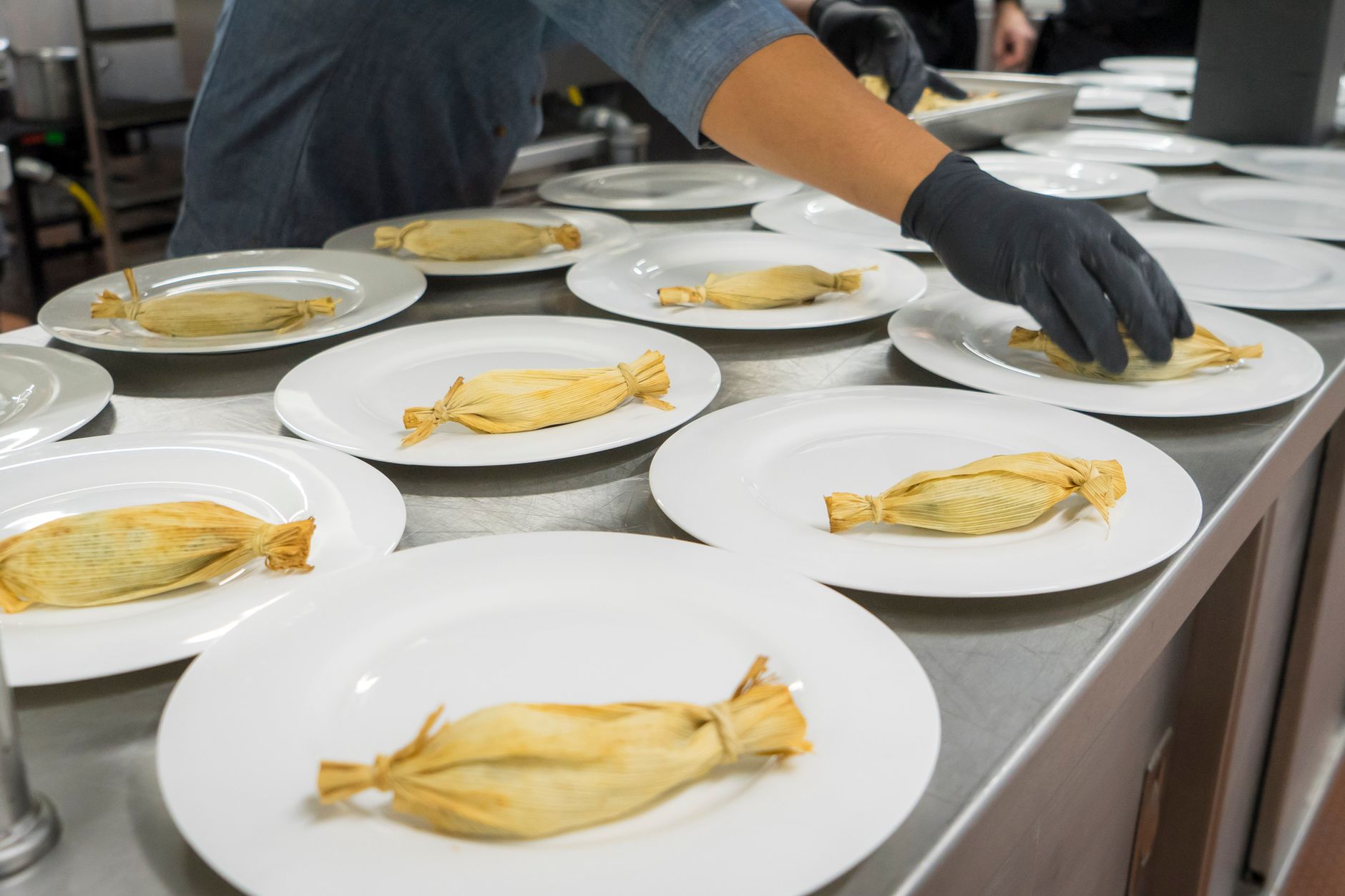
- Spread a layer of masa dough onto the smooth side of a softened corn husk, leaving room at the edges.
- Add a spoonful of your chosen filling down the center.
- Fold the sides of the husk in over the filling, then fold up the bottom, leaving the top open.
- Repeat until all the masa and filling are used.
Step 3: Steam the Tamales
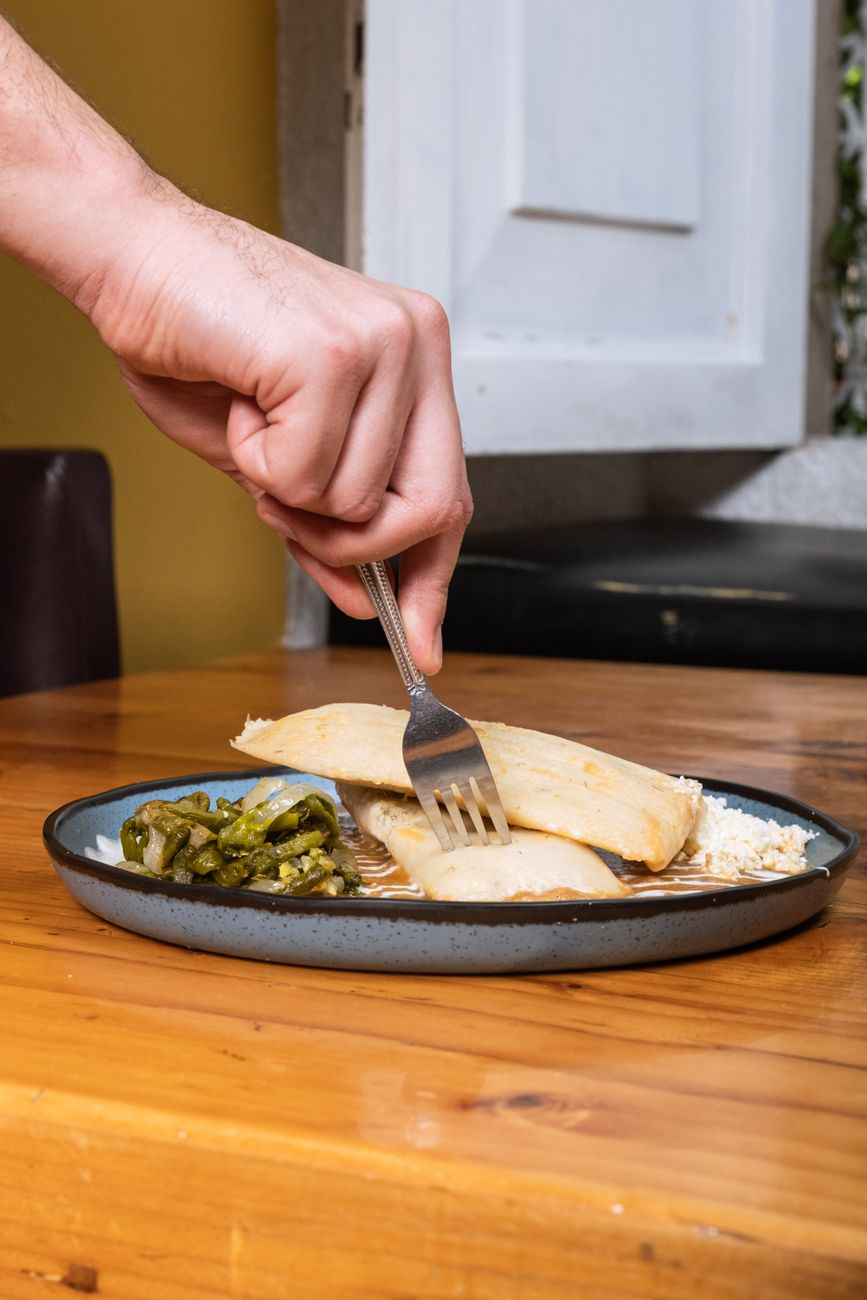
Stand the assembled tamales upright, open-end up, in a steamer basket set over simmering water, without letting the water touch the tamales directly. Cover and steam for about an hour, checking water levels periodically, until the masa pulls cleanly away from the husk — the clearest sign they’re fully cooked.
Resist the urge to unwrap a tamale too early to check on it — the dough continues firming up during the full steaming time, and an early peek often makes an unfinished tamale look more done than it actually is.
If you’re unsure whether a batch is done, test one from the center of the pot rather than the edges — steam circulation isn’t perfectly even, and tamales closest to the pot’s walls sometimes cook slightly faster than ones packed toward the middle.
Common Beginner Mistakes
- Not soaking the corn husks long enough, which makes them brittle and prone to tearing during folding.
- Under-seasoning the masa, since the flavor mellows considerably during steaming.
- Overfilling, which makes tamales difficult to fold neatly and more likely to leak filling during cooking.
- Letting the steamer run dry, which can scorch the bottom layer of tamales.
Frequently Asked Questions
How long do I steam tamales?
Roughly an hour, until the masa pulls cleanly away from the corn husk when unwrapped.
Can I freeze tamales?
Yes — steamed tamales freeze well; reheat by steaming again or microwaving wrapped in a damp paper towel.
Why is my masa dough too dense?
Usually not enough broth was added, or the lard wasn’t fully softened and incorporated before mixing.
Do I eat the corn husk?
No — the husk is a cooking wrapper, unwrapped and discarded before eating the tamale inside.
Where can I get tamales near Poncha Springs?
Mabel’s Deli inside Poncha Market serves a Tamale Supreme and tamales by the order, pork or beef.
Can I make tamales without a steamer basket?
Yes — a metal colander set inside a large pot with a lid works as a reasonable substitute, as long as the tamales stay above the water line.
How many tamales does one batch of masa make?
It varies by size, but a standard batch typically yields between two and three dozen tamales, which is part of why assembly is often shared among multiple people.
What is a tamalada?
A tamale-making gathering, traditionally held around the Christmas and New Year holidays, where family and friends assemble large batches together rather than one person working alone.
Do all tamales cook at the same rate in one pot?
Not perfectly — steam circulation varies slightly, so testing one from the center of the pot rather than the edges gives a more reliable sense of doneness for the whole batch.
Want to try one first? See our Mabel’s Deli menu guide for the Tamale Supreme and other menu items.
For more on tamale traditions and technique, see the Smithsonian Institution.

Leave a Reply